

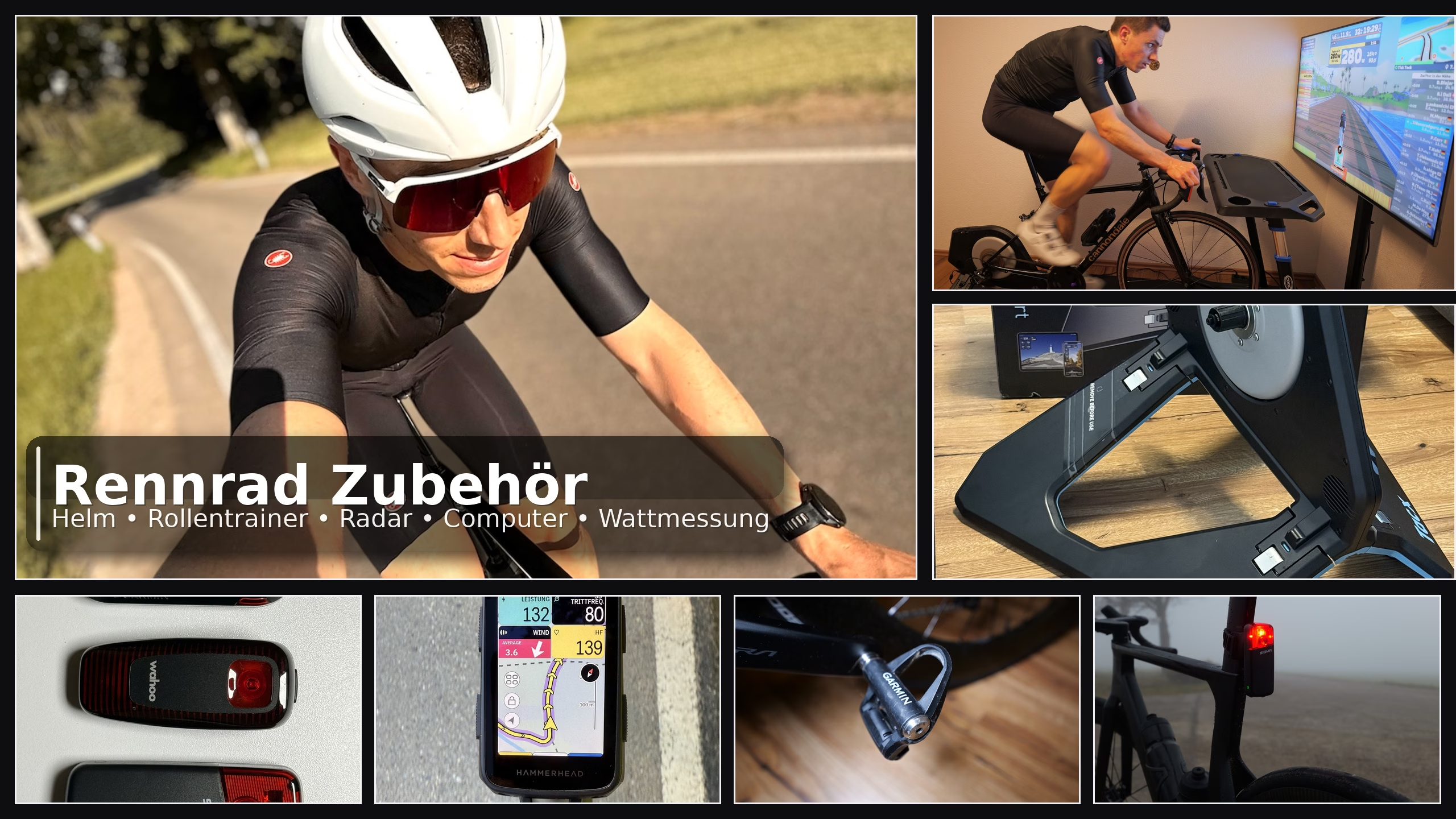
Why road bike accessories will transform your training.
Road cycling has long been more than a hobby – it is a lifestyle built around performance and precision. If you want to take your training to the next level, you need the right tools. In this article, I introduce the top road bike accessories to help you ride more efficiently, safely and intelligently. Ideal for:
- Ambitious recreational cyclists
- Tech-minded newcomers to road cycling
- Gravel and long-distance riders
- Indoor training fans
Power Meters – Give Your Training Structure
Why train by feel when you can know exactly what is happening? Power meters measure your power output in real time – invaluable for effective training. Unlike a heart rate monitor, there is no delay: the readings are available in real time. You may have noticed this when running uphill with a heart rate monitor. Your heart rate rises with a delay after the effort increases.
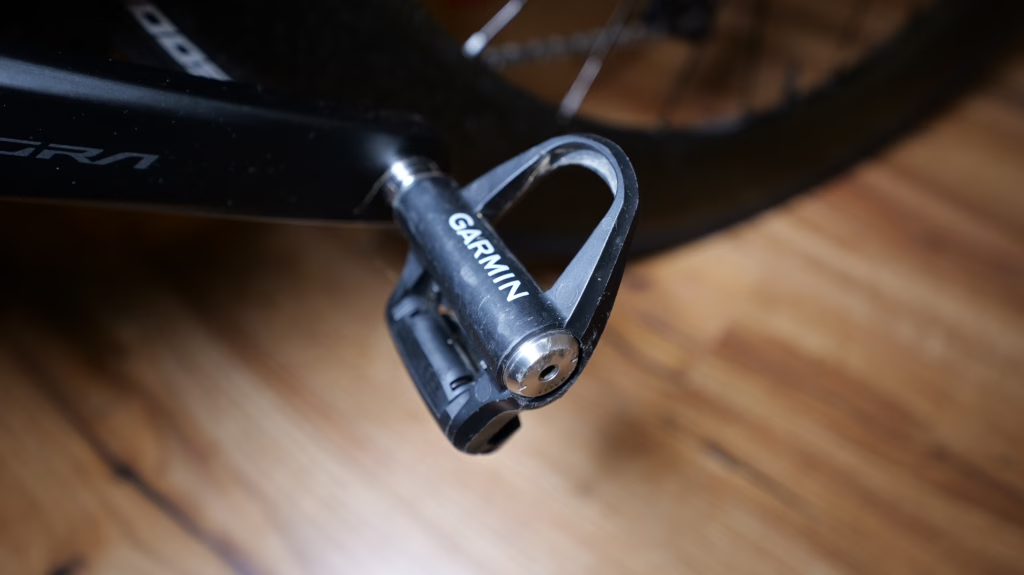
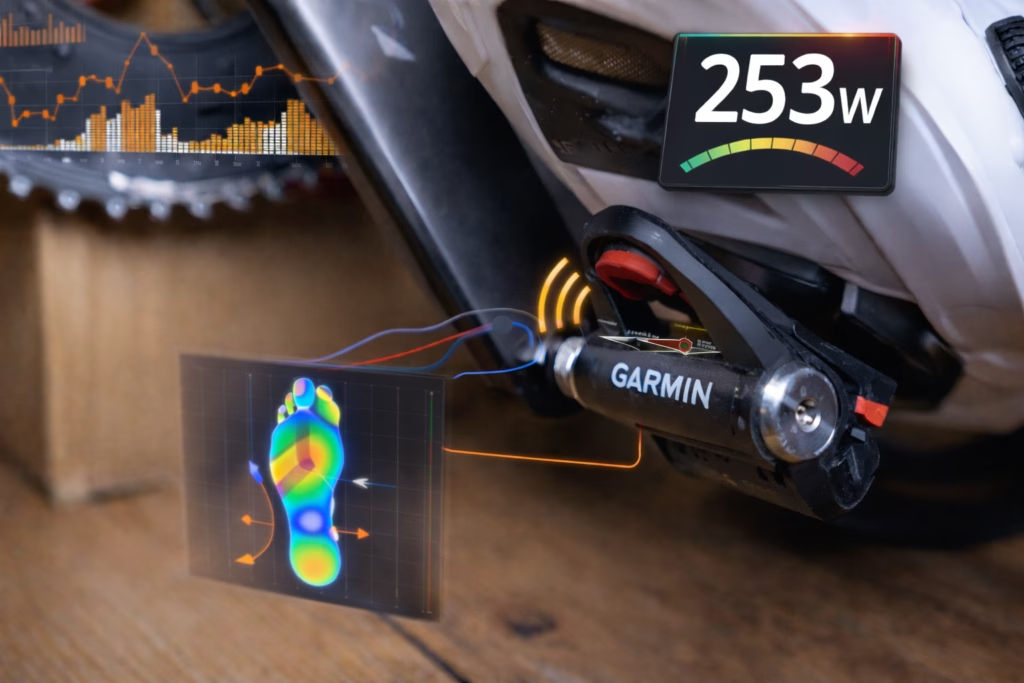
There are also two main types of power meter: 1) crank-based measurement (crank or crank-arm power meters) and 2) pedal-based measurement, which is what I use. In most cases, we recommend pedal-based power meters because they are quicker and easier to install, especially when switching bikes, and often offer more additional features – such as more detailed analysis of how your feet transfer power, including pressure distribution, pedalling efficiency and left/right balance.
- Dual-sided power measurement (L/R), very accurate
- Quick to install and easy to swap between bikes
- Extensive additional data (Cycling Dynamics), ANT+ & Bluetooth
- High price
- Weight
GPS Bike Computers – Your Smart Training Partner
Still navigating with your phone? It might be time for an upgrade! A bike computer is designed specifically for cycling: compact, robust and weather-resistant. Unlike a smartphone, it mounts directly on the handlebars, is easy to read in all lighting conditions and does not distract you with incoming messages or calls. Battery life is designed for long rides, often lasting 10 hours or more without a power bank.
Modern GPS bike computers offer turn-by-turn navigation, training data and Strava integration, and pair seamlessly with other road bike accessories such as a heart rate strap, power meter or Garmin Varia Radar. A bike computer is a smart upgrade that deserves a place in a quality road bike setup, giving you a clearer overview, more endurance and greater control on every ride.
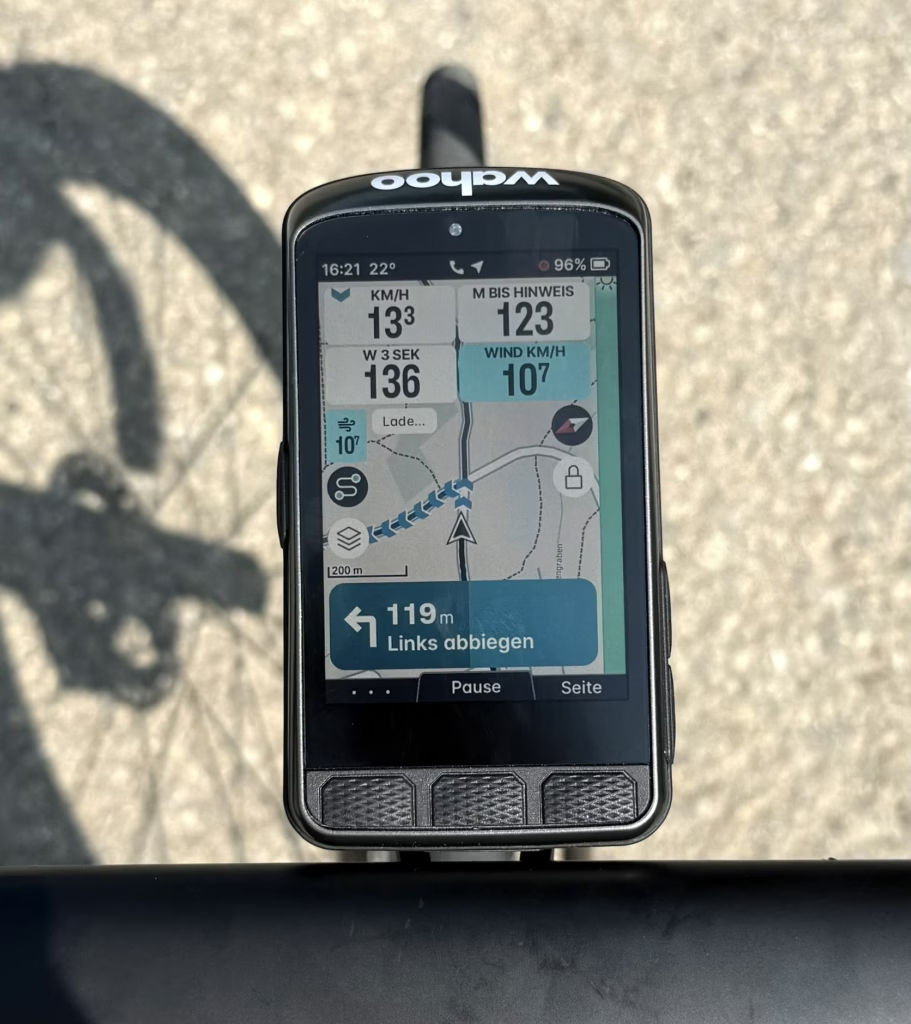
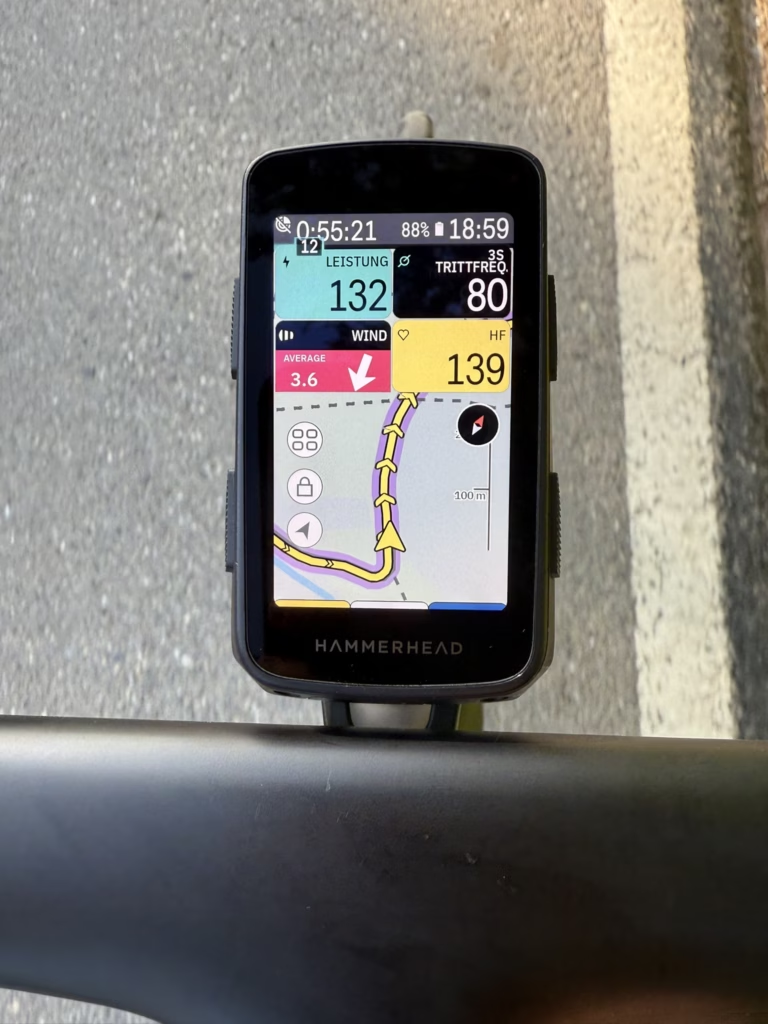
A modern GPS bike computer does more than navigate: it analyses your training, syncs with Strava and even supports you with live segments. I have personally owned the Garmin Edge 1040 Solar, Wahoo ELMNT BOLT V2, Wahoo ELMNT Ace and, most recently, the HAMMERHEAD Karoo 3 – all of these bike computers are excellent. Personally, though, I like the Karoo 3 best, and it is also one of the most affordable of the bunch. The display is, quite literally, brilliant!
I have already tested several bike computers on real rides and brought the key models together in a detailed comparison. To find out which bike computer best suits your training, navigation needs and budget, take a look at my in-depth bike computer review & comparison.
- Easier to read in sunlight
- Longer battery life, even with sensors and navigation
- More weather-resistant & robust in rain, cold and crashes
- More reliable sensor and power meter pairing (ANT+/BT)
- Button/touch operation even with gloves, with fewer distractions
- Additional cost, plus possible map or feature charges depending on the model
- Smaller display and fewer smart apps than a smartphone
Tip: Ideal for bikepacking, touring & structured workouts.
You may also be interested in our article on the Wahoo ELMNT Ace
Smart Lighting & Rear Radar
Visibility is not a luxury – it is essential. Modern rear lights do far more than simply light up: they use radar to warn you of approaching vehicles, offer brake light or emergency braking functions and can often be controlled conveniently through an app. Particularly interesting: on compatible Garmin bike computers, the Garmin Varia Radar can show not only approaching traffic but, with suitable add-ons, even the speed of the approaching cars.
There are now strong alternatives to Garmin. The SIGMA RECO 80 combines radar with a rear light compliant with Germany's StVZO road traffic regulations, making it particularly interesting for everyday riding and commuting. The Wahoo TRACKR Radar is another modern contender, combining radar and a rear light in one device that fits neatly into the Wahoo ecosystem.
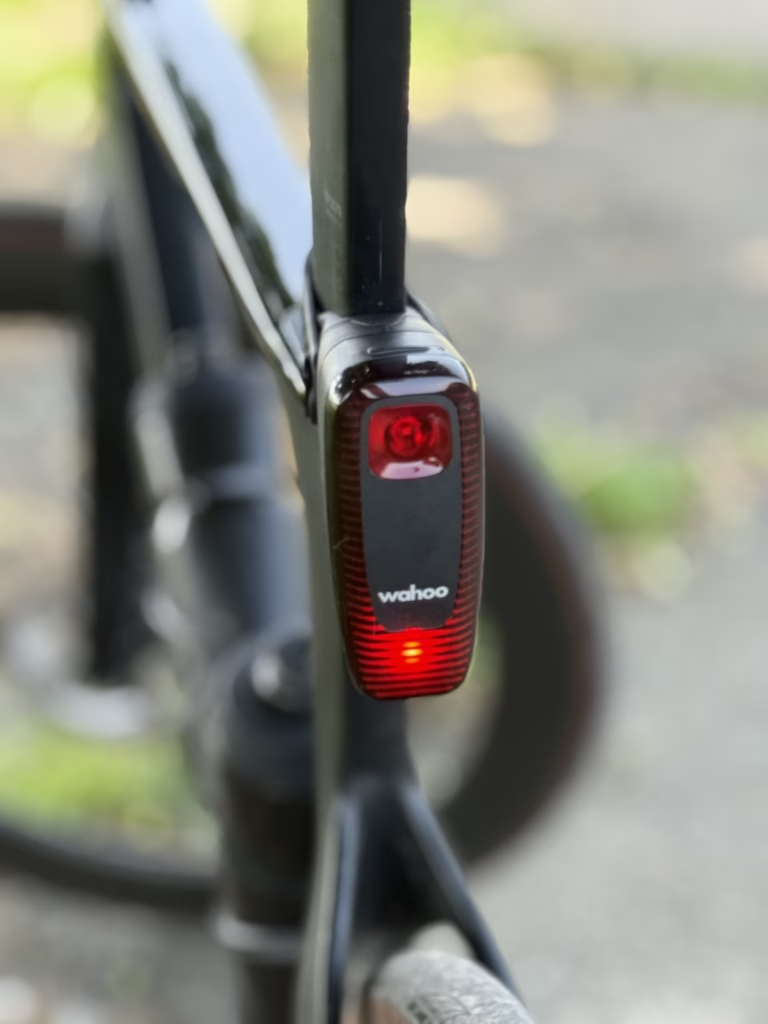
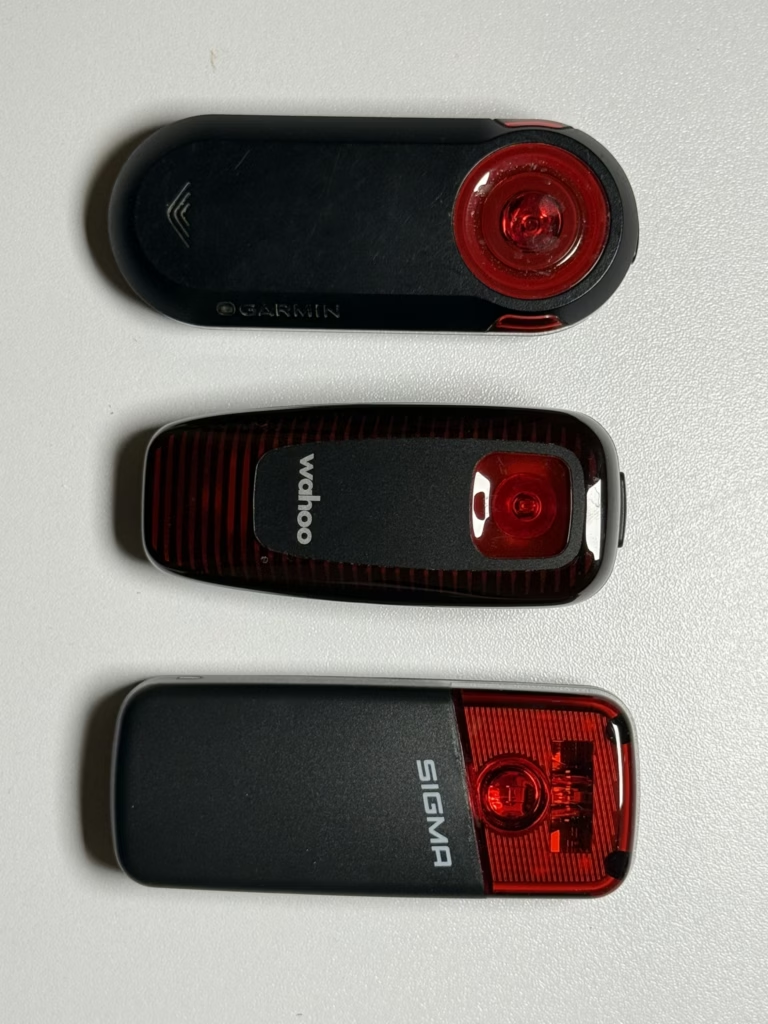
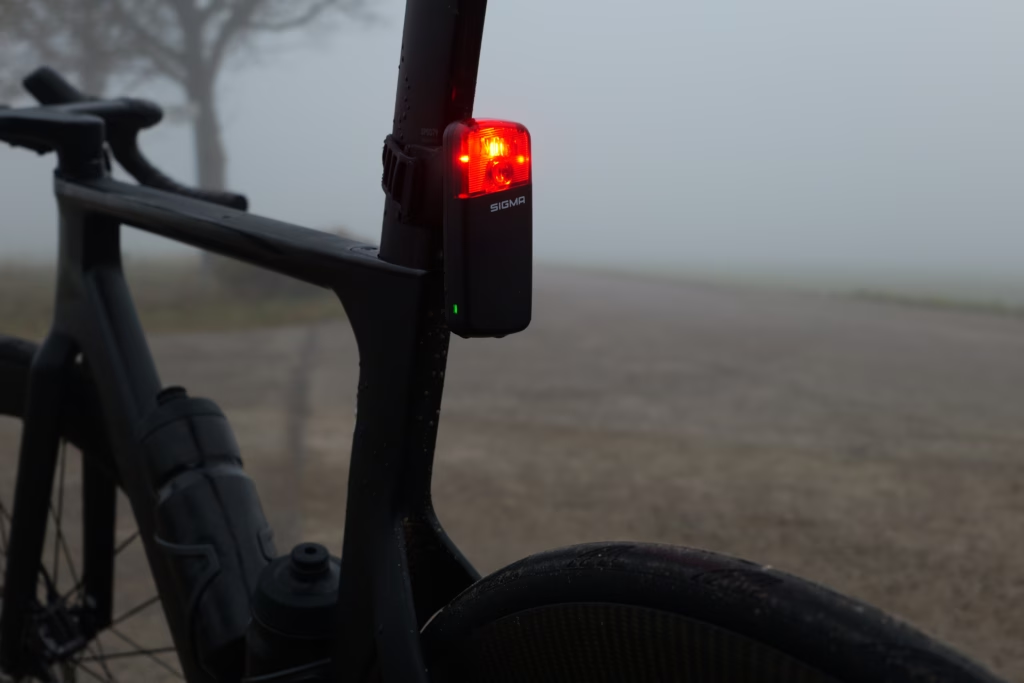
Safety first: an automatic lighting mode, rear vehicle detection and a battery with an extended runtime mode make it a real game changer for commuting and riding at dusk.
- Early warning of vehicles approaching from behind
- Greater safety and less strain: fewer shoulder checks
- Works in wind and noise, with good visibility from the light
- Especially useful at dusk, in rain and on long solo rides
- Expensive, plus an extra device to set up
- Battery management: charging and runtime
If you want to put even more emphasis on safety and visibility when road cycling, radar rear lights are worth a look. I have already compared several models, explaining the differences in radar range, alerts, lighting modes, battery life and compatibility with Garmin/Wahoo & other devices. You can find the full overview in my detailed road bike rear light & radar comparison.
Smart Indoor Training – Stay Fit Through Winter
Zwift & similar platforms turn indoor road cycling into an immersive experience: ride virtual routes, compete with others, collect data and maintain your fitness throughout winter. But does an indoor trainer still count as a road bike accessory? In my view, absolutely! After all, where better to ride your road bike in winter than on a trainer?
I started out with the Wahoo KICKR CORE 2 and trained reliably on it for years. I have since switched to the Tacx NEO 2T, mainly for its even better ride feel, very quiet operation and generally more precise, smoother performance during intervals and long sessions.
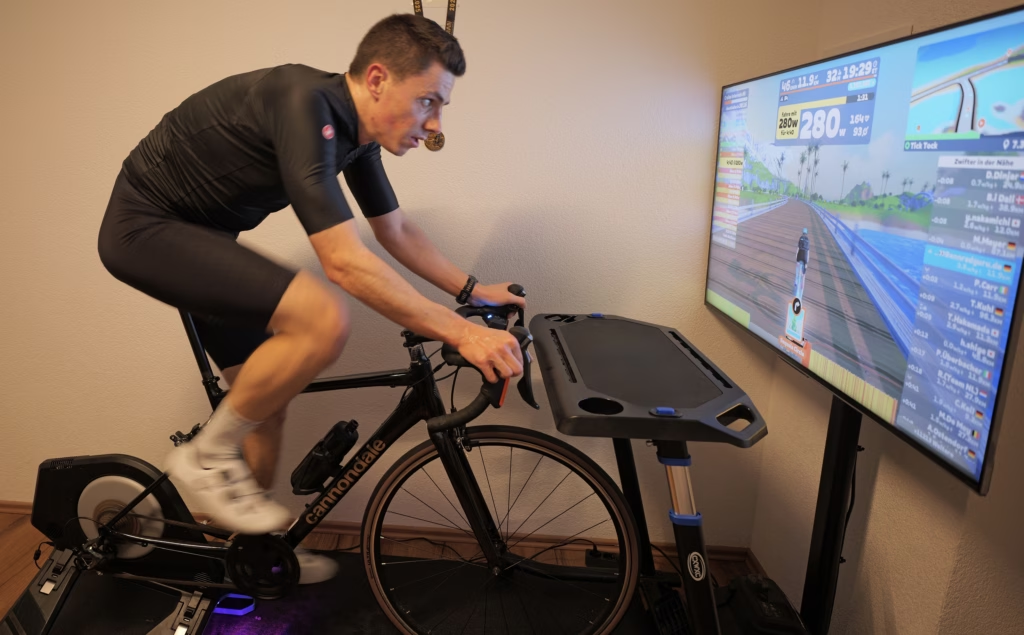
Setup checklist: smart trainer + app, training mat, fan and tablet mount, plus Garmin/Strava connectivity – ideal for interval training & FTP tests.
- Train whatever the weather: winter, rain or darkness
- Highly efficient training: intervals, FTP and ERG mode
- Safer than the road: no traffic or traffic lights
- Precise data: power, cadence and training control
- Platforms such as Zwift/MyWhoosh make it more motivating
- Setup effort & space requirements: mat, fan and possibly a cassette
- Heat build-up and sweating → a fan is almost essential
- Cost: trainer, accessories and possibly subscription platforms
If you are looking for the right indoor trainer, I have put together a comprehensive overview for that too. My comparison explains the main differences between direct-drive and traditional wheel-on trainers, including noise, ride feel, stability, measurement accuracy, maximum power and app compatibility with platforms such as Zwift, Rouvy and TrainerRoad. You can find the full review here: Comprehensive Indoor Trainer Comparison
Bike Helmets – The Most Important Road Bike Accessory
When people think of road bike accessories, lightweight carbon bottle cages, aerodynamic wheels and clever GPS devices often come to mind first. Yet the most important accessory for any road cyclist is often overlooked: it is not attached to the bike, but worn on your head – your helmet.
A helmet does much more than protect against scrapes: in a serious accident, it can be the difference between life and death. Road cycling regularly involves high speeds, close group riding and changing road conditions, significantly increasing the risk of crashes and collisions. Research and real-world experience clearly show that bike helmets significantly reduce the risk of serious head injuries.
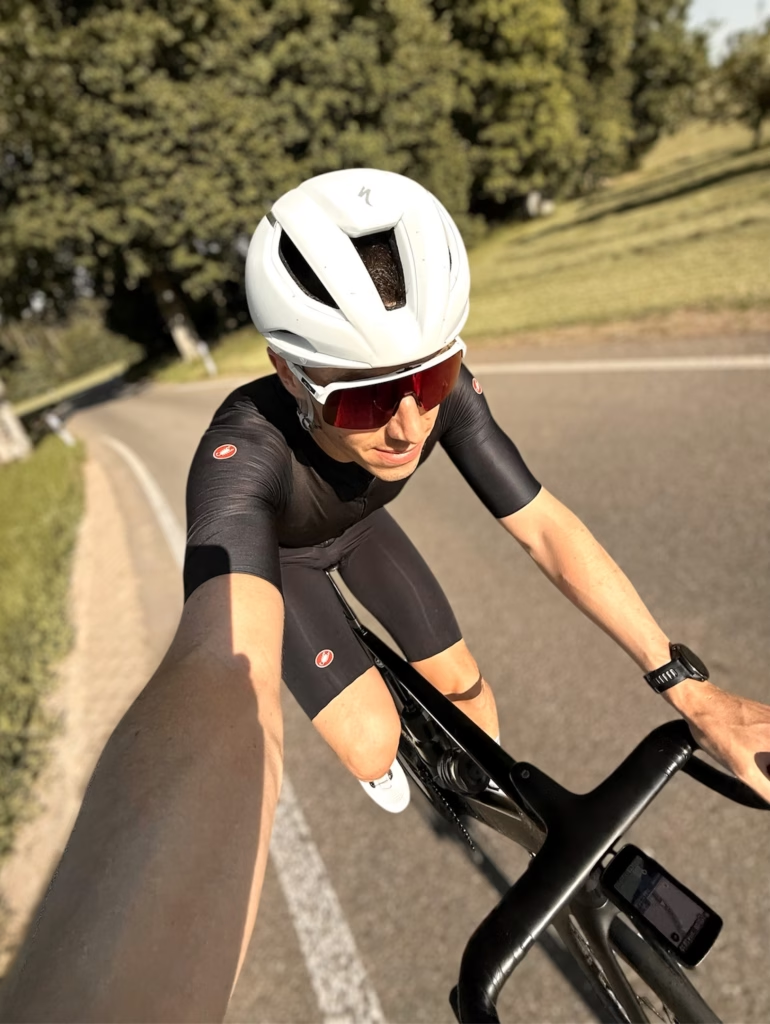
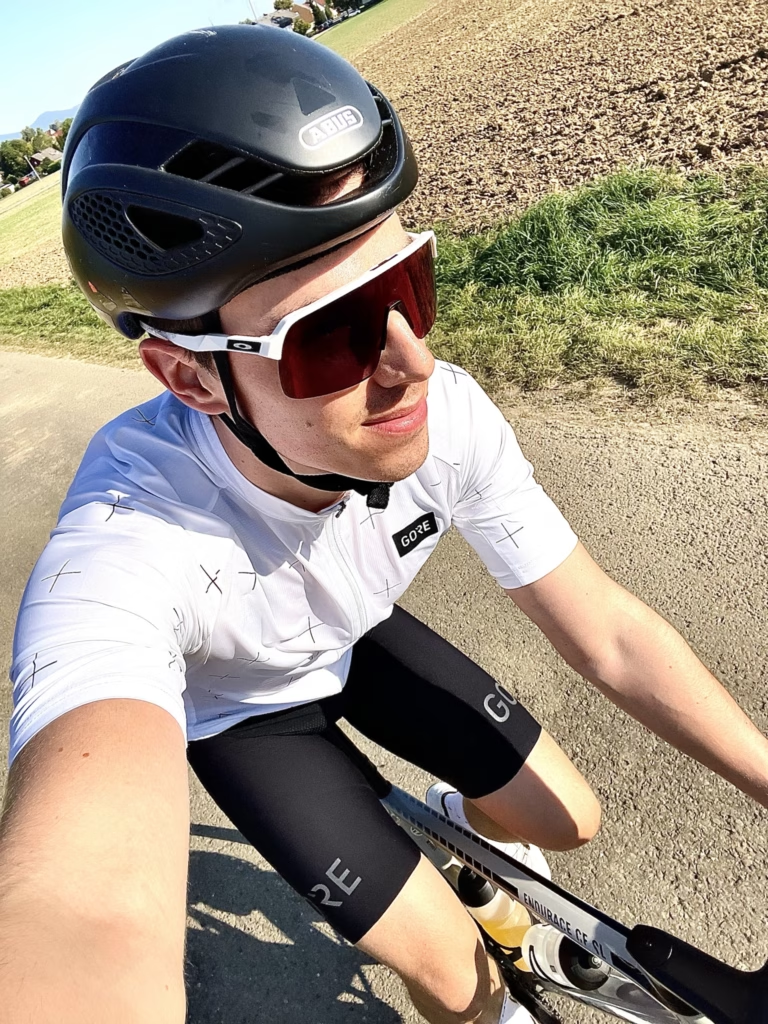
A good helmet does more than protect you: it is with you on every kilometre. Modern road bike helmets are designed to combine maximum safety with minimal weight and excellent ventilation. They support your riding without getting in the way. Aerodynamic designs and clever adjustment systems provide both comfort and protection, whether you are on a long ride, racing or navigating busy city traffic.
- Protection in a crash, significantly reducing head injuries
- Better visibility through bright designs and reflectors
- Comfort: low weight, good ventilation and an adjustable fit
- Aerodynamics: noticeably more efficient on some models
- Extras such as MIPS/rotational protection and integrated light or eyewear storage
- None!
A road bike helmet is only a reliable companion if it fits properly and is well made. When buying one, it is worth looking for a low weight: the lighter the helmet, the more comfortable it remains on long rides. Effective ventilation is just as important. Plenty of well-placed vents and a well-designed air channel system help keep your head cool even in the heat.
For a helmet to protect you properly, it must also fit perfectly. A precise adjustment system provides a secure, stable fit without pressure points. Performance-minded riders also benefit from an aerodynamic design that keeps drag as low as possible. Certified safety matters too: look for CE marking and durable materials that hold up when needed. If you would like to explore this further, you can find more information here: Road Bike Helmet Comparison
But a helmet offers more than physical protection: it also gives you confidence. Riders wearing a helmet often feel more focused and self-assured, with that sense of safety accompanying them in the background. You can concentrate on technique, cadence and the route instead of being held back by an uneasy feeling. A road bike helmet should therefore be seen as a natural and essential accessory, rather than an annoying obligation. It is with you from the first pedal stroke to the final descent, protecting your most valuable asset: your head.
Among high-tech components and stylish cycling kit, this point sometimes gets lost: a helmet is a fundamental accessory that belongs on every ride. It signals responsibility and respect for the sport. Invest in quality, take time to get the fit right and replace your helmet regularly – safety is the foundation of every sporting achievement.
More Road Bike Accessories: High-Performance Bike Care & Upgrades
Recommendation: Muc-Off Care Kits*
Less friction means more speed. Regular bike care makes a difference not only to how your bike looks, but also to how it rides. A clean drivetrain runs more quietly, shifts more precisely and may even save a few watts. Admittedly, I am not someone who treats the entire bike with an array of accessories after every ride either. Even so, it is well worth sticking to the essential maintenance routines. Regular cleaning and lubrication can significantly extend drivetrain life, keeping expensive wear items such as your chain, cassette and chainrings in good condition for longer.
A good chain lubricant, a cleaning kit with suitable brushes and, depending on your frame, a carbon care product for matt finishes have proven to be must-haves. They help reliably remove dirt and old lubricant, protect delicate paintwork and get your road bike running like new again.
Ultimately, this is the kind of technology that really helps you progress. In 2025, smart performance is what matters, and the road bike accessories featured here are more than cool gadgets: they can genuinely boost performance. Whether you want to improve training, safety or comfort, the right upgrades help you get more out of yourself and your setup.
You might also be interested in…
0 Comments