
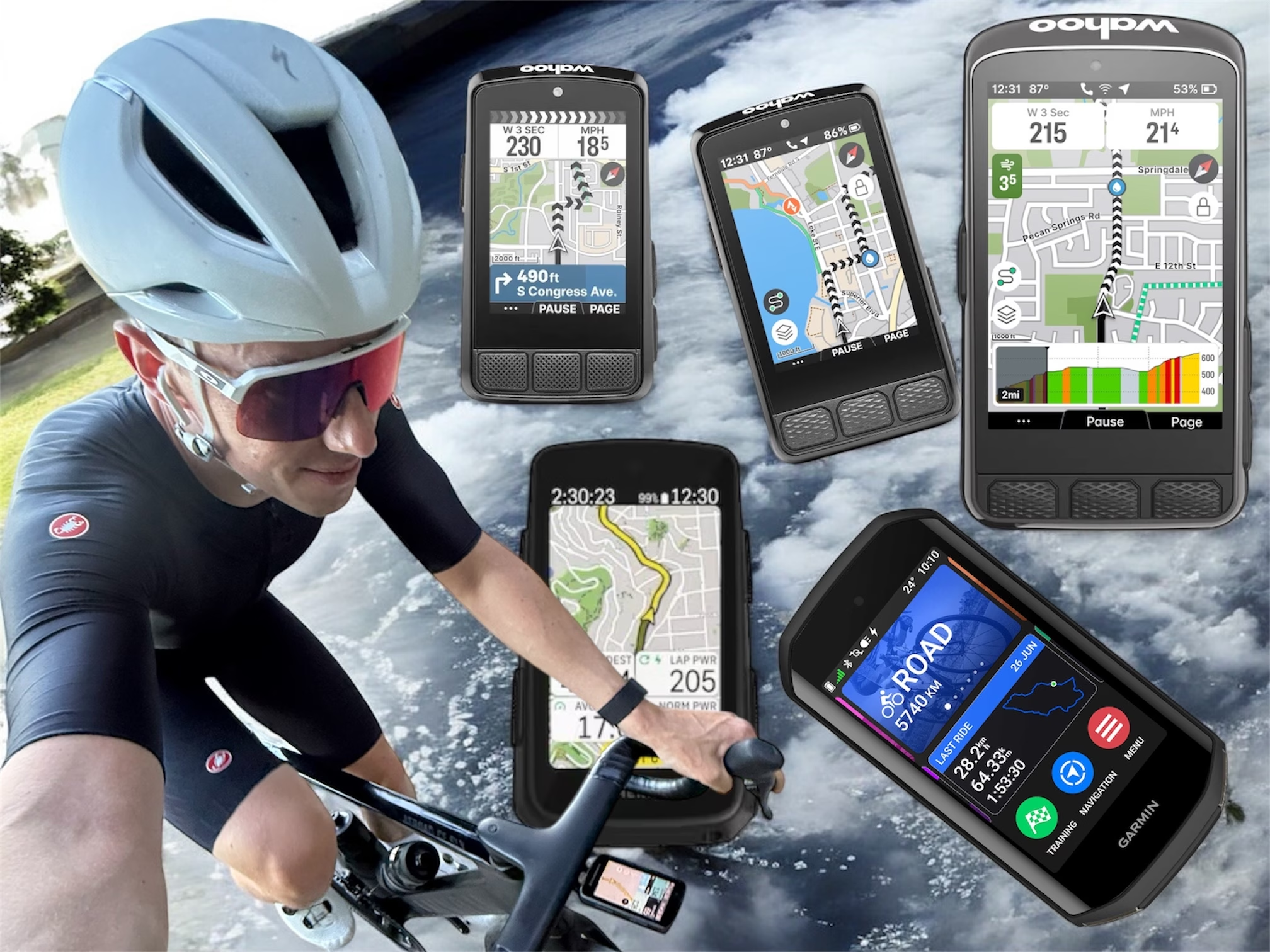
Bike computer review comparison table
| Feature | ||||||||||||
|---|---|---|---|---|---|---|---|---|---|---|---|---|
| Quick comparison | ||||||||||||
| Strengths | 2.7″ touch · speaker / bell · Garmin Pay | 2.8″ touch · voice guidance · 25 h | 3.5″ touch · extensive features · bell | 3.2″ 800×480 · strong navigation · Extensions | 84 g · compact · 20 h battery life | 3.5″ touch · 50 h battery life · Strava Live Segments | 3.5″ touch + 6 buttons · strong battery life · value for money | 3.8″ touch · wind sensor · 30 h battery life | 3.3″ touch · voice guidance · bell | Compact · strong training features · 110 g | 3.7″ touch · rotary dial · voice guidance · iClimb 4.0 | Affordable for beginners · bright 3″ touchscreen · good workouts |
| Weaknesses | 12 h with intensive use | No wind sensor · larger than BOLT 3 | 161 g · 20 h standard battery life | No built-in speaker · standard battery life shorter than many rivals | No touch · no speaker / bell | No speaker · only 2 additional fields on the map page | Display in partial shade · no Strava Live Segments · no speaker | 208 g · very large casing | No Strava Live Segments · battery life in practical testing clearly below the lab figure | No touch · no speaker / bell | Display in partial shade · audio cannot be adjusted separately | No map · limited rerouting · no ANT+ / Di2 |
| Features | ||||||||||||
| Display | 2.7″ touch · 420×600 | 2.8″ touch · 320×480 | 3.5″ touch · 480×800 | 3.2″ touch · 800×480 | 2.3″ · 240×360 · buttons | 3.5″ TFT touchscreen | 3.5″ transflective · touch · 320×480 | 3.8″ touch · 480×720 | 3.3″ touch · 320×480 | 2.7″ · 420×600 · buttons | 3.7″ transflective · touch + rotary dial · 480×854 | 3″ IPS touchscreen · 240×320 · touch + buttons |
| Navigation | Maps · multi-band GNSS · routing | Offline maps · rerouting · voice guidance | Maps · multi-frequency GNSS · routing | Offline maps · rerouting · routes directly on the device | Offline maps · rerouting · turn-by-turn | OSM maps · turn-by-turn · on-device rerouting | Offline maps · dual-band L1/L5 · rerouting | Offline maps · rerouting · voice guidance | Offline maps · dual-band · rerouting | Maps · multi-band GNSS · routing | Offline maps · dual-band L1/L5 · rerouting · route collections | Route + turn instructions · no map · direction arrows when off route |
| Climbs | ClimbPro | Summit Segments | ClimbPro | CLIMBER | Summit Segments | Climb Challenge 2.0 | iClimb 3.0 | Summit Segments | iClimb 2.0 | ClimbPro | iClimb 4.0 · automatic detection without an active route | No iClimb / no automatic climb detection according to the manufacturer |
| Training | Cycling Coach · Power Guide · workouts | Workouts · TrainingPeaks / SYSTM | Cycling Coach · Power Guide · workouts | Workouts · TrainingPeaks · Extensions | Workouts · TrainingPeaks / SYSTM | 12 data fields · workouts · TrainingPeaks | Workouts · VO₂max · training load · recovery | Workouts · TrainingPeaks / SYSTM | Workouts · automatic FTP · 130+ data fields | Cycling Coach · Power Guide · workouts | Workouts · VO₂max · FTP · training load · recovery | Workouts · 107 data fields · up to 10 values per page |
| Sensors & radar | ANT+/BLE · power · eShift · radar | ANT+/BLE · power · eShift · radar | ANT+/BLE · power · eShift · radar | ANT+/BLE · power · radar · smart trainer | ANT+/BLE · power · eShift · radar | ANT+ · power · eShift · radar · FE-C | ANT+/BLE · power · eShift · radar · lights | ANT+/BLE · power · eShift · radar | ANT+/BLE · power · eShift · radar | ANT+/BLE · power · eShift · radar | ANT+/BLE · power · Di2 · radar paired during testing | BLE only · power / heart rate · SR Mini in testing · no ANT+ / Di2 |
| Safety | LiveTrack · incident detection · GroupRide | LiveTrack · no incident feature | LiveTrack · incident detection · GroupRide | Live tracking · no incident feature | LiveTrack · no incident feature | Live Track · Group Ride · no incident feature | Live tracking · no incident feature | LiveTrack · no incident feature | Live tracking · no incident feature | LiveTrack · incident detection · GroupRide | Live tracking according to the manufacturer | Live tracking according to the manufacturer |
| Strava Live | Yes | Yes | Yes | Yes | Yes | Yes | No | Yes | No | Yes | Unavailable in the test firmware; planned according to the manufacturer | Not checked in practical testing |
| Audio & bell | Speaker · bell | Speaker · voice · bell | Speaker · bell | Beeper / bell · voice via Bluetooth audio | Beeper · no voice / bell | Beeper · no voice guidance / bell | Beeper · no built-in voice guidance / bell | Speaker · voice · bell | Speaker · voice · bell | Beeper · no speaker / bell | Speaker · voice guidance · digital bell | Voice guidance via smartphone / headphones · no built-in voice speaker |
| Hardware | ||||||||||||
| Battery | 12 h intensive use · 36 h power-saving mode | 25 h | 20 h · 60 h power-saving mode | 15+ h · 30+ h power-saving mode | 20 h | 50 h manufacturer · approximately 46:40 h extrapolated from testing | >35 h manufacturer · approximately 24:10 h extrapolated from testing | 30 h | 25 h · 35 h power-saving mode | 12 h intensive use · 36 h power-saving mode | 30+ h manufacturer · approximately 43:20 h extrapolated from testing (78 min measurement) | Up to 25 h manufacturer · approximately 16:35 h extrapolated from testing at 100% brightness |
| Weight & protection | 113 g · IPX7 | 109 g · IPX7 | 161 g · IPX7 | 118 g · IP67 | 84 g · IPX7 | 114 g tested / 116 g manufacturer · 1 m / 30 min | 103 g · IPX7 | 208 g · IPX7 | 106 g tested / 107 g manufacturer · IPX7 | 110 g · IPX7 | 122 g in testing · IPX7 | 95 g manufacturer · IPX7 |
| Mount | Garmin Quarter-Turn | Wahoo mount · not Garmin-compatible | Garmin Quarter-Turn | Hammerhead system · Garmin adapter available | Wahoo mount · not Garmin-compatible | Bryton · Garmin via conversion kit | iGPSPORT standard mount | Wahoo mount · not Garmin-compatible | Garmin-style quarter-turn | Garmin Quarter-Turn | Garmin-compatible quarter-turn mount | Garmin-compatible quarter-turn mount |
| Offer | Check availability on Amazon* | Check availability on Amazon* | Check availability on Amazon* | View Offer* | Check availability on Amazon* | View Offer* | View Offer* | Check availability on Amazon* | View Offer* | Check availability on Amazon* | Check availability* | Check availability* |
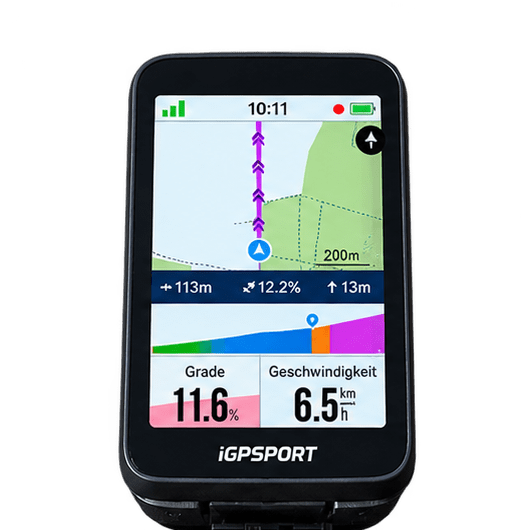
Updated on 10 October 2026: iGPSPORT BiNavi Ultra and BSC200 Pro added. The new entries combine my practical tests with current manufacturer specifications for the BiNavi Ultra and BSC200 Pro. Battery life extrapolations are not fully measured runtimes; firmware and testing conditions may differ. Specifications for the other models come from the previous comparison (September 2026). The new Amazon links open a model search; a current offer is therefore not guaranteed.
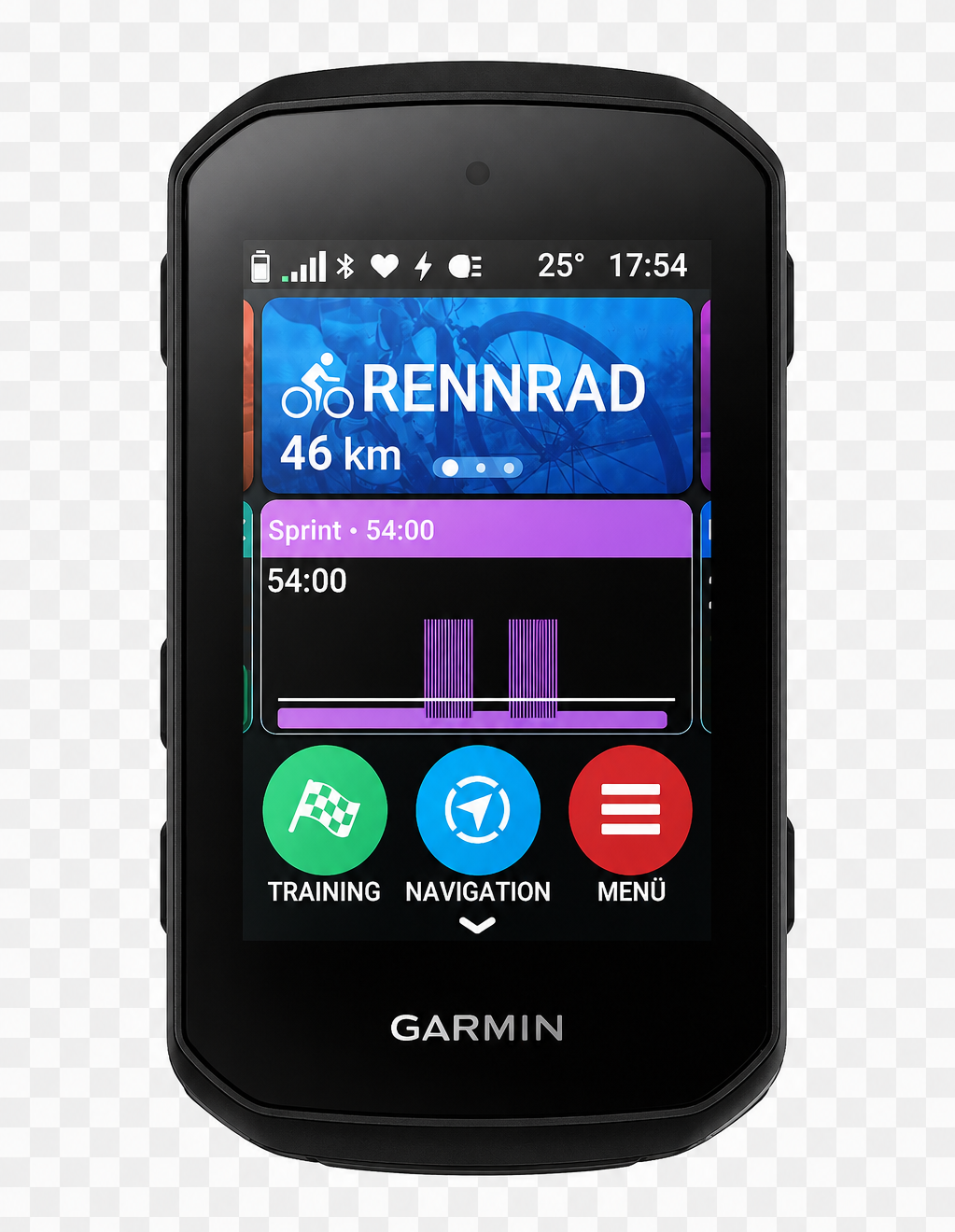
- 2.7" colour touchscreen with 420 × 600 pixels
- Touchscreen plus buttons
- Multi-band GNSS, maps and ClimbPro
- Cycling Coach, Power Guide and workouts
- LiveTrack, incident detection and GroupRide
- Speaker, digital bell and Garmin Pay
- 113 g · up to 12 h intensive use / 36 h power-saving mode
The Garmin Edge 850 is one of the strongest compact GPS bike computers in our bike computer review. Its sharp 2.7-inch display, precise navigation, ClimbPro and comprehensive training features make it particularly appealing to ambitious road cyclists. In the bike navigation comparison, it also scores points for its speaker, digital bell, Garmin Pay and numerous safety features. The downside: during intensive use, battery life is significantly shorter than that of touring models with greater endurance.
- Sharp 2.7-inch touchscreen
- Very comprehensive training and analysis features
- Precise navigation with ClimbPro
- Speaker, bell and Garmin Pay
- LiveTrack, incident detection and GroupRide
- Shorter battery life with intensive use
- The large number of features may overwhelm beginners
- Priced firmly in the premium segment
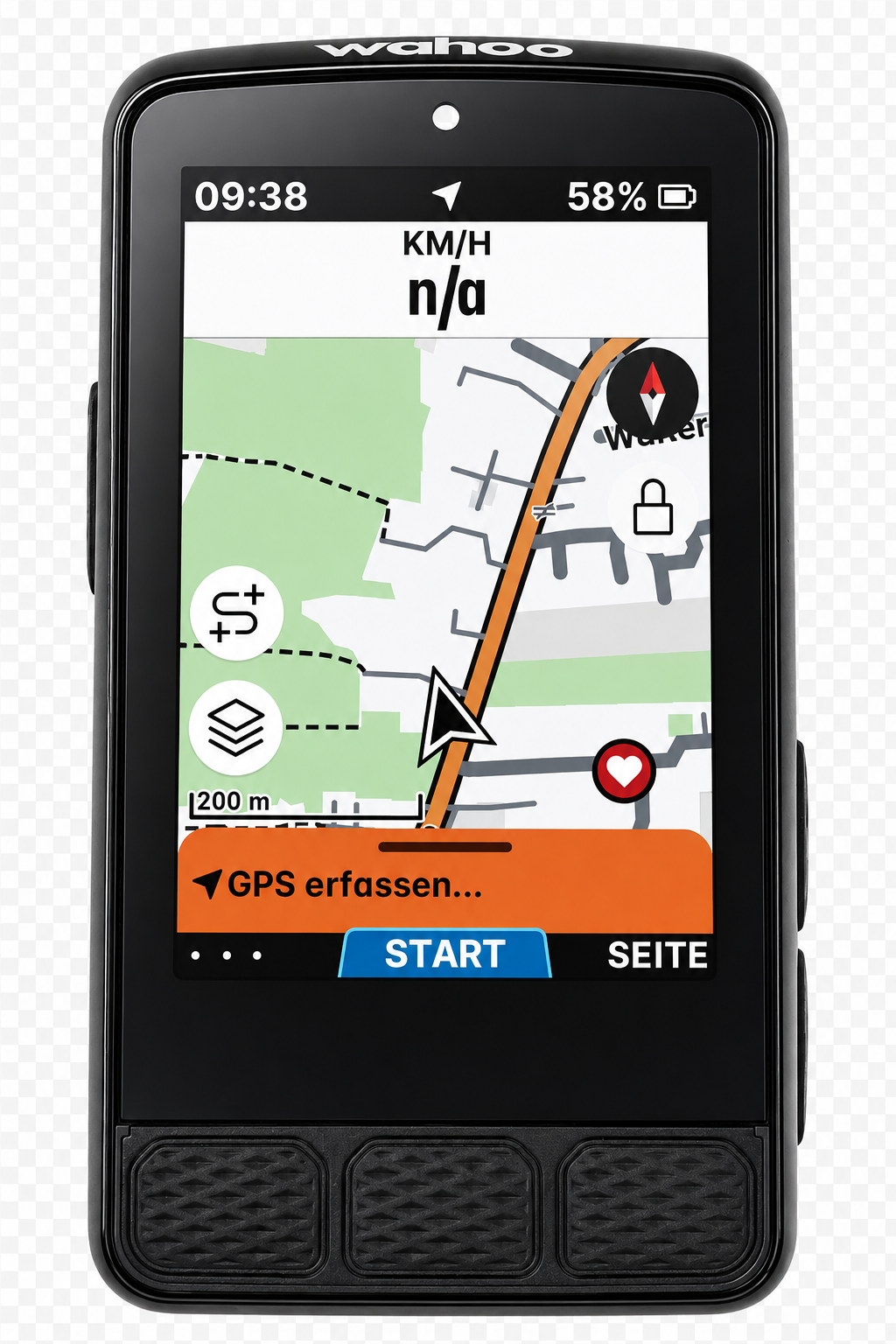
- 2.8" colour touchscreen plus side buttons
- Dual-band GPS (L1 + L5)
- 64 GB storage, Wi-Fi, Bluetooth and ANT+
- Turn-by-turn, rerouting and SUMMIT
- Integrated speaker with voice guidance
- Strava Live Segments and TrainingPeaks
- 109 g · up to 25 hours of battery life
The Wahoo ELEMNT ROAM V3 is a very well-balanced GPS bike computer in this comparison. Its 2.8-inch touchscreen, dual-band GPS and simple Wahoo navigation are pleasantly straightforward in everyday use. For long rides, it offers up to 25 hours of battery life, plus Strava Live Segments, TrainingPeaks, radar and sensor support. Anyone seeking a reliable cycling navigation device with little learning required will find a strong all-rounder here.
- Clear touchscreen with buttons
- Simple navigation and quick rerouting
- Up to 25 hours of battery life
- Speaker with voice guidance
- Broad sensor and platform support
- No integrated wind sensor like the ACE
- Display not ideal in every lighting situation
- Less training analysis than Garmin
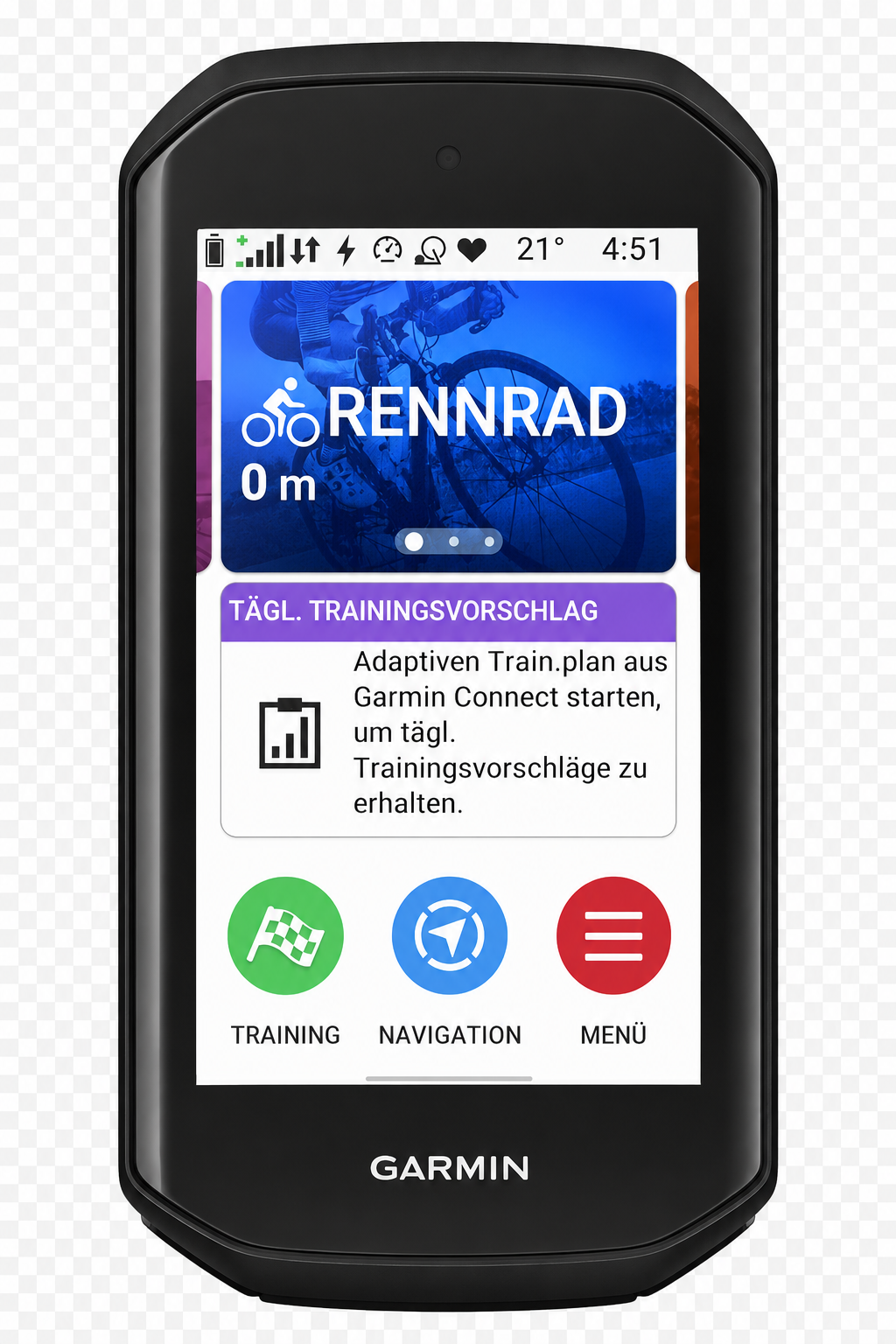
- 3.5" LCD touchscreen with 480 × 800 pixels
- Multi-frequency GNSS and extensive maps
- ClimbPro, Power Guide and Stamina
- LiveTrack, incident detection and GroupRide
- Garmin Pay, speaker and digital bell
- ANT+ / Bluetooth for power meters, radar and Di2
- 161 g · up to 20 h / 60 h in battery saver mode
The Garmin Edge 1050 is a high-end GPS bike computer with a large display, comprehensive navigation and numerous training features. In the bike computer test, maps, ClimbPro, Power Guide, Stamina and deep Garmin Connect integration are particular strengths. Safety features, a speaker, bell and Garmin Pay add to the package. It is among the most versatile devices in the cycling navigation test but is larger and heavier than more compact models.
- Large, bright 3.5-inch touchscreen
- Very extensive navigation and training analysis
- ClimbPro, Power Guide and Stamina
- Many safety features
- Speaker, bell and Garmin Pay
- Relatively heavy at 161 g
- Many menus and features
- Premium price
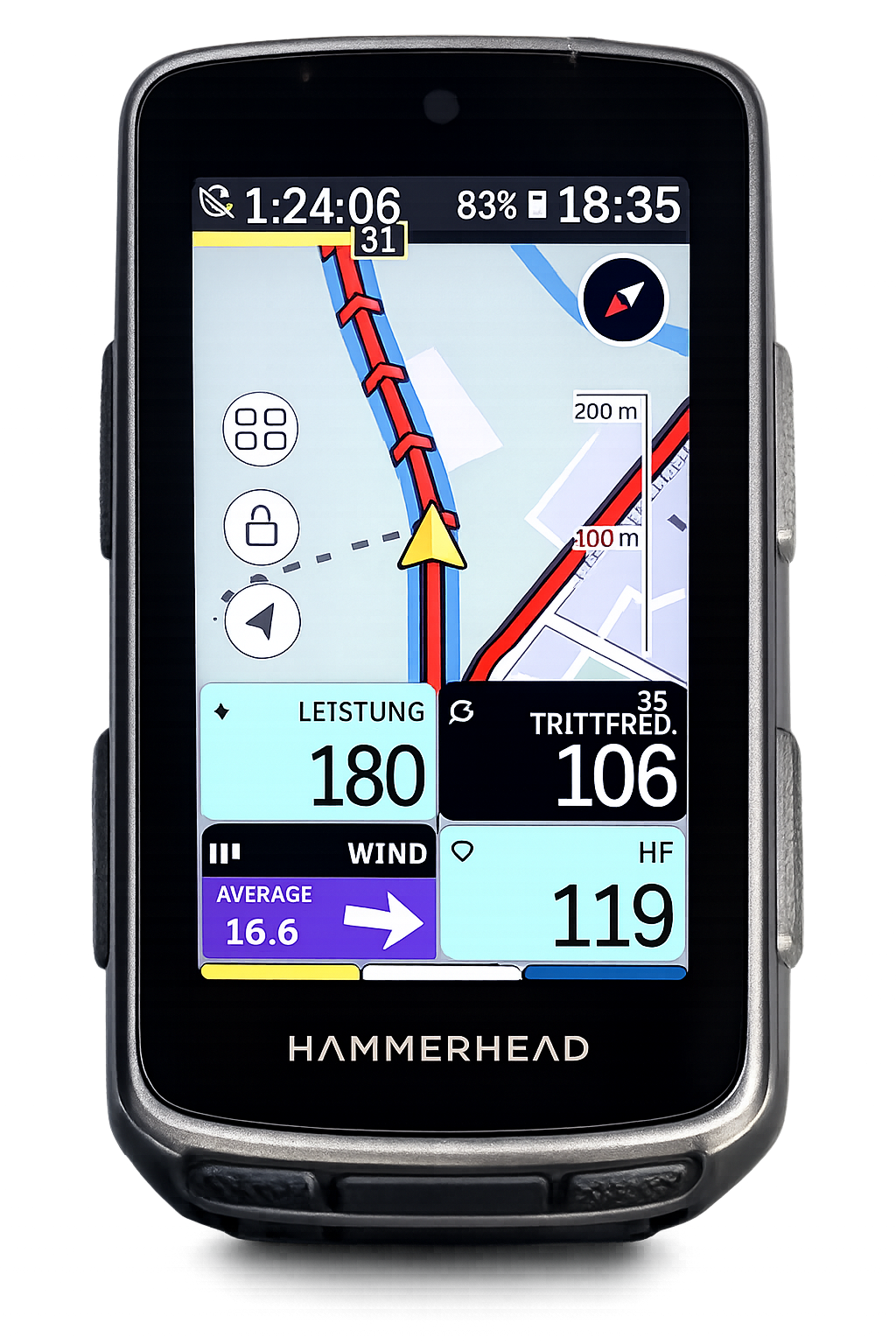
- 3.2" colour touchscreen with 480 × 800 pixels
- Touchscreen plus five physical buttons
- Multi-band GNSS and quick recalculation
- CLIMBER detects climbs without a planned route
- 64 GB storage, ANT+, Bluetooth and Wi-Fi
- Strava Live Segments and strong SRAM AXS integration
- 118 g · 15+ h standard / 30+ h battery saver
The Hammerhead Karoo 3 is a modern GPS bike computer for riders who particularly value the display and navigation. In the bike computer test, its high-resolution presentation, quick map controls and immediate rerouting impress. CLIMBER detects climbs even without an active route, complemented by Strava Live Segments and deep SRAM AXS integration. Its interface feels particularly modern in the cycling navigation comparison, although alternatives offer greater battery endurance.
- Brilliant 3.2-inch touchscreen
- Very intuitive maps and quick rerouting
- CLIMBER without a planned route
- Strava Live Segments
- Strong SRAM AXS integration
- No integrated speaker for voice guidance
- Beeper can sound very loud with radar
- Shorter battery life than long-distance models
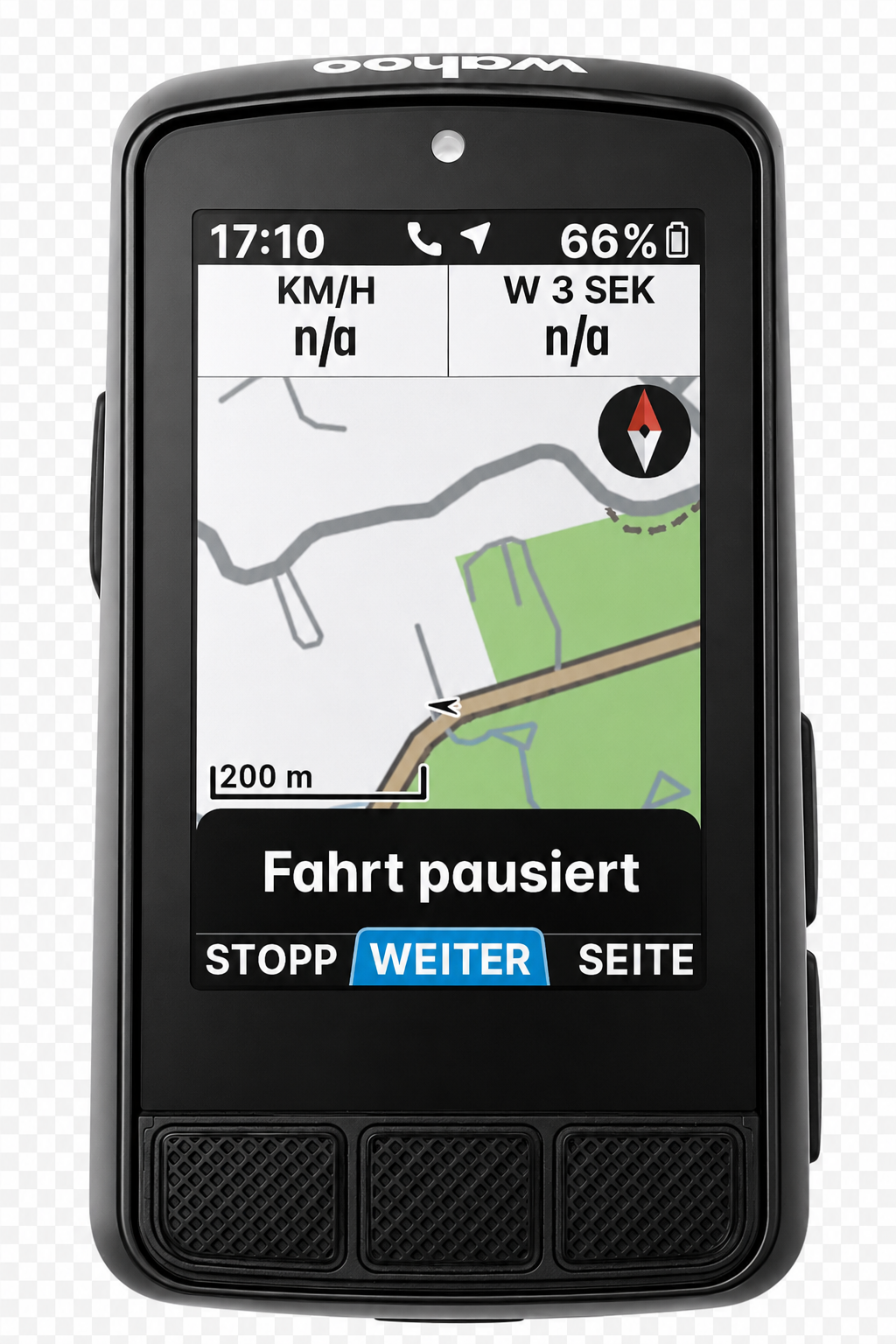
- 2.3" colour display with button controls
- Dual-band GPS (L1 + L5)
- 32 GB storage, Wi-Fi, Bluetooth and ANT+
- Back on Track and SUMMIT climb information
- Strava Live Segments and TrainingPeaks
- IPX7 and USB-C
- Just 84 g · up to 20 hours of battery life
The Wahoo ELEMNT BOLT V3 is the compact choice for road cyclists in this bike computer comparison. Its 2.3-inch colour display is operated entirely with buttons and remains straightforward even in wet conditions. Dual-band GPS, Back on Track, SUMMIT and Strava Live Segments cover navigation and training well. At just 84 grams, with up to 20 hours of battery life, this cycling navigation device is particularly suited to lightweight, uncluttered road bike setups.
- Very light and compact
- Reliable button controls
- Dual-band GPS and good rerouting
- Up to 20 hours of battery life
- Strava Live Segments and many sensors
- No touchscreen
- Small 2.3-inch display
- No speaker or digital bell
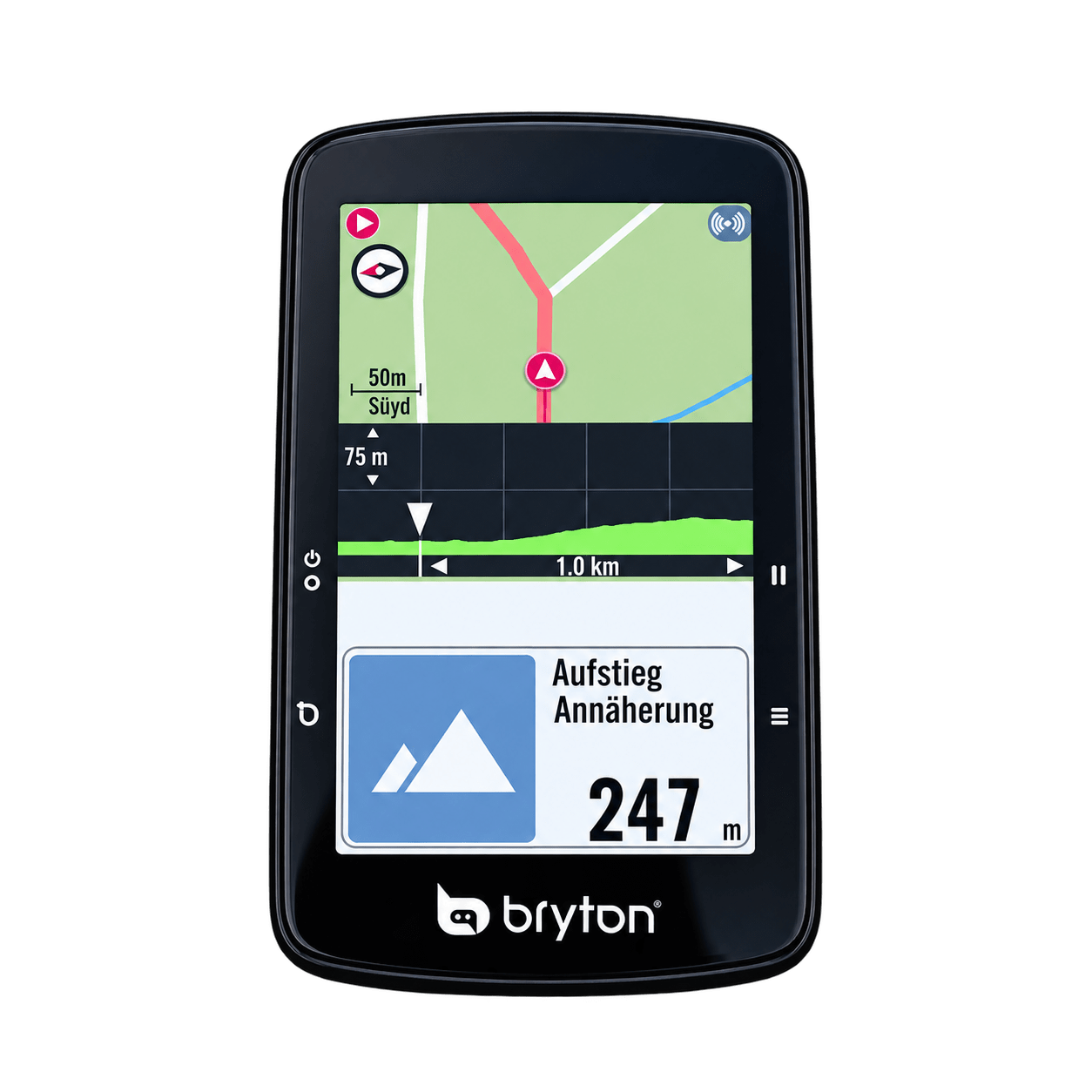
- 3.5" TFT touchscreen
- OSM maps, turn-by-turn guidance and rerouting
- Climb Challenge 2.0
- Strava Live Segments and structured workouts
- ANT+ for power meters, radar, Di2 and smart trainers
- 114 g in the test · Garmin adapter included
- Up to 50 h claimed · approx. 46:40 h extrapolated from testing
In the bike computer test, the Bryton Rider S810 particularly targets touring riders and bikepackers. Its 3.5-inch display is easy to read, maps remain clear and operation is smooth. Sensors, Strava Live Segments and workouts worked reliably in the test. Battery life is the major selling point: my short measurement extrapolated to around 46 hours and 40 minutes. There is no speaker for voice guidance.
- Very long battery life
- Readable, clearly presented maps
- Smooth operation
- Strava Live Segments and well-implemented workouts
- Trouble-free sensor pairing
- Only two additional fields on the map page
- No speaker for voice guidance
- Map and menu design sometimes old-fashioned
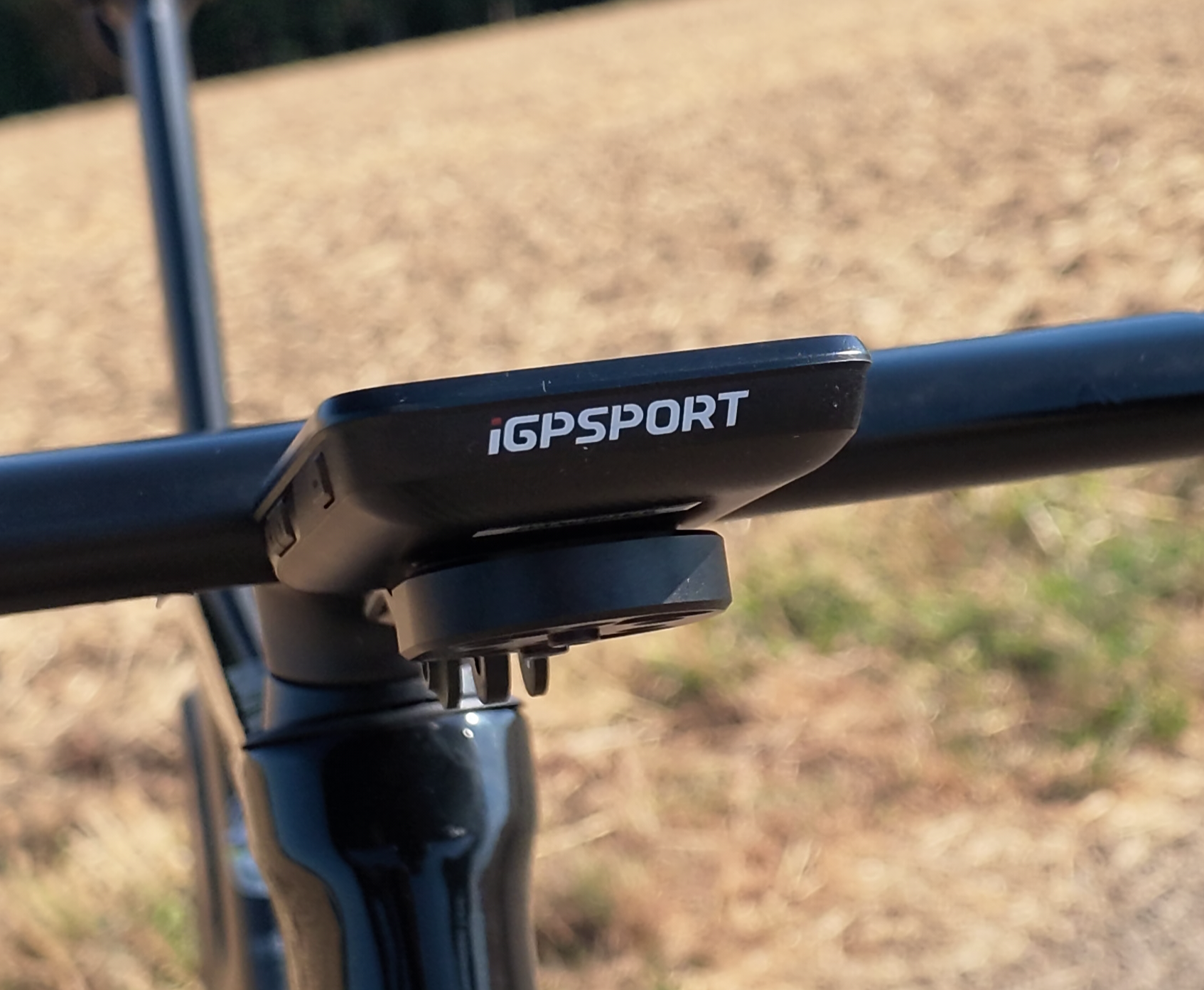
- 3.5" transflective touchscreen with 320 × 480 pixels
- Touchscreen plus six buttons
- Dual-band GNSS and offline maps
- iClimb 3.0 and extensive training metrics
- ANT+ / Bluetooth for power meters, radar and Di2
- 103 g · IPX7 · USB-C
- >35 h manufacturer · approximately 24:10 h extrapolated from testing
The iGPSPORT BiNavi is a versatile GPS bike computer with strong value for money. In the bike computer test, its 3.5-inch display in direct sunlight, touch controls plus six buttons, offline maps and simple sensor integration impress. iClimb 3.0, training analysis and around 24 hours of extrapolated runtime at full brightness are further strengths. Drawbacks include partial shade, occasionally slow rerouting and the absence of Strava Live Segments.
- Very good value for money
- Touchscreen plus six buttons
- Good readability in direct sunlight
- Strong sensor and radar support
- iClimb 3.0 and good training features
- Inconsistent display in partial shade
- No Strava Live Segments
- Route planning mainly through the app
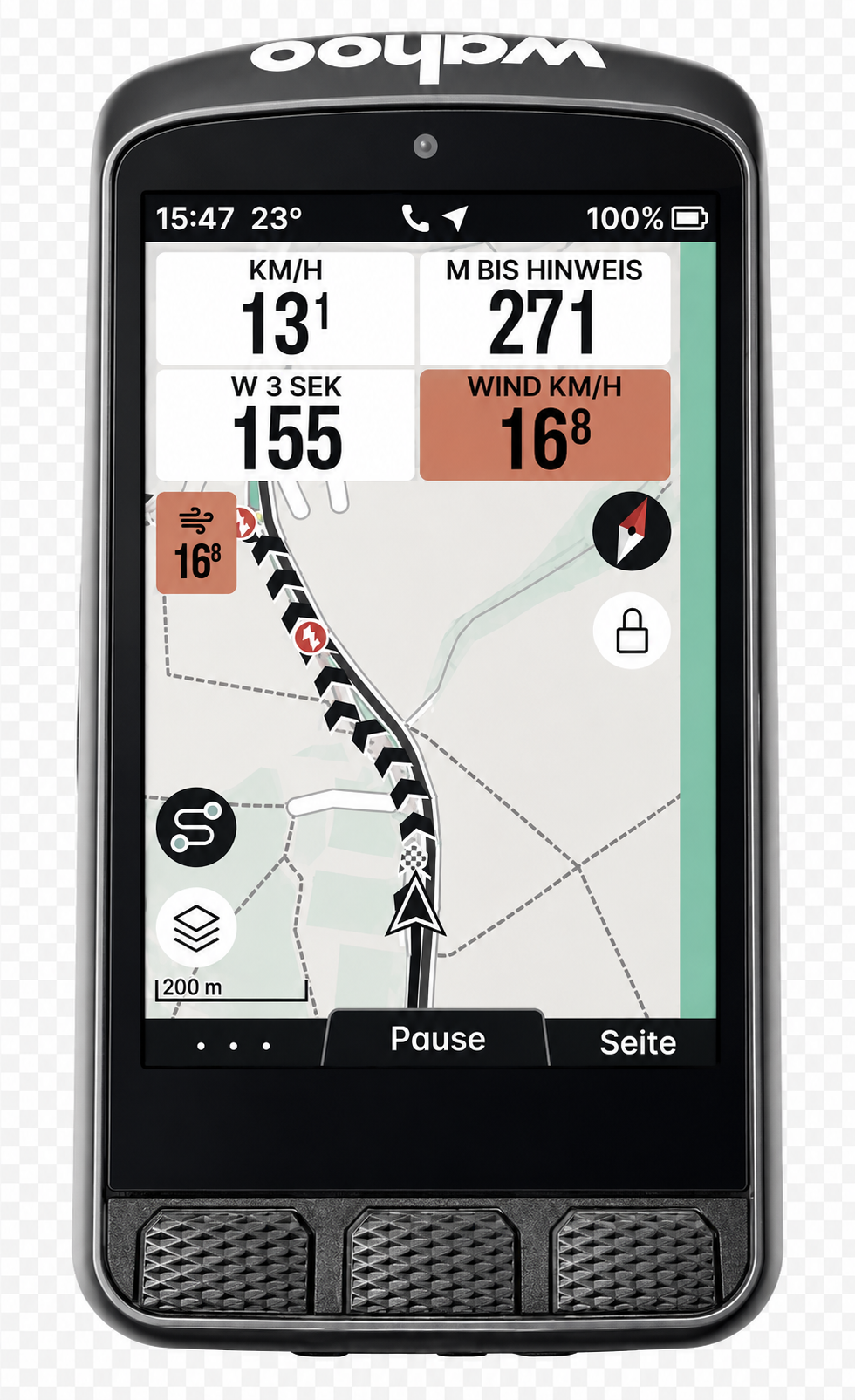
- 3.8" colour touchscreen with 480 × 720 pixels
- Touchscreen plus buttons
- Dual-band GNSS and worldwide maps
- Integrated wind sensor
- SUMMIT, Strava Live Segments and TrainingPeaks
- Speaker with voice guidance and bell
- 208 g · up to 30 hours of battery life
The Wahoo ELEMNT ACE is a large GPS bike computer with a 3.8-inch touchscreen and integrated wind sensor. In the bike computer test, it scores with clear navigation, SUMMIT climb information, Strava Live Segments and up to 30 hours of battery life. Voice guidance and the digital bell come directly from the speaker. Its display is a clear highlight in the cycling navigation comparison, but its size and 208 grams make the ACE significantly bulkier than the ROAM or BOLT.
- Very large 3.8-inch touchscreen
- Integrated wind sensor
- Up to 30 hours of battery life
- Voice guidance and digital bell
- Strong navigation and sensor support
- Very heavy at 208 g
- Very large case
- Less suitable for compact aero cockpits
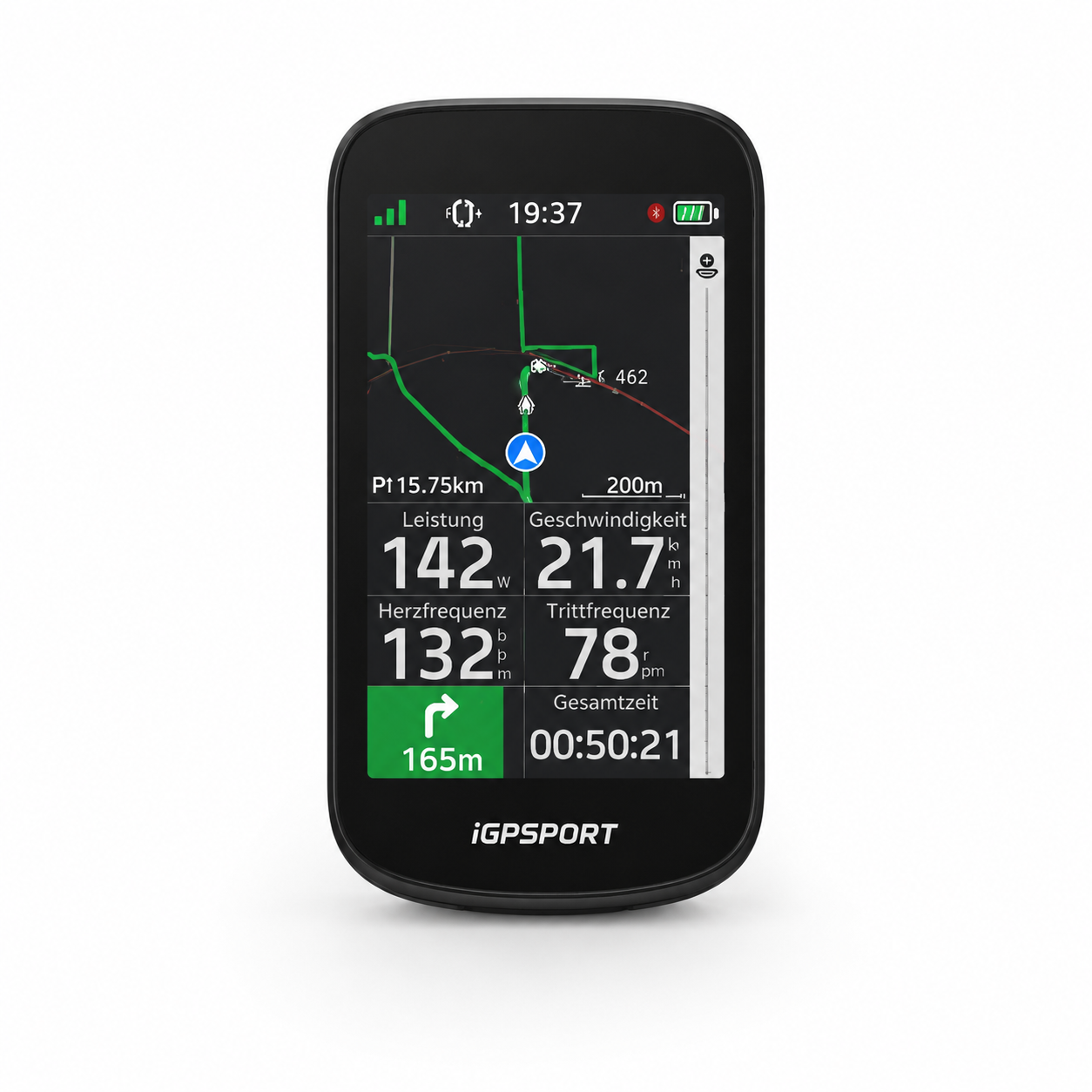
- 3.3" colour touchscreen with 320 × 480 pixels
- Dual-band GNSS and offline maps
- Voice guidance and electronic bell
- iClimb 2.0 and structured workouts
- ANT+ / Bluetooth for power meters, radar and Di2
- Garmin-compatible quarter-turn mount
- 106 g in the test · approx. 13:03 h extrapolated from testing
The iGPSPORT BSC500 is a strong budget GPS bike computer in this test. Its high-contrast 3.3-inch display, reliable dual-band GNSS and broad sensor support for power meters, radar and Shimano Di2 are particularly convincing. Offline maps, voice guidance and six data fields on the map page make it interesting in the cycling navigation comparison. Weaknesses include occasionally questionable rerouting, no Strava Live Segments and limited weather and radar information.
- Very high-contrast touchscreen
- Strong value for money
- Reliable GPS and offline maps
- Voice guidance and broad sensor support
- Garmin-compatible mount
- Rerouting sometimes takes large detours
- No Strava Live Segments
- Limited weather and radar information
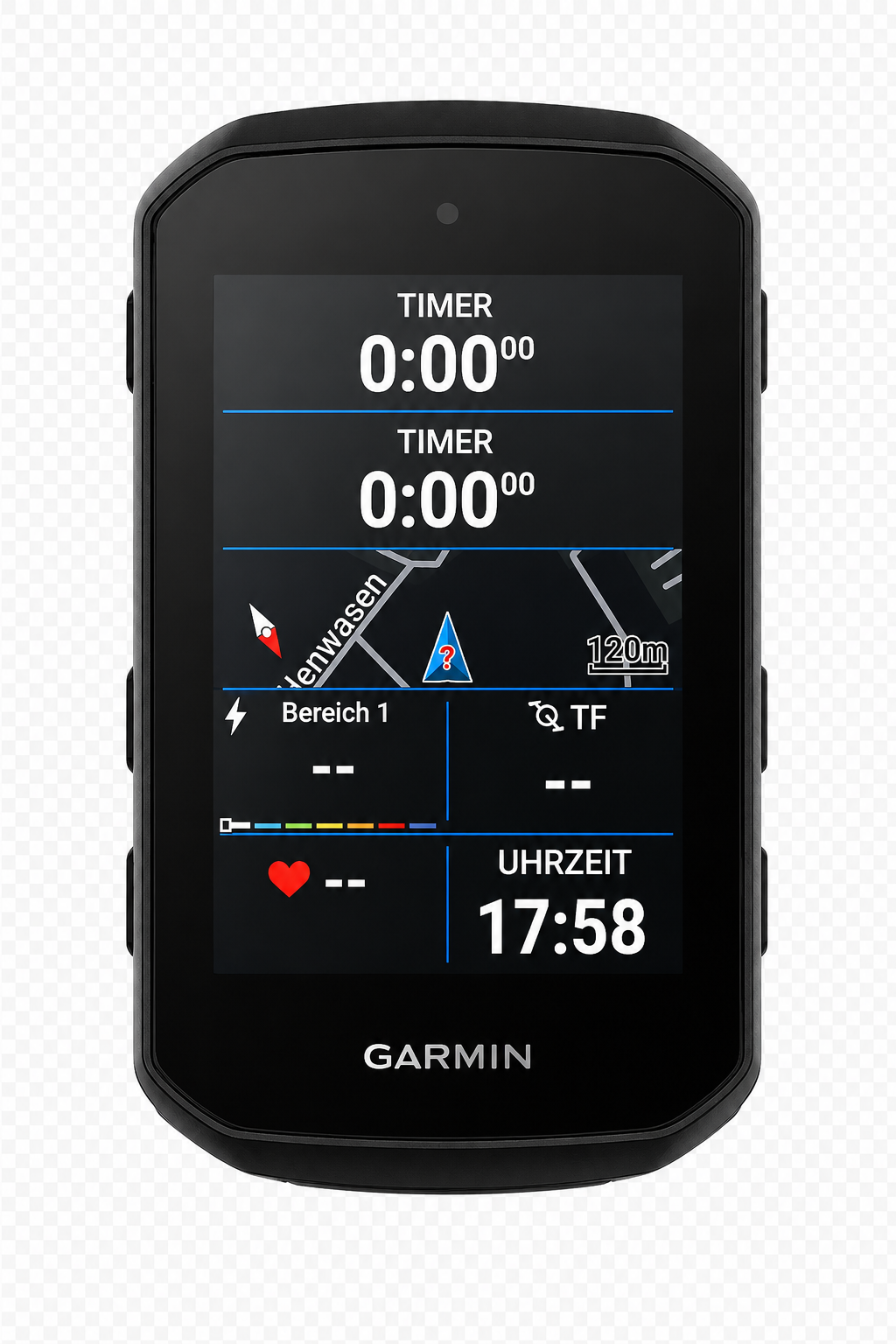
- 2.7" colour display with 420 × 600 pixels
- Operated entirely with buttons
- Multi-band GNSS, maps and ClimbPro
- Cycling Coach, Power Guide and workouts
- ANT+ / Bluetooth for power meters, radar and Di2
- 110 g · IPX7
- Up to 12 h intensive use / 36 h battery saver mode
The Garmin Edge 550 is a compact GPS bike computer for riders who deliberately prefer no touchscreen. In the bike computer comparison, it offers many training and navigation features from the current Garmin generation: ClimbPro, Cycling Coach, Power Guide, radar and sensor support, and extensive maps. Its 2.7-inch display is operated entirely with buttons. Anyone wanting a speaker or digital bell is better served by the Edge 850.
- Compact and lightweight
- Full button control
- Extensive Garmin training features
- ClimbPro and strong navigation
- Broad sensor and radar support
- No touchscreen
- No speaker or digital bell
- Many features despite the smaller control layout
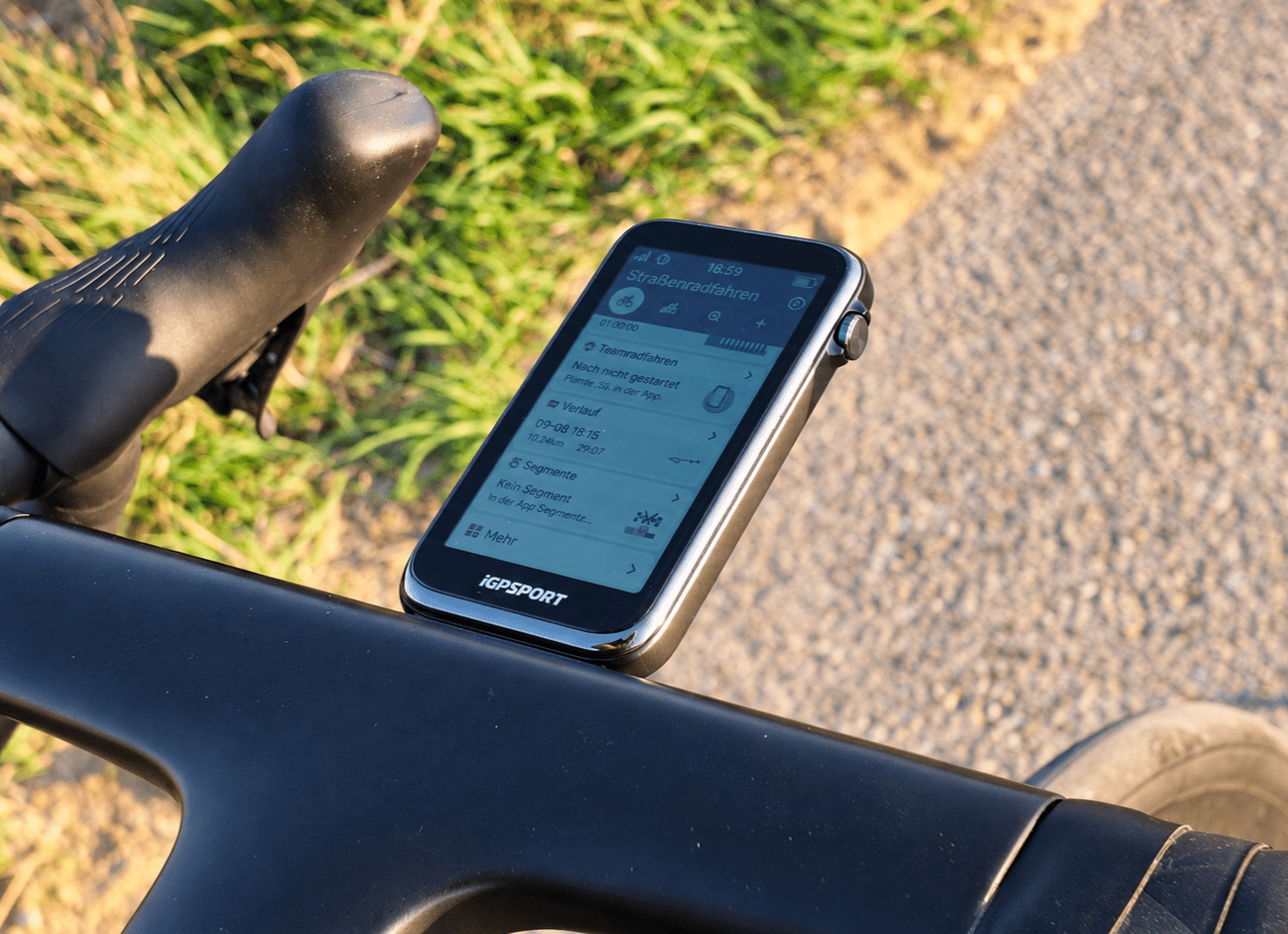
- 3.7″ transflective touchscreen · 480 × 854 pixels
- Touchscreen, metal buttons and a side-mounted rotary dial
- Offline maps, dual-band GNSS and rerouting
- iClimb 4.0 detects climbs without an active route
- Voice guidance and a digital bell directly on the device
- Heart rate, power meter, Di2 and radar paired in the test
- 122 g in the test · approx. 43:20 h extrapolated battery life
The new iGPSPORT BiNavi Ultra joins the bike computer comparison as a premium navigation device with a large display. Compared with the BiNavi, I like the higher resolution, richer colours and additional rotary dial controls. Voice guidance, clear turn instructions and iClimb 4.0 worked well in practical testing. Heart rate sensors, power meters, Shimano Di2 and radar also paired without difficulty. Route collections and “Resume Later” are interesting additions for touring riders. My test device showed limitations in readability in partial shade. Strava Live Segments were not yet available in my test firmware; the manufacturer now lists them as a feature. The approximately 43 hours and 20 minutes of battery life is a linear extrapolation from 78 minutes and three percentage points of consumption, not a complete runtime test.
- Large display with higher resolution than the BiNavi
- Rotary dial and metal buttons complement the touchscreen
- Good voice guidance and automatic climb detection
- Trouble-free sensor, Di2 and radar connections
- Promising initial battery impression
- Display harder to read in partial shade
- Radar and navigation volume cannot be adjusted separately
- Strava Live Segments not yet available in the test firmware
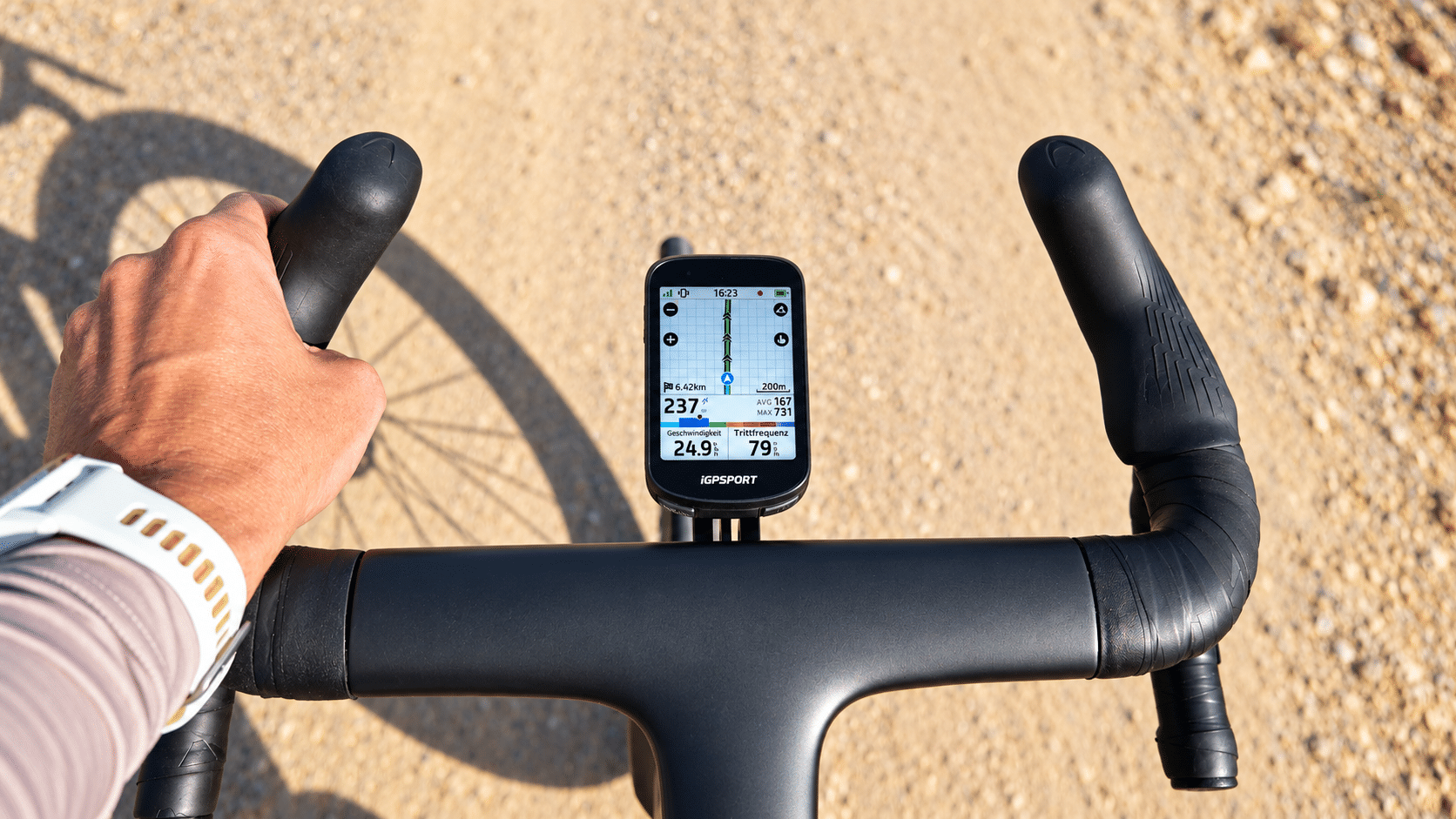
- Bright 3″ IPS touchscreen · 240 × 320 pixels
- Clear route display with timely turn instructions
- No road map or complete rerouting in the test
- 107 data fields · up to ten values per page
- Structured workouts with target ranges and interval times
- Bluetooth sensors · SR Mini paired · no ANT+ / Di2
- 95 g claimed · approx. 16:35 h extrapolated battery life
The new iGPSPORT BSC200 Pro is particularly interesting for beginners and budget-conscious road cyclists in this bike computer comparison. Its bright 3-inch touchscreen impressed me with readable data fields and straightforward operation. Turn instructions arrived in good time on simple routes, although there is no actual road map. When I left the route, my test device showed directional arrows instead of a recalculated route. Structured workouts and connections to heart rate sensors, Garmin Rally and the iGPSPORT SR Mini worked very well. Anyone needing ANT+, Shimano Di2 or another radar should note the limitations: I could not pair the Garmin Varia RCT715 in my test. At a constant 100 percent display brightness, the measurement extrapolated to around 16 hours and 35 minutes of battery life. This, too, is a guide based on a partial test, not a fully measured runtime.
- A very affordable introduction to GPS bike computers
- Bright, high-contrast touchscreen
- Easy operation and up to ten data fields per page
- Well-presented structured workouts
- Good initial battery impression at full brightness
- No actual map display
- Rerouting limited to directional arrows in the test
- No ANT+ or Shimano Di2 support
- Limited radar compatibility; Varia RCT715 not paired
Why a bike computer is genuinely worthwhile
I genuinely want every cyclist to use a suitable bike computer, whether for everyday riding, touring or training. Our bike computer tests repeatedly show just how large the difference is between basic speedometers and modern GPS bike computers. Anyone who rides regularly should give the subject serious consideration. Here are the main reasons why cycling navigation should be part of every ride:
- Better orientation: whether in everyday use or on long rides, a good road cycling or bicycle navigation device helps you keep track of your route and avoid detours. Particularly in unfamiliar terrain, a precise GPS computer provides reassurance and efficiency.
- Smart training data: modern devices in our bike computer comparison provide not only navigation data but also power, heart rate, cadence and more, perfect for anyone wanting targeted training.
- Greater safety: reliable navigation makes riding more relaxed, particularly in complex surroundings or bad weather. Our cycling navigation test shows that good devices noticeably improve riding comfort.
- Ready for the future: many models in the cycling navigation comparison offer regular software updates and connectivity with sensors and platforms such as Strava or Komoot, providing real value for ambitious cyclists.
A modern bike computer may look small, but it can make a major improvement to your rides. Once you have ridden with a proper road cycling navigation device, you will not want to go without it.
The best bike computers compared
Which bike computer offers the perfect combination of navigation, training data and ease of use? In our comprehensive bike computer test, we have thoroughly analysed the latest and most popular models, from compact entry-level devices to powerful road cycling navigation devices for professionals. Whether you are an ambitious road cyclist or simply want smarter route planning, here you will find all the information you need to buy the right bike computer.
A good cycling navigation test quickly reveals the differences in features, accuracy and ease of use. Particularly on long rides, training sessions or unfamiliar terrain, choosing the right device can be crucial for safety, efficiency and motivation. That is why we have examined the best GPS bike computers, analysed their strengths and weaknesses and compared performance across different categories.
Below this introduction, a detailed bike computer comparison table shows at a glance which model ideally suits your needs in 2026, including features, ratings and value for money. Whether you want a robust cycling navigation device with long battery life or a lightweight road cycling GPS with innovative training features, our cycling navigation comparison helps you start the next season well prepared.
Bike computer reviews: find the perfect companion for your rides
A reliable bike computer is essential for every cyclist, whether a road rider, gravel enthusiast or mountain biker. It supports navigation, training management and performance improvement. Our bike computer test explains what matters when buying, which features are genuinely important and which models stand out in the comparison.
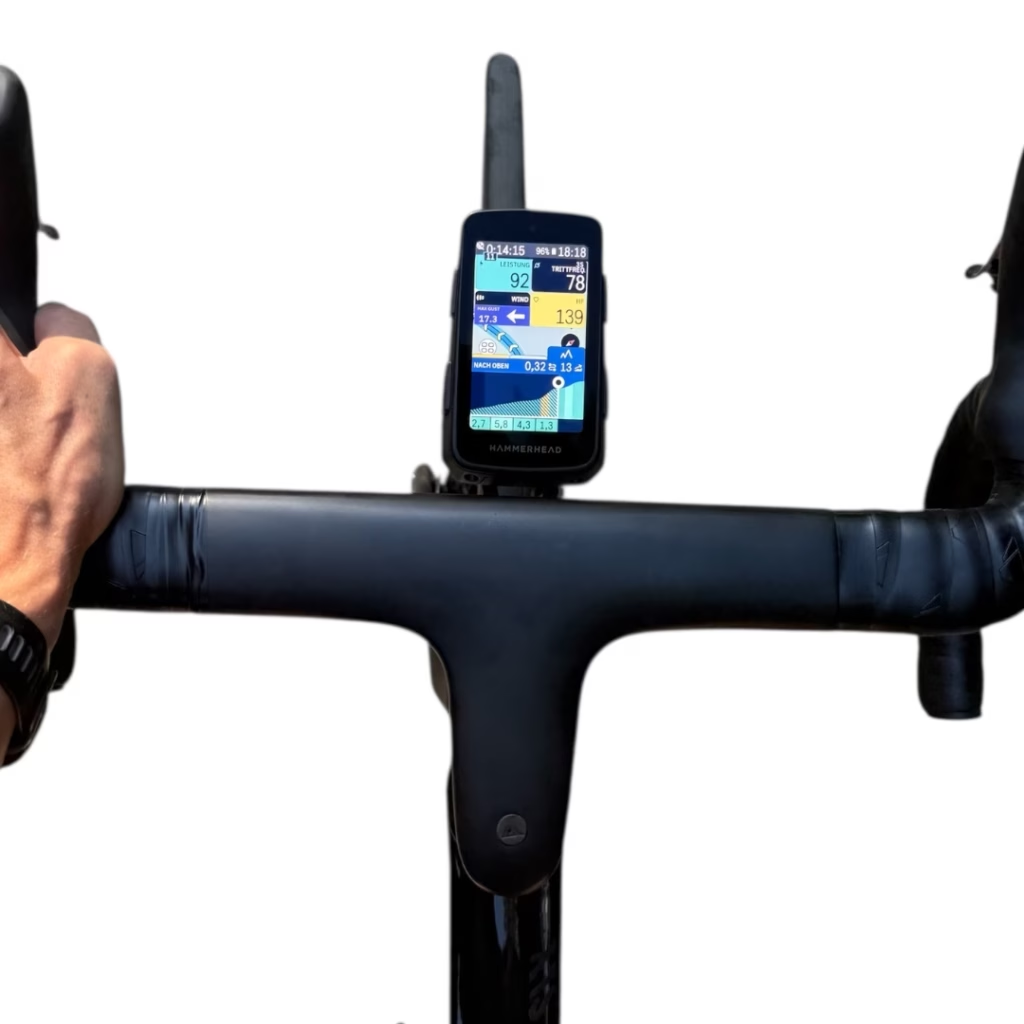
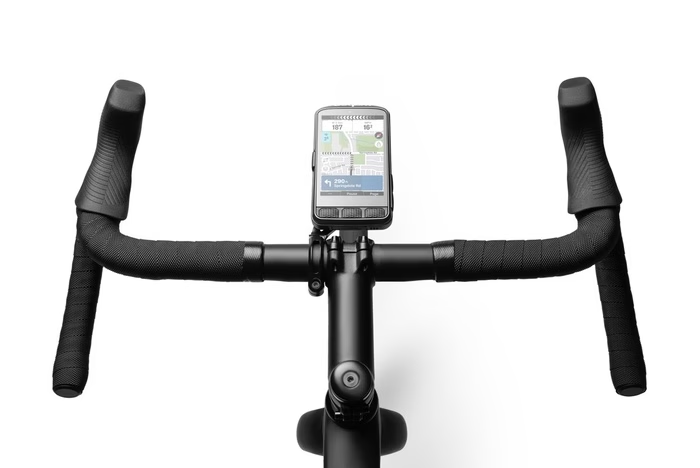
To help you find the ideal device for your rides and training in our cycling navigation test, we have summarised the key buying criteria for bike computers and GPS navigation devices:
- Precise GPS navigation
Accurate positioning is essential. Look for dual-band GPS (L1 + L5) or multi-frequency GNSS (GPS, GLONASS, Galileo) for precise navigation even in challenging surroundings such as valleys or wooded routes. Smart navigation with turn-by-turn instructions and features such as Back on Track helps you stay on course at all times. - Display & ease of use
A readable display, ideally with high resolution and an anti-reflective surface, is especially important in direct sunlight. Touchscreens or physical buttons should be intuitive and usable with gloves. Multitouch features such as zooming and swiping improve usability while riding. - Storage & maps
Generous internal storage of at least 32 GB allows extensive maps and routes to be saved. Wi-Fi or USB updates keep maps current. Supported map providers such as OpenStreetMap, Google Maps or specialist cycling maps make planning and navigation easier. - Battery life
Long battery life of at least 20 hours matters for extended or multi-day rides. Battery saver modes extend use further. USB-C fast charging is practical for flexible use on the move. - Connectivity & compatibility
The navigation device should connect easily to sensors for heart rate, cadence and power, smart trainers, lighting systems and apps such as Strava, Komoot or TrainingPeaks. Bluetooth, ANT+ and Wi-Fi are important standards here. - Safety features
Features such as live tracking, incident detection and emergency notifications increase safety while riding. Group tracking and sharing features let you share your location with friends or family. - Additional features & ease of use
Practical extras such as music controls, smartphone notifications, an integrated bike bell or action camera controls (GoPro) make the navigation device a multifunctional companion. A clear dashboard with individual training profiles completes the package.
These criteria are guaranteed to help you find the best GPS device in the cycling navigation test for precise navigation, comprehensive training features and optimum connectivity, whether for a road bike, mountain bike, gravel bike or touring bike. This keeps you safe, efficient and comfortable on every route.
Modern bike computers offer many extra features beyond navigation, including:
- Multi-sensor compatibility for heart rate, power, cadence and more
- Incident detection and emergency notifications for greater safety while riding
- Live tracking and group tracking to share your location in real time
- Music and device controls directly on the device, for example Spotify, GoPro or lighting
- Integration with training platforms such as Strava, Komoot, TrainingPeaks or Wahoo SYSTM
- Voice prompts and audible turn-by-turn navigation for hands-free riding
- Weather warnings and intelligent route adjustments according to conditions
The cycling navigation test shows that these features can significantly improve comfort and safety. Their relevance varies, however, according to intended use and riding style.
Conclusion
A good bike computer is far more than a technical accessory. It combines a navigation expert, training coach and safety assistant. Our bike computer test shows that there is a suitable model for every type of rider and use, provided you understand the key criteria.
Pay particular attention to:
- Precise, reliable navigation
- Long battery life for extended rides
- Intuitive operation and a readable display
- Comprehensive training features and sensor compatibility
- Smart safety features such as incident detection and live tracking
- Your personal riding style and intended use
Use our bike computer test to find the model that fits you perfectly, for greater safety, better performance and maximum enjoyment on every ride.
Tip: You will regularly find current comparisons, test winners and new releases on our site, your destination for comprehensive bike computer reviews and everything related to cycling.
0 Comments