

The Best Indoor Trainers Compared
More and more cyclists turn to an indoor trainer to keep riding through cold weather or rain. Our comprehensive indoor trainer comparison explains the different models, how they differ and what to consider when buying. Whether you are a beginner or an ambitious recreational cyclist, the right trainer helps you structure your training effectively. An indoor trainer lets you train regularly regardless of the weather, season or training goal.
| Feature | |||||||||||||
|---|---|---|---|---|---|---|---|---|---|---|---|---|---|
| Ride Feel & Performance | |||||||||||||
| Realism & Ride Feel | Realistic | Very realistic: direct drive, gradients up to 15 % | Very realistic (smart bike) | Integrated Motion Pods allow forward, backward and sideways movement (manufacturer specification) | Very realistic | Very realistic | Very realistic | Realistic | Realistic | Realistic | Realistic | OK | Very realistic |
| Power / Resistance | 1800 W | 1500 W | 1800 W | 2,200 W (manufacturer specification) | 2200 W | 2200 W | 2200 W | 600 W | 1900 W | 1500 W | 2000 W | 1500 W | 3 manual magnetic resistance levels |
| Gradient Simulation | 16 % | 15% | 16 % | 20 % | 25% (test winner) | 20% | 20% | 6% | 15% | 10% | 18% | 12% | None |
| Noise Level | Quiet | Very quiet: approx. 56 dB at 25 km/h | Very quiet | Quiet operation according to Garmin; not yet measured by us | Very quiet (test winner) | Quiet | Quiet | Quiet | Quiet | Quiet | Quiet | Quiet | Moderate |
| Stability | High | High | High | Not yet tested by us in practice | High | High | High | Moderate | High | High | High | Moderate | Floating system and parabolic rollers; balancing required |
| Apps & Connectivity | |||||||||||||
| Virtual Cycling | Yes | Yes (Zwift Ready & other apps) | Yes, Zwift and ROUVY; a compatible app is required for virtual shifting | Yes | Yes | Yes | Yes | Yes | Yes | Yes | Yes | Yes | Optional: My E-Training with Misuro B+; other apps with a power meter. Resistance remains manual |
| Connection Types | ANT+, Bluetooth, WiFi | Bluetooth (FTMS), ANT+, Zwift protocol | Bluetooth, ANT+, WiFi | ANT+, Bluetooth, WiFi; BLE bridging | ANT+, Bluetooth | ANT+, Bluetooth, WiFi, Direct Connect | ANT+, Bluetooth, WiFi, Direct Connect | Bluetooth (FTMS) | ANT+, Bluetooth | ANT+, Bluetooth | Bluetooth & ANT+ | ANT+, Bluetooth | Optional through Misuro B+ or a compatible power meter (ANT+/Bluetooth) |
| Recorded Data | Speed, distance, power, cadence | Speed, distance, power, cadence | Speed, distance, power, cadence | Power (±1 % measurement accuracy according to Garmin) and cadence | Speed, distance, power, cadence | Speed, distance, power, cadence | Speed, distance, power, cadence | Speed, distance, power; cadence through an additional sensor | Speed, distance, power, cadence | Speed, power, distance, cadence | Speed, distance, power, cadence | Speed, distance, power; cadence only with an additional sensor | With Misuro B+: speed/cadence and estimated power in My E-Training; otherwise an external power meter |
| Virtual Shifting Available | Yes | Yes, through Zwift Click (virtual shifting in Zwift) | Yes (handlebar controllers, virtual gears) | Yes, the version with Zwift Cog & Click works in Zwift and ROUVY | Yes | Yes | Yes | Yes, through Zwift Click (virtual shifting) | No | No | No | No | No |
| Compatibility & Hardware | |||||||||||||
| Compatibility | 130/135 mm QR, 12x142/148 thru-axles | QR 130/135 mm, thru-axle 12x142/148 mm; MTB 26"–29", road bike 700C | Smart bike frame, no rear wheel needed (rider heights 152–198 cm) | 130/135 mm quick-release, 12×142/148 mm thru-axle; adapters included | 130/135 mm QR, 12x142/148 thru-axles | 130/135 mm QR, 12x142/148 thru-axles | 130/135 mm QR, 12x142/148 thru-axles | Zwift Cog on an HG freehub, direct drive; compatible with common road/gravel frames | 130/135 mm QR, 12x142/148 thru-axles | 130 mm QR, 135 mm QR; adapters available for other widths | 130/135 mm QR, 12x142/148 thru-axles; compatible with 24", 26", 27.5", 29", 650C & 700C | 130/135 mm QR, 12x142 thru-axles (adapter required) | Wheelbase 944–1144 mm; front and rear wheels remain fitted |
| Mounting Method / Trainer Type | Direct drive – bike secured in place | Direct drive – bike secured in place | Direct-drive smart bike (bike integrated) | Direct drive; belt drive with electromagnetic brake | Direct drive – bike secured in place | Direct drive – bike secured in place | Direct drive – bike secured in place | Direct drive – bike secured in place | Direct drive – bike secured in place | Direct drive – bike secured in place | Direct drive – bike secured in place | Wheel-on (rear wheel remains fitted) | Rollers (front and rear wheels in use) |
| Cassette Compatibility | Depending on the version: no cassette, a Shimano-compatible 8–12-speed cassette, or Zwift Cog & Click; check the required freehub | Zwift Cog pre-installed (Zwift Ready): a Zwift subscription is required, with a 2-month Zwift voucher included. The Zwift Cog can be removed and replaced with a cassette: Shimano 8–12-speed, SRAM 8–11-speed, or SRAM XDR 12-speed with a separate freehub body. This also lets you use the trainer independently of Zwift with other apps. | KICKR CORE 2 with integrated Zwift Cog V2 – no additional cassette needed | 11-speed cassette pre-installed, or a version with Zwift Cog & Click; check the correct cassette or freehub for other drivetrains | Shimano/SRAM 8–11-speed (HG); Campagnolo 9–12-speed with optional freehub body; SRAM XD/XDR and Shimano Micro Spline optional | Shimano/SRAM 8–12-speed (HG); 11-speed cassette (11–28 teeth) pre-installed; SRAM XD/XDR optional with adapter | Shimano/SRAM 8–12-speed (HG); 11-speed cassette pre-installed; SRAM XD/XDR optional with adapter | Zwift Cog on an HG freehub: Shimano & SRAM 8–12-speed; SRAM XDR with optional freehub body | Shimano 9–12-speed; SRAM 9–12-speed (HG); Campagnolo 9–12-speed with optional freehub body; SRAM XD/XDR and Shimano Micro Spline optional | Shimano/SRAM 8–11-speed (HG); cassette not included; Campagnolo only with optional freehub body | Compatible with Shimano 8–12-speed, SRAM 8–11-speed and SRAM XDR 12-speed (XDR adapter required). | Compatible with the existing rear wheel and its cassette; no specific restriction | Compatible with the existing rear wheel and its cassette; no specific restriction |
| Compatible Bike Types & Wheel Sizes | Road bike, gravel, MTB; wheel sizes: 24", 26", 650b, 650c, 700c, 28", 29" | Road bike, gravel, MTB; wheel sizes: 26"–29", 700C | Smart bike – no separate bike needed; rider heights 152–198 cm | Road bike, gravel, MTB, triathlon and time trial bikes; check frame and axle compatibility | Road bike, gravel, MTB; wheel sizes: 26", 27.5", 29" | Road bike, gravel, MTB; wheel sizes: 24", 26", 650b, 650c, 700c, 28", 29" | Road bike, gravel, MTB; wheel sizes: 24", 26", 650b, 650c, 700c, 28", 29" | Road bike & gravel; Zwift Cog for 8–12-speed drivetrains; suitable for common wheel sizes | 26", 27.5", 28", 29", 700c | Road bike, gravel, MTB; wheel sizes: 26", 27.5", 28", 29" | 20/24/26/27.5/29 inches, 700C | Road bike, gravel, MTB; wheel sizes: 24", 26", 650b, 650c, 700c, 28" 29" | Road bike, gravel, MTB, city bike; wheelbase 944–1144 mm |
| Weight and Dimensions | 19.7 kg; 59.7 × 52 × 47 cm | 13.6 kg, 600 x 500 x 460 mm | 35.4 kg, 136 x 58 cm footprint | 24.7 kg; 62.9 × 77.9 × 50.2 cm | 21.5 kg, 575x750x550 mm | 22 kg, 50.8x71.1x43.2 cm | Approx. 23 kg, dimensions similar to V6 | 10.5 kg, 600 x 490 x 450 mm | 14.5 kg, 560 x 760 x 495 mm | 22.8 kg, 670x642x460 mm | Approx. 16 kg | 17 kg, 73.7x58.4x48.3 cm | 11.5 kg; open 140 × 52 × 16 cm; folded 52 × 45 × 30 cm |
| Offer | Check availability on Amazon* | Check availability on Amazon* | Check availability on Amazon* | Check Amazon* | Check availability on Amazon* | Check availability on Amazon* | View Offer* | Check availability on Amazon* | Check Availability on Amazon* | Check availability on Amazon* | View Offer* | View Offer* | View Offer* |




* Affiliate link; the price you pay stays the same.
New to the Comparison: Garmin Tacx Nēra
Introduced in October 2026, the Garmin Tacx Nēra adds a direct-drive trainer with integrated Motion Pods to our comparison. These allow forward, backward and sideways movement. Garmin specifies resistance of up to 2,200 watts, a 20 % gradient and measurement accuracy of ±1 % for power. Cadence is also recorded. WiFi, Bluetooth and ANT+ are integrated, and the manufacturer states that calibration is not required.
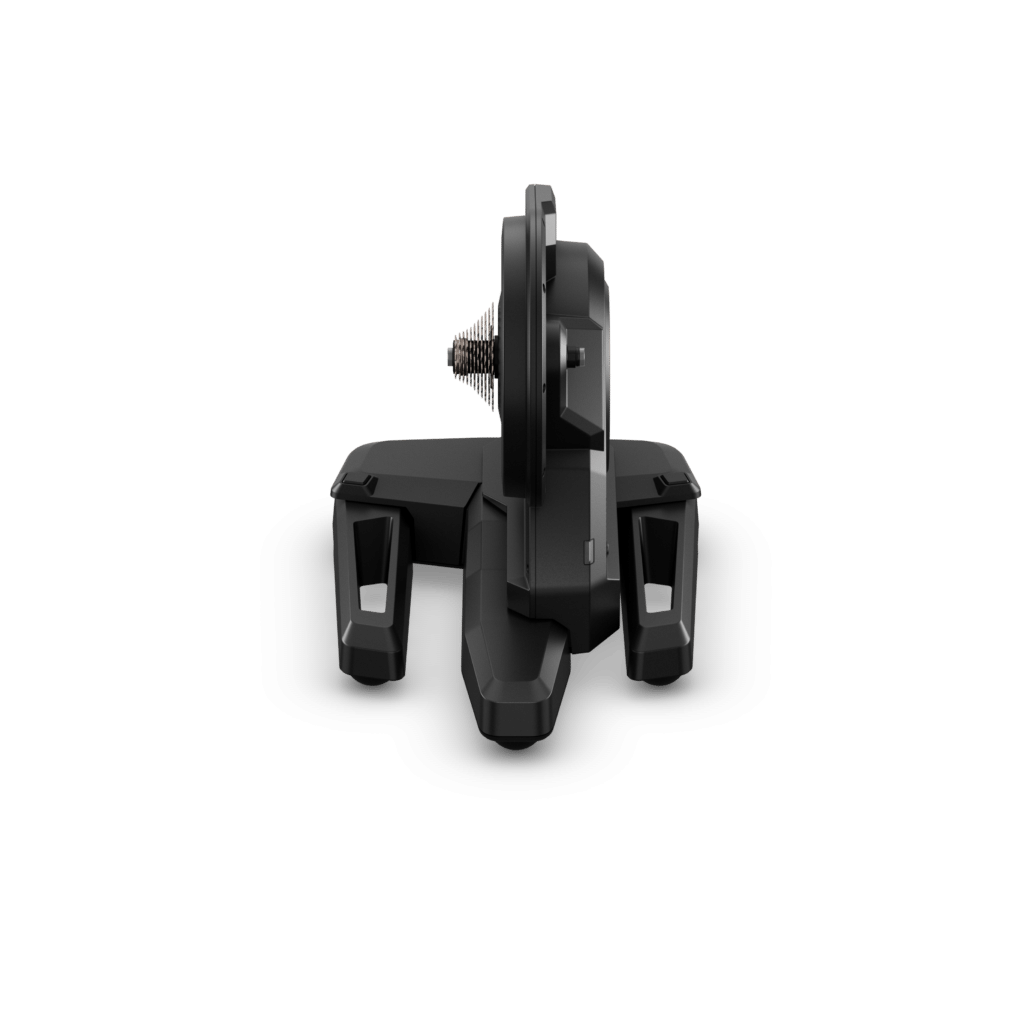
The RRP is €999.99 for both the version with a pre-installed 11-speed cassette and the version with Zwift Cog and Click. The latter supports virtual shifting in Zwift and ROUVY. With the cassette version, gearing and freehub must suit your bike: the included 11-speed cassette is not automatically compatible with every drivetrain. Axle adapters for 130/135-mm quick-release and 12×142/148-mm thru-axles are included.
The Nēra is an additional product line alongside the NEO models. It requires a power supply and offers neither NEO Road Feel nor active downhill simulation. It can optionally be paired with the Tacx Alpine. Context: This addition is based on manufacturer information as of 29 October 2026. We have not yet tested the Tacx Nēra ourselves, so statements about noise, ride feel and measurement accuracy are not our own test results.
Official sources: Garmin product page, German Garmin data sheet and Garmin's announcement of 20 October 2026. Virtual shifting requires a compatible app and, where applicable, its paid subscription.
What Is an Indoor Trainer?
An indoor trainer is a training device that lets you use your own bike in a stationary setup. Usually used indoors, it provides a realistic ride feel, with different resistance levels, smart features and app compatibility depending on the model.
Many athletes now use indoor trainers to improve fitness in a targeted way, save time or train independently of the weather. There is a wide range of models on the market. Our indoor trainer comparison explains the differences and what to look for.
Indoor Trainer Comparison & Virtual Cycling
Anyone looking for the ideal indoor setup needs a comprehensive trainer comparison. Alongside traditional criteria such as resistance system, noise and stability, one aspect is becoming increasingly important: virtual cycling. This innovative form of training has transformed indoor riding, bringing more motivation, variety and efficiency.
Virtual cycling means connecting an indoor trainer to digital training platforms such as Zwift, TrainerRoad, Rouvy or Wahoo SYSTM. The trainer exchanges real-time data with the software using Bluetooth or ANT+, allowing an exceptionally realistic ride feel, including gradients, descents and wind resistance. This is where an indoor trainer comparison separates the contenders: only models with precise power measurement, good connectivity and dependable app compatibility are truly suitable for interactive training.
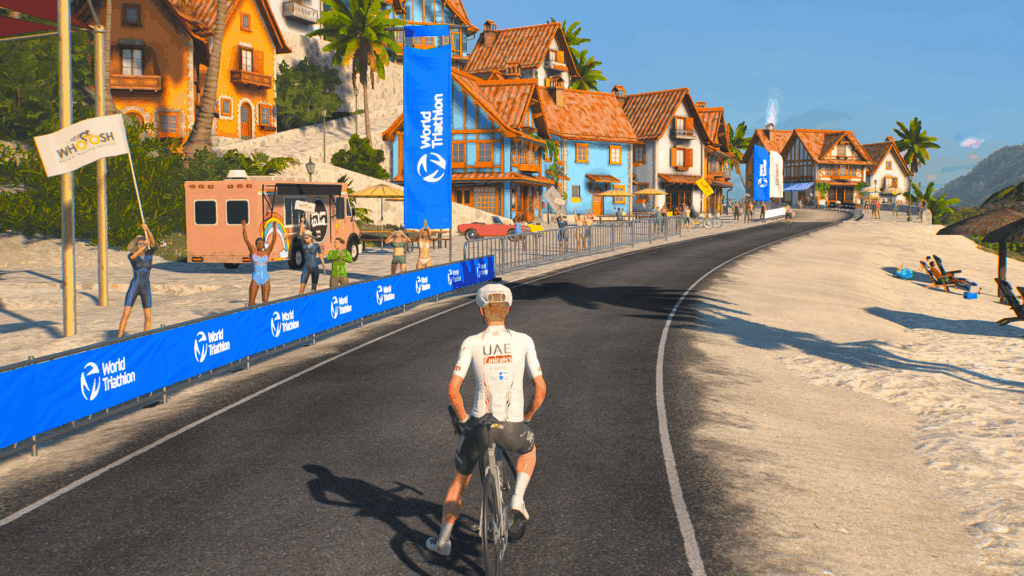
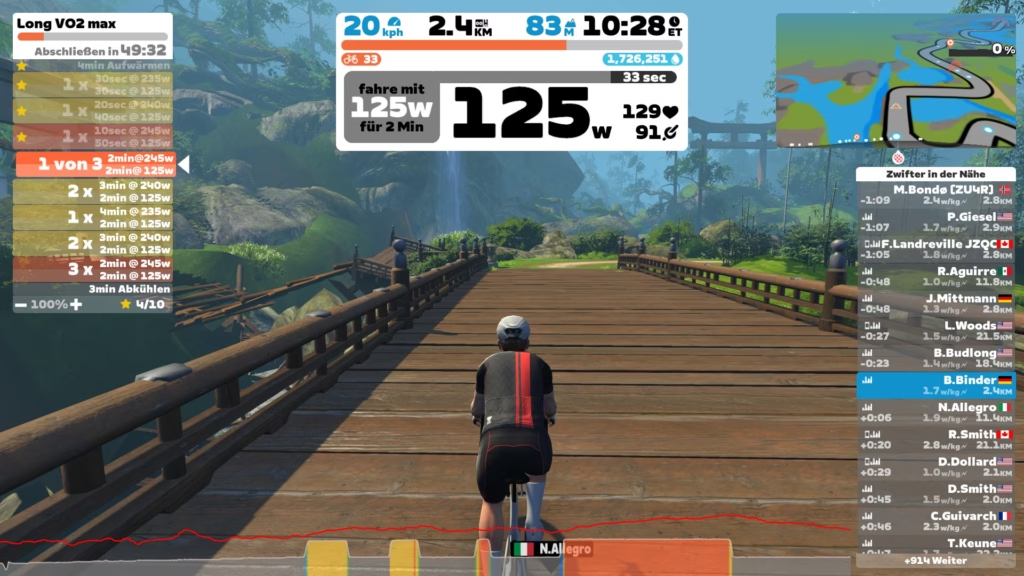
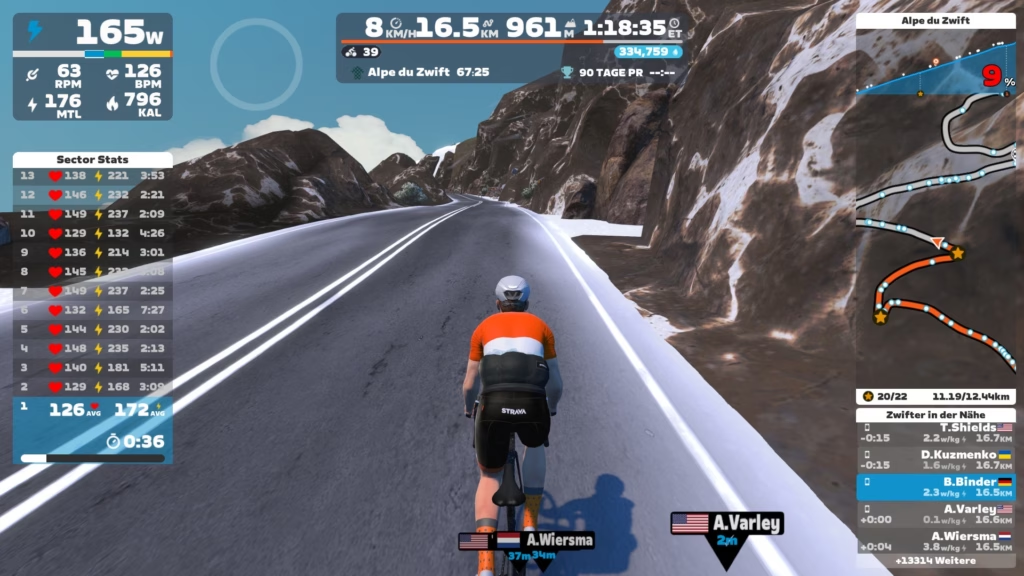
Smart trainers such as the Wahoo KICKR, Tacx NEO 2T and Elite Suito-T perform particularly well in an indoor trainer comparison focused on virtual cycling. They offer highly accurate power readings, simulate gradients up to 15 % and integrate seamlessly with virtual platforms. If you plan to train regularly with Zwift & similar apps, specifically look for a trainer with app connectivity and virtual cycling functionality.
Another advantage is that virtual cycling makes indoor training more entertaining as well as more effective. Gamification, virtual group rides and structured training plans make it much easier for many athletes to train consistently. For ambitious cyclists, triathletes or beginners aiming to improve fitness, a smart trainer combined with virtual cycling is a clear recommendation.
A current 2026 indoor trainer comparison should therefore consider virtual cycling compatibility alongside basic technical features, as it contributes significantly to long-term motivation. Whether you value quiet direct-drive trainers, want to switch bikes regularly or need a space-saving model, the right trainer and good app connectivity turn indoor training into an engaging experience.
What Premium Indoor Cycling Looks Like
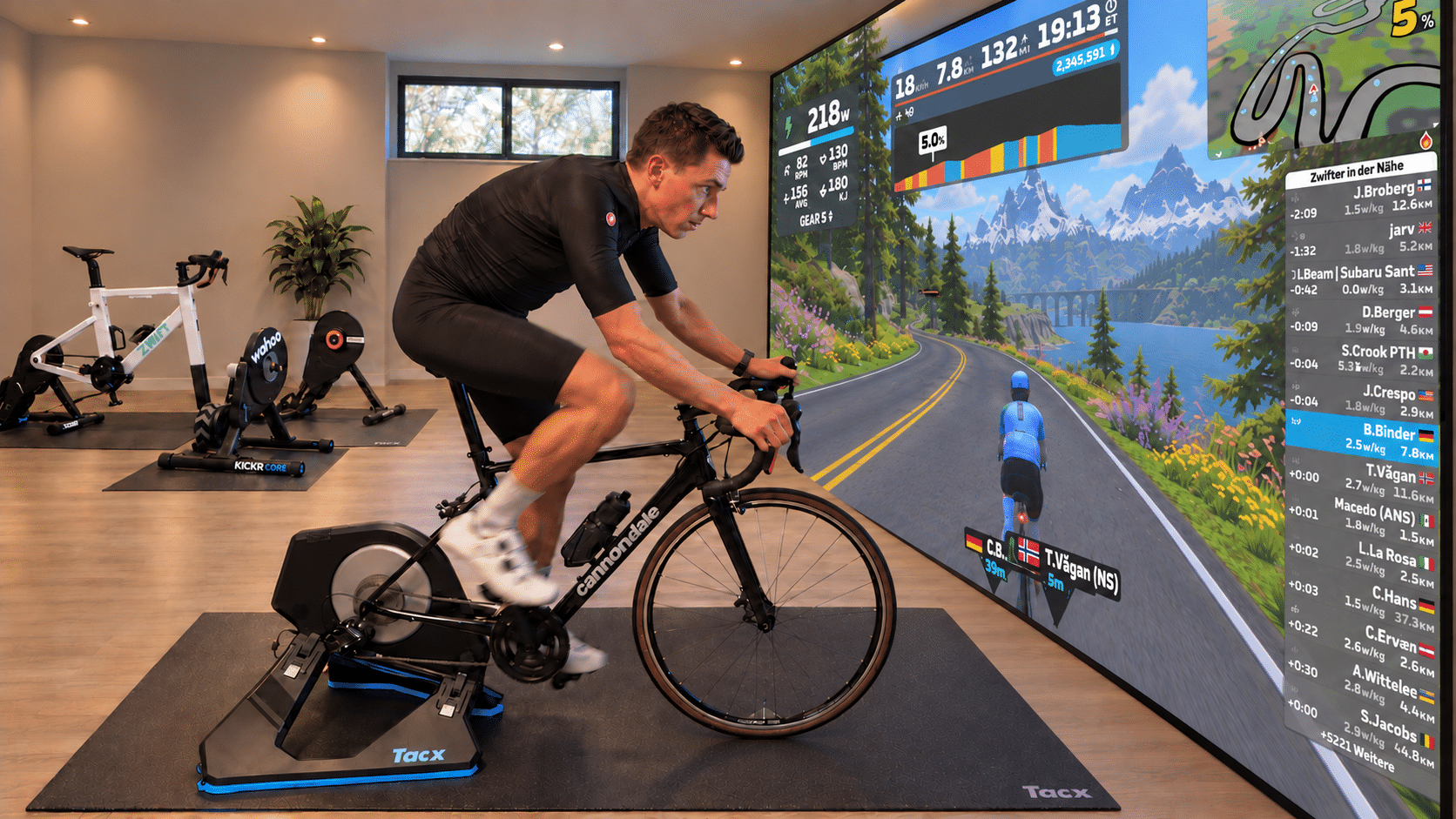
This article is about more than a traditional indoor trainer comparison. I want to show you how realistic road cycling at home can now be. My current setup combines the Wahoo Kickr Core with the Kickr Climb, which realistically simulates gradients, plus a 50-inch TV for a fully immersive riding experience.
Indoor Trainer Comparison – The Different Types
Traditional Wheel-On Trainers
Traditional wheel-on trainers are particularly popular with beginners. The bike stays fully assembled: the rear wheel runs against a small resistance roller, and the bike is securely held by a clamping mechanism. Their biggest advantage is simplicity: set up, ride and put away again. They are also relatively affordable, with good entry-level models often available for under 200 euros, and many are compact and foldable. This is often entirely sufficient for occasional sessions or getting started with indoor training.
However, it is worth knowing the usual drawbacks. Direct contact between roller and tyre creates more noise, and the tyre wears noticeably faster depending on training volume. The ride feel is also less natural than with higher-end systems. Anyone wanting structured power-based training should note that many wheel-on trainers measure power inaccurately or not at all.


The Wahoo KICKR Snap stands out in our comparison as a reliable smart trainer for beginners getting into indoor cycling. Its wheel-on design makes setup particularly easy: the rear wheel stays on the bike, so assembly takes only a few minutes.
Automatic resistance adjustment gives the KICKR Snap a realistic ride feel well suited to platforms such as Zwift, Rouvy and TrainerRoad. Bluetooth and ANT+ connect the trainer seamlessly to smartphones, tablets and bike computers.
Another highlight in our trainer comparison is the 4.8 kg flywheel, which creates a smooth, realistic ride feel, ideal for longer sessions or interval programmes. Power measurement accurate to ±3 % is entirely sufficient for beginners.
Verdict: In a direct indoor trainer comparison, the Wahoo KICKR Snap scores well for value, ease of use and app compatibility. It is a clear recommendation for anyone wanting a smart, straightforward start to indoor training.
Direct-Drive Trainers
Direct-drive trainers are often considered the best choice in an indoor trainer comparison, and for good reason. The rear wheel is removed and the bike mounted directly onto the trainer, which usually uses its own cassette. Power is transferred without tyre contact, improving ride feel and reducing wear on the equipment. For beginners, I consider the Wahoo KICKR CORE a particularly sensible option in this category; we already have a dedicated article about it.
In everyday use, direct-drive trainers stand out mainly for their low noise, since no tyre runs against a roller. Training also feels much more realistic because resistance can be controlled precisely and dynamically, including gradient simulation. Measurements are generally far more accurate too: power, cadence and speed can be recorded reliably, making structured training and progress tracking easier. Strong app connectivity usually includes broad support for platforms such as Zwift, Rouvy and TrainerRoad. Reduced wear is another benefit, as the tyre is not worn down.

The Wahoo KICKR CORE 2 impresses in our indoor trainer comparison with very realistic ride feel, quiet operation and strong app compatibility. As a direct-drive trainer, it is ideal for structured indoor training, from easy endurance sessions to intense intervals.
It connects quickly using Bluetooth or ANT+ and works with Zwift, Wahoo SYSTM, TrainerRoad and many other platforms. If you want a dependable smart trainer offering excellent value, the KICKR CORE 2 is a very strong choice in our indoor trainer comparison.
Free Rollers / Roller Trainers
Free rollers differ significantly from traditional wheel-on and direct-drive trainers. The bike is not clamped in place but sits freely on three parallel rotating rollers. You must therefore keep your balance throughout training, much as you do on the road. This is what makes them interesting: the ride feel is very natural, they improve your pedalling smoothness and you also train coordination and stability.
One major advantage is their straightforward use, as the bike needs no modifications. Simply place it on the rollers and start riding. Many models are also light and foldable, making them easy to transport. Free rollers are therefore particularly popular for technique training, especially among track cyclists and experienced riders.
However, the concept has clear limitations. With the bike unsecured, there is nothing to prevent it toppling, and a lapse in concentration can quickly lead to slipping or falling. Free rollers are also less suitable for hard intervals or very high power, and most models have few smart features such as app connectivity or integrated power data.
Newer direct-drive trainers, such as the very popular Wahoo KICKR Core 2 , are making traditional three-roller trainers less prominent. We have therefore deliberately included only one model from this category in our comparison.

In our indoor trainer comparison, these three-roller trainers, or free rollers, are an interesting option for anyone seeking a particularly natural ride feel. The bike is not clamped in place but rests freely on three rollers. This automatically trains your balance, coordination and smooth pedalling.
The concept is particularly popular for technique training, warm-ups and easy sessions. Simply place your bike on the rollers and start riding, without removing the rear wheel or fitting a cassette.
Verdict: If you value realistic ride feel and technique training and do not need extensive smart features, this three-roller trainer is a solid option.
Premium Indoor Trainers
Premium indoor trainers are aimed at riders who want to get as close as possible to outdoor ride feel and control their training very precisely. This category mainly comprises high-quality direct-drive trainers with particularly quiet operation, excellent stability and highly accurate power measurement. Resistance is adjusted precisely and quickly, realistically reproducing gradients, pace changes and interval programmes. Connectivity is generally very reliable too, allowing smooth operation with platforms such as Zwift, Rouvy and TrainerRoad.
Two premium models particularly stand out in the table in our indoor trainer review: the Wahoo KICKR MOVE and Tacx NEO 2T. Both impress with high precision, excellent ride feel and very fast resistance adjustment, ideal for interval training, pace changes and long sessions. A direct indoor trainer comparison also shows where premium models excel beyond cheaper trainers: high power, structured training plans and consistently reliable measurement accuracy, for example during FTP tests or short power changes. Better construction and control also make the ride feel noticeably smoother.
The main trade-off is price. Premium trainers typically cost €800–1200 and are generally somewhat heavier and less portable because of their construction. However, if you train indoors regularly, value maximum precision and want the most realistic experience possible, the Tacx NEO 2T and Wahoo KICKR MOVE are two particularly compelling premium options.


Wahoo KICKR MOVE – Premium Test Winner in Our Indoor Trainer Comparison, with Natural Ride Feel
The Wahoo KICKR MOVE impresses in our indoor trainer comparison with a distinctive, natural ride feel thanks to forward/backward movement of up to 20 cm and sideways flexibility through AXIS feet. This makes indoor training particularly realistic.
Precise power measurement (±1 %), quiet operation, automatic calibration and full app compatibility with Zwift, Wahoo SYSTM, TrainerRoad and others make it a top model for ambitious athletes.
Verdict: One of the most innovative trainers in the comparison, ideal for anyone who values comfort, precision and realistic training.
Which Criteria Matter Most?
Anyone seriously considering an indoor trainer soon discovers a large, varied market where the differences are often in the details. Our comparison highlights the key criteria to consider for lasting satisfaction. After all, not every trainer suits every bike, rider or training goal.
Bike Compatibility
Compatibility is the foundation of a stress-free start to indoor training. Wheel size and axle system are particularly important. While many trainers support common sizes such as 26", 27.5", 28" and 700C, you should always check approval for 29" wheels or fat bikes. Whether your bike uses a quick-release or thru-axle is equally important, as an adapter may be needed depending on the trainer.
Tyre type also matters with wheel-on trainers. Knobbly tyres are louder and wear more quickly, while slicks or dedicated trainer tyres run much more quietly and cause fewer problems. Frame shape and material deserve attention too, especially with carbon and aero bikes, to avoid pressure marks or damage when securing the bike. The safest approach is to check manufacturer information or compatibility lists before buying.
Resistance System and Ride Feel
The resistance system determines how natural training feels and how effectively you can vary your training stimulus. Basic magnetic trainers are robust, affordable and low-maintenance, but often feel less like riding outdoors. Fluid systems build resistance progressively: the faster you pedal, the harder it becomes, producing a much more realistic ride feel.
Smart trainers with electronic resistance control offer the widest range of options. They automatically adapt resistance to workouts or route profiles, allowing targeted intervals and simulated gradients. For regular structured training or a realistic, varied indoor experience, a smart trainer or good fluid trainer is generally the best choice.
Noise and Sound Levels
Noise is particularly important if you train in a flat or need to consider your neighbours. Wheel-on trainers are typically louder because the tyre runs against a roller, creating friction noise. Knobbly tread makes this considerably worse, so tyre choice makes a big difference with this type of trainer.
Direct-drive trainers are generally much quieter because there is no tyre contact. Depending on the model and tyres, free rollers fall somewhere between the two, but require careful setup and smooth pedalling. A training mat is worthwhile with any trainer: it dampens vibration, reduces sound transmission into the floor and protects the surface underneath.
Measurement Accuracy and Power Data
Reliable power data is a major advantage for structured training. Power in watts is the most important metric because it lets you control intensity precisely during intervals, FTP tests or training plans. Cadence data is also useful for working on technique and efficiency. Speed and distance help with recording and motivation but are less important than power.
Many smart trainers already provide these metrics, while cheaper models often supply only estimates or require additional sensors. If you train regularly and want to compare progress, measurement accuracy deserves a close look. Smaller deviations mean more reliable training zones and analysis, making it easier to develop a well-structured long-term training programme.
Smart Features and Connectivity
Smart features are particularly beneficial for interactive training. Platforms such as Zwift, Rouvy, TrainerRoad, Kinomap and Wahoo SYSTM offer variety, structured workouts and clear training control. A stable connection is essential so resistance, power and training data are transmitted reliably.
Look for Bluetooth and/or ANT+ and check whether the trainer supports several platforms. Open standards are an advantage because you can switch platforms later without being tied to a closed system. Firmware updates are useful too: they often improve stability, add functions and fix bugs, making a noticeable everyday difference, particularly with intensive use.
Setup, Transport and Storage
Everyday convenience is about more than performance: how quickly can you start, and how easily can you store the trainer? Folding mechanisms help if space is limited or you want to put the trainer away afterwards. Assembly matters too. If you frequently set up and pack away, a tool-free or straightforward solution is much more valuable than one that takes time every session.
Weight is a trade-off. Heavier trainers often feel more stable and substantial but are less portable. Carry handles or wheels help if you regularly move the trainer or want to store it in a corner. In small flats or shared spaces, this can ultimately determine whether you use the trainer regularly.
Value for Money
Price should not be the sole deciding factor; consider it in relation to your training goal. Budget models include solid basic trainers that are sufficient for occasional sessions but often compromise on noise, ride feel or data quality. The middle price range often brings access to smart and direct-drive trainers, offering many riders the best balance of performance, realism and connectivity.
At the upper end, you generally get the quietest trainers, with high measurement accuracy, excellent resistance control and strong app integration. Remember any accessories your setup may need, such as a cassette, mat, sensors or fan. Planning for these from the start avoids surprises and lets you begin training comfortably and effectively.
An Affordable Direct-Drive Option in Our Indoor Trainer Comparison
The ThinkRider X2 Max is attracting attention in our current indoor trainer comparison. As a direct-drive smart trainer, its output of up to 2,000 W, ±2 % accuracy and broad app compatibility are surprisingly strong, at a fraction of the price of established brands. Our ThinkRider X2 test shows that riders seeking solid indoor performance on a budget will find a genuine alternative with a surprisingly good feature set.
How Did We Rate the Trainers in Our Comparison?
To provide dependable buying guidance, our indoor trainer comparison uses a clear, practical rating system. We focused not only on technical specifications but also on usefulness for different groups, from occasional riders to ambitious athletes. This makes it easier to judge which model truly suits your needs.
We grouped the key characteristics into fixed rating categories and compared them consistently. Ride feel, noise, connectivity, ease of use and compatibility with training platforms all contributed to the overall score. The following sections explain the criteria used to rate the trainers.
Technical Specification and Features
Trainer specification was central to our comparison. We examined the resistance technology used, whether magnetic, fluid or electronic, and how effectively resistance can be controlled. With smart trainers in particular, automatic resistance adjustment matters for structured workouts or route profiles.
Sensors also played an important role. Are power, cadence and speed readings integrated, and how complete is the feature set without additional accessories? We also considered whether smart features are reliably available and how easily the trainer integrates with mainstream training apps.
Ease of Use, Noise and Ride Feel
Alongside technology, the everyday experience matters. We assessed how straightforward assembly and setup are and whether operation is intuitive. For beginners in particular, the setup should not be unnecessarily complicated, so training can begin quickly.
For ride feel, we considered how smooth and realistic the resistance feels, especially during intensity changes or simulated climbs. Noise was another important factor, particularly for flats or noise-sensitive floors. This often reveals clear differences between wheel-on and direct-drive systems.
Build Quality, Stability and Compatibility
A good indoor trainer must stand securely and work reliably over the long term. We therefore assessed build quality, material choices and stability under heavy loads. Practical details such as non-slip feet or height-adjustable supports can make a big everyday difference, particularly on uneven floors.
Compatibility was another focus. Which wheel sizes are supported, which axle standards fit – quick-release or thru-axle – and how flexible is the trainer across different bike types? A model may be technically excellent, but if it does not fit your bike, it is still the wrong choice.
App Integration and Updates
Modern indoor trainers are often part of a digital training system. We therefore checked platform compatibility and how reliably data is transmitted through Bluetooth or ANT+. For many users, trouble-free operation with Zwift, Rouvy, TrainerRoad or similar services is essential.
We also considered software and firmware updates: are improvements regularly provided to add features or fix bugs? Additional apps for calibration, analysis or device control are another benefit when they work reliably and provide real value.
Value for Money
Price alone says little; what matters is what you get for it. We therefore assessed cost in relation to features, quality and intended users. An inexpensive model can score very well if it provides exactly what beginners need without unnecessary weaknesses.
Premium trainers can likewise impress when their specification, accuracy, noise and construction clearly justify the extra cost. Comparison with similarly priced alternatives also mattered: which features are genuinely relevant, and where are you mainly paying for extras that not everyone needs?
User Feedback and Long-Term Experience
We also analysed user opinions and experiences from different sources, including platform reviews, feedback from specialist communities and reports from everyday training. This helps put typical strengths and weaknesses into context, particularly those that do not appear on a specification sheet.
Service and support were considered too. How easy is it to contact the manufacturer, how are problems handled, and what warranty or goodwill support is available? Reliable support is an important part of the overall package, especially for technically complex smart trainers.
A Transparent, Practical Indoor Trainer Comparison
Our aim with this indoor trainer comparison was to provide a realistic, understandable and technically informed overview. Covering different users, from beginners to ambitious athletes, was important so you can quickly identify which models suit your needs and which do not. We also rated the relevant criteria consistently to make the comparison fair.
Good value for money was another priority. Not everyone needs high-end features, but everyone should get a convincing overall package for their budget. We also considered integration with digital training environments because apps and platforms are now central to indoor training for many riders. This helps you find a trainer that suits your bike, training style and daily life, rather than one that only looks good on paper.
Improve Your Indoor Training: Accessories & Tips
Useful accessories can often make indoor training more comfortable, quieter and more effective. A front wheel support keeps the bike level and helps maintain a natural riding position. This makes a noticeable difference during longer sessions, with fewer pressure points and less muscle tension.
Protection and comfort matter too. A sweat guard or towel protects the frame and bolts from sweat and corrosion. A training mat reduces vibration, dampens noise and protects the floor. A fan is almost essential for staying comfortable because indoor training quickly becomes very warm. If you want to train by heart rate, a heart rate monitor or smartwatch is also a simple way to control intensity and record sessions accurately.
Indoor Trainer Comparison Verdict: Which Trainer Is Right for You?
Our detailed indoor trainer comparison shows that the choice is extensive, but the right criteria make it easy to find a suitable model. For occasional training or a smaller budget, a traditional trainer serves well. For serious training goals, realistic simulation or virtual competition, a direct-drive smart trainer is worth the investment.
Above all, the comparison shows that quality, functionality and training comfort increase with price, but not everyone needs the top model. What matters is suitability for your training style, budget and bike type.
With a suitable trainer, nothing stands in the way of an effective indoor workout. Use this review to guide your buying decision and take your endurance and fitness to the next level!
Im Rollentrainer-Vergleich wollte ich vor allem zeigen, wie unterschiedlich die Modelle in puncto Lautstärke, Fahrgefühl und Konnektivität abschneiden – denn gerade beim Indoor-Training merkt man schnell, was einem wirklich wichtig ist.
Mich persönlich hat überrascht, wie nah manche Smart-Trainer inzwischen an das echte Fahrgefühl herankommen. Und gleichzeitig stellt sich natürlich die Frage: Muss es immer das Topmodell sein oder reicht auch ein solider Trainer ohne viel Schnickschnack?
Wie sind eure Erfahrungen mit dem Rollentraining?
Welche Features sind euch dabei am wichtigsten – Realismus, Trainingsapps, Lautstärke? Und welche Trainer könnt ihr aus eigener Erfahrung empfehlen?