

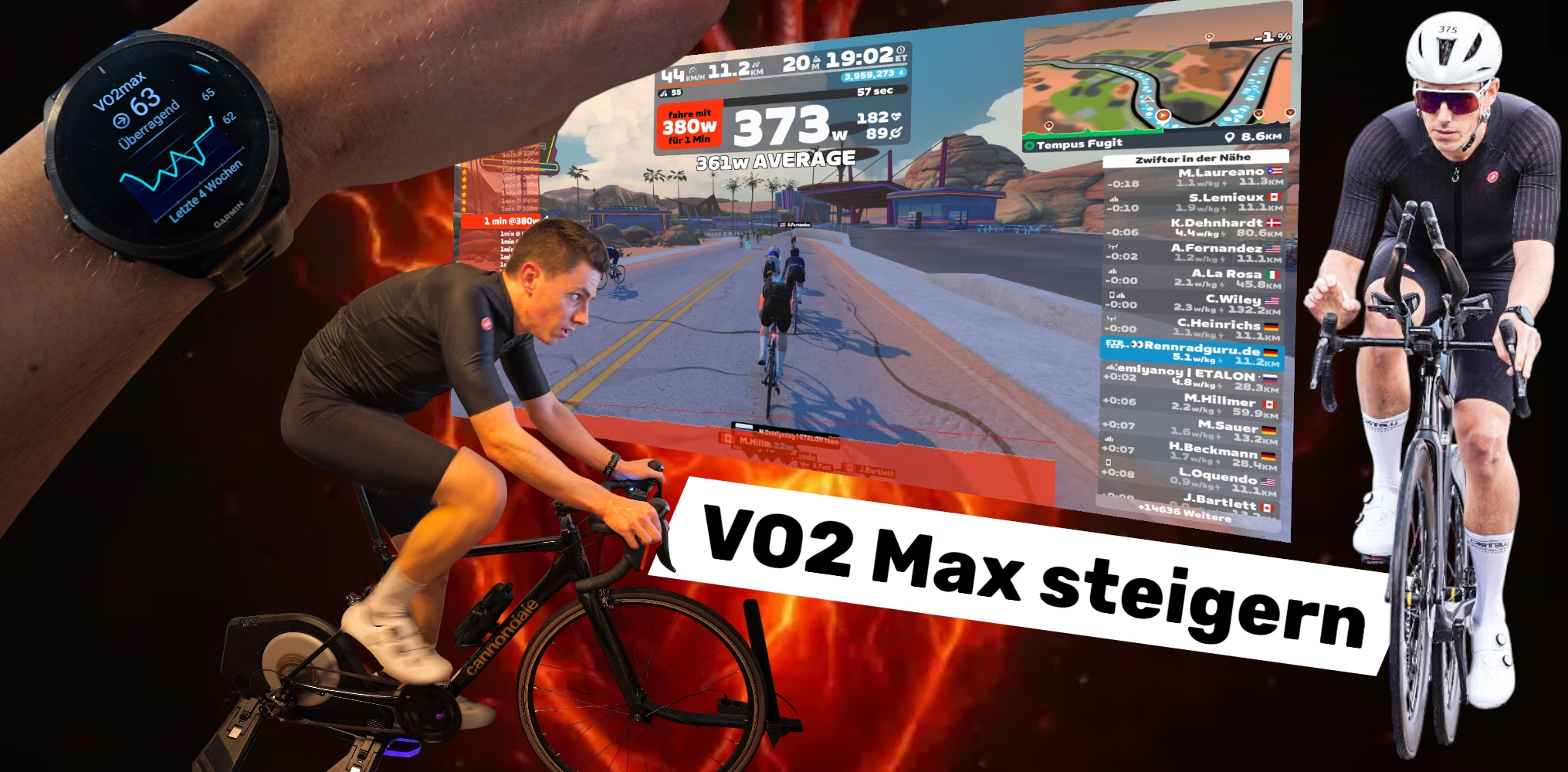
Why VO2 Max Is So Important for Cyclists
VO2 Max measures your maximum oxygen uptake and is a direct indicator of endurance performance. In cycling, whether outdoors or on an indoor trainer, it plays a major role in how long you can sustain high power outputs. Improving your VO2 Max lays the foundation for speed, endurance and resilience. Professional athletes have values well above 70–80 ml/kg/min
VO2 Max in Cycling
VO2 Max measures your maximum oxygen uptake and is a direct indicator of your endurance performance. In cycling, it helps determine how long you can sustain high power outputs, whether outdoors or on an indoor trainer.
What Does a Higher VO2 Max Give You?
- A bigger ‘engine’: more oxygen for your working muscles.
- Sustain intensity for longer: useful for attacks, short climbs and hard intervals.
- A better training foundation: a basis for speed, endurance and tolerating training loads well.
- Measurable indoors: VO2 intervals can be ridden consistently and precisely on an indoor trainer.
Putting It in Context: Chart (ml/kg/min)
Professional athletes often have values well above 70–80 ml/kg/min, depending on the discipline, body weight and measurement method.
Advantages and Disadvantages of a High VO2 Max
- Better Endurance Performance
- You can exercise for longer and at a higher intensity without becoming fatigued.
- Greater efficiency in producing energy from oxygen.
- Health Benefits
- Lower risk of cardiovascular disease.
- Improved circulation and heart function.
- Lower risk of high blood pressure, type 2 diabetes and excess weight.
- Faster Recovery
- A better oxygen supply speeds up recovery after exercise.
- Greater Capacity in Everyday Life
- Activities such as climbing stairs or doing heavy physical work become easier.
- Better Metabolic Profile
- Improved fat metabolism and insulin sensitivity.
Does a high VO₂max actually have any disadvantages?
- In brief, no: for healthy people, a high VO₂max has practically no direct disadvantages.
It is associated almost entirely with better health and performance measures.
Scientific Studies on Improving VO2 Max
Improving VO2 Max quickly requires targeted training methods that develop both aerobic and anaerobic capacity.
Scientific studies, such as Coyle et al. (1988), show that targeted cycling interval training has a significant effect on VO2 Max, especially during structured indoor training, where external factors such as weather and traffic are removed.
Another widely discussed Norwegian study by sports scientists led by Rønnestad et al. (2012) examined the effect of block training on VO2 Max and endurance performance. The study divided well-trained cyclists into two groups: one followed conventional interval training spread over several weeks, while the other used intensive training blocks, with several high-intensity sessions over a few days followed by longer recovery periods.
The result was clear: the block-training group showed significantly greater improvements in VO2 Max, maximum power and time to exhaustion. The researchers attributed this success to the higher frequency of training stimuli and the concentrated workload during the blocks, a principle now used in many professional training plans.
The study is seen as evidence that targeted load management can improve VO2 Max quickly, particularly among ambitious amateur athletes with limited training time. I also put the study to use and started block training...
Block Training: How I Train
What My VO2 Max Block Training on the Indoor Trainer Looks Like
Block training means applying targeted training stimuli over a short period, then deliberately recovering. This approach offers major advantages, especially for indoor training on a trainer: intensity can be controlled precisely, external factors such as weather and traffic are removed, and the training effects are measurable and efficient.
My 4-week block-training programme for improving VO2 Max follows a clear rhythm:
Week 1: High-Intensity Stimulus
The training block starts with a demanding week. The plan includes 4 to 5 HIT sessions: short, sharp workouts with VO2 Max intervals, such as 4×4 minutes at 110–120% FTP. This week is challenging, but it provides the foundation for the training stimulus. The remaining time is filled with low-intensity training (LIT) or active recovery.
Week 2: Building Volume at Moderate Intensity
The intense start is followed by a high-volume week with only one HIT session. The focus is on longer, easy rides in the base endurance zone. The aim is to consolidate the stimuli from week 1 and strengthen aerobic metabolism while maintaining a high training volume.
Week 3: The Longest Week, Focusing on Base Endurance
Training volume increases again in week 3. There is still only one HIT session, supplemented by long, easy sessions to develop endurance. This week requires discipline and patience – ideal for structured indoor trainer sessions focusing on technique, cadence and power control.
Week 4: Recovery for Supercompensation
The block ends with a recovery week with significantly reduced volume and no HIT. The body now has time to respond to the training stimuli and adapt. This week is essential for avoiding overtraining and securing the gains in VO2 Max.
The Equipment I Use
Garmin Forerunner 965: My Daily Companion
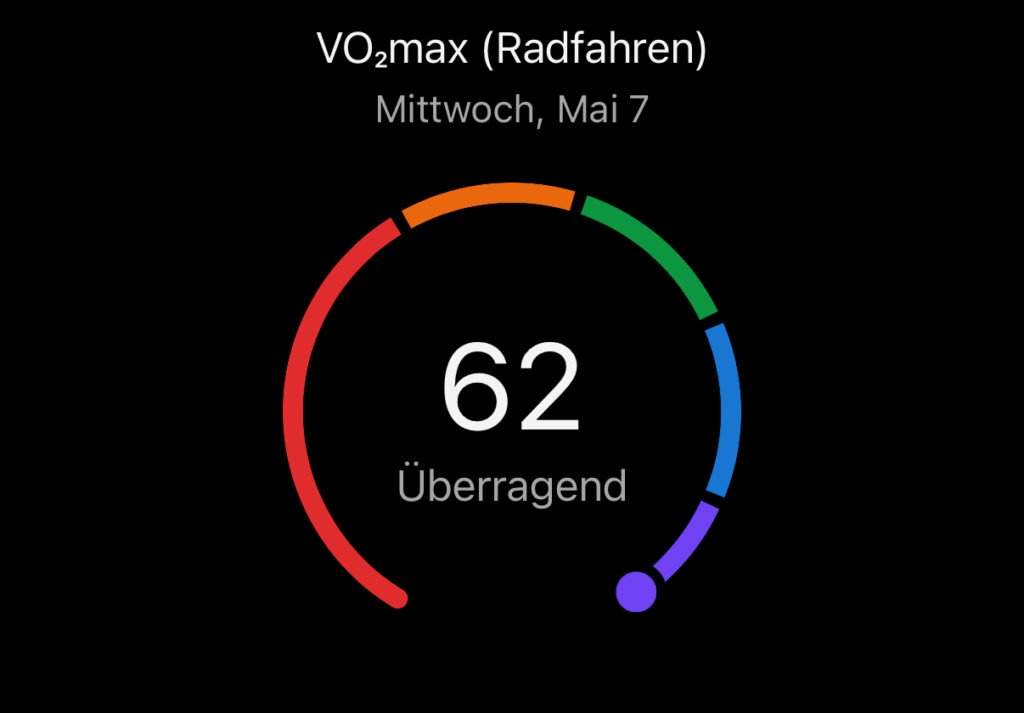
I have used the Garmin Forerunner 965 for around two years to track my training data, particularly my estimated VO2 Max. I am thoroughly impressed with this watch: its synchronisation with my smart trainer, VO2 Max estimate and recovery tips are invaluable to me. After indoor trainer sessions in particular, it provides precise analysis that helps me keep my goal of improving VO2 Max in sight.


The Garmin Forerunner 965 is a high-quality GPS multisport watch designed specifically for ambitious athletes. It combines advanced training and health features with a modern AMOLED touchscreen and a lightweight yet robust design.
Its 1.4-inch AMOLED screen delivers a razor-sharp image, even in direct sunlight. The casing is made from lightweight titanium, and the watch can be operated using both the touchscreen and physical buttons, making it ideal for any environment.
For sport, the Forerunner 965 impresses with precise multi-band GPS, full-colour offline maps and a wide range of training metrics, including Stamina, Training Readiness, HRV Status and running power directly from the wrist. Seamless switching between sports is a major advantage for triathletes in particular.
Its health features include comprehensive sleep analysis, SpO₂ measurement, stress and breathing rate monitoring, and Body Battery to assess energy levels. The Morning Report gives you a daily overview of your recovery and training readiness.
With battery life of up to 23 days in smartwatch mode and up to 31 hours in GPS mode, it is well equipped for longer adventures too. It also supports music storage, Garmin Pay, smart notifications and safety features such as incident detection and LiveTrack.
The Forerunner 965 is aimed at athletes who want top accuracy, detailed training analysis and smart features, both in everyday life and in competition.
Indoor Trainers for Targeted Block Training
An indoor trainer has become essential for my targeted block training. I started with the Wahoo KICKR Core, a really strong introduction that finally let me ride intervals consistently and precisely. Outdoors, I often lack the uninterrupted conditions for this: traffic, lights, wind and changing gradients make precise training difficult.
I have since moved up to the next level with the Tacx NEO 2T. It lets me complete my sessions even more precisely and consistently, focusing entirely on power, cadence and heart rate, without distractions or excuses.
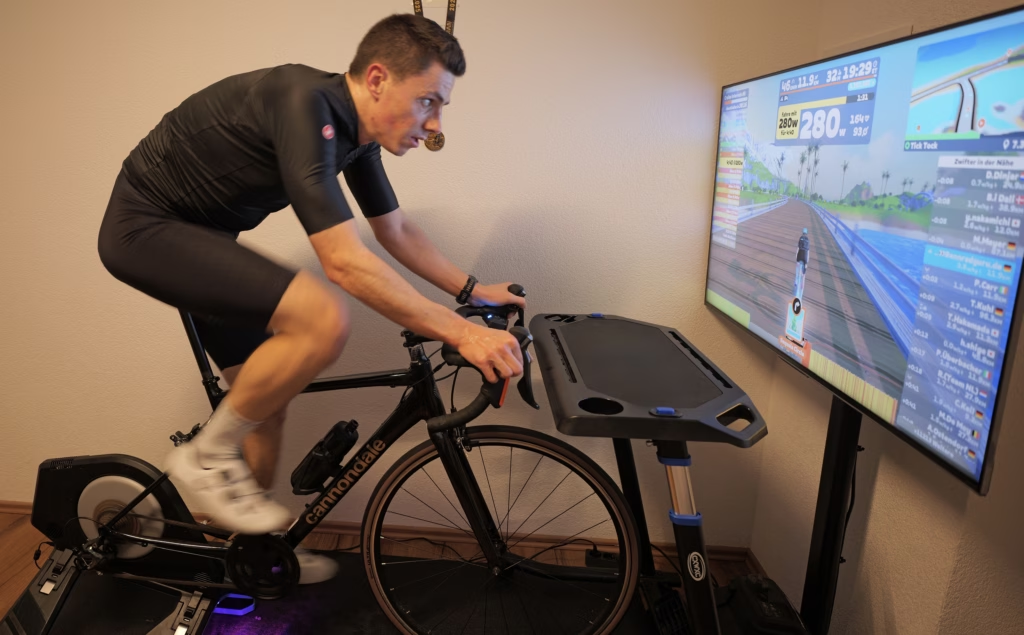
Three Years of Improving VO2 Max: How I Did It
Looking back, three key elements helped increase my VO2 Max:
- Targeted Indoor Trainer Sessions with Intervals in the VO2 Max Zone
- Block Training Instead of Continuous Loading
- Structured Recovery
This combination is essential if you want to improve your VO2 Max quickly, especially in cycling.
Verdict: Improve VO2 Max Through Smart Training
My experience shows that you can improve your VO2 Max quickly without training camps or professional coaching, provided you have structure, patience and the right equipment. Indoor trainer sessions offer ideal conditions for improving VO2 Max quickly and deliberately because you have repeatability and control. Of course, you can also improve your VO2 Max without an indoor trainer, for example by running or simply cycling outdoors. Ultimately, it comes down to effectiveness and efficiency, which in my opinion are significantly better on an indoor trainer.
Even with running intervals, I cannot control my sessions as precisely as on the indoor trainer. There are gradients, wind and different surfaces, and heart rate always responds with a delay, among other factors. And the most important measure, power, is extremely difficult to measure when running. Although many sports watches offer this feature, it tends to be inaccurate and has always been unusable for me.
Tools such as the Garmin Forerunner 965 make the process measurable, motivating and understandable. Anyone wanting to improve their VO2 Max can rely on smart support more than ever, and I am the best example. If your VO2 Max is still relatively low, the good news is that progress is extremely fast at first and only becomes more difficult beyond a certain level.
If you have questions about my training sessions or how to set them up in Zwift or Garmin, feel free to write to me! I am happy to help others improve their VO2 Max just as effectively.
0 Comments