

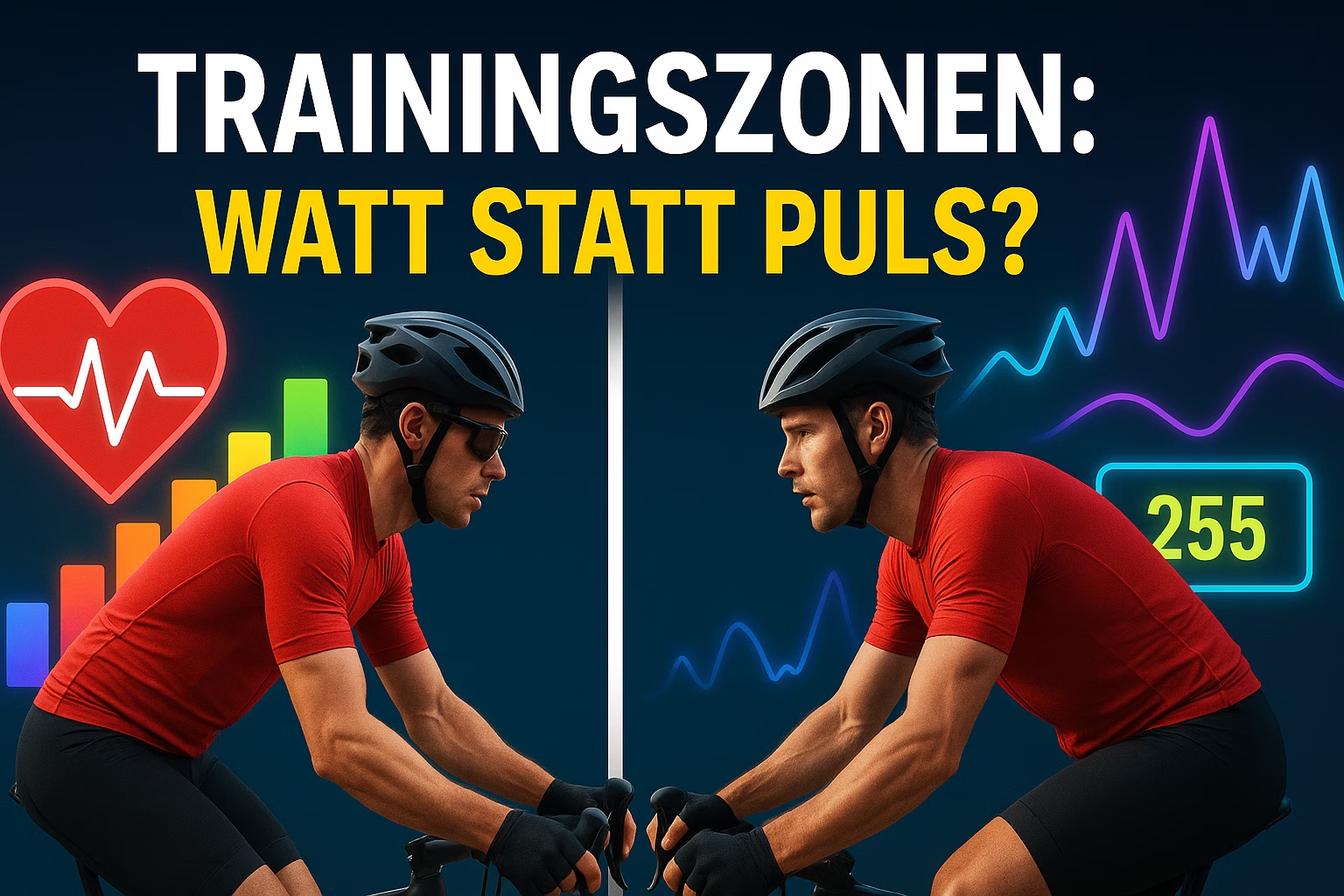
Training zones based on power instead of heart rate - what is FTP and why is it so important?
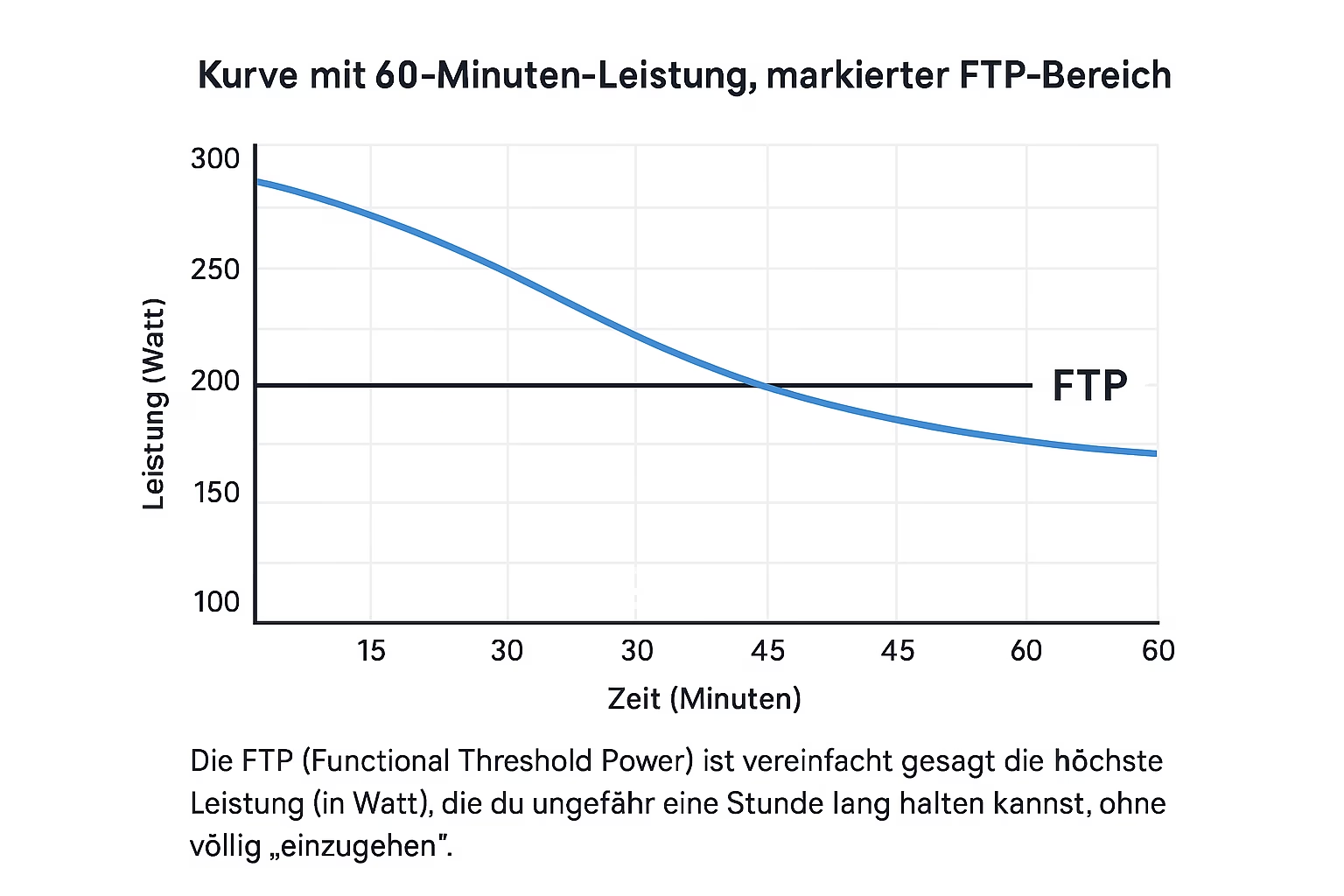
Put simply, FTP (Functional Threshold Power) is the highest power output in watts that you can sustain for approximately an hour without completely falling apart. In practice, it serves as a reference for defining relative training zones as % of your FTP.
Why this is so smart
- Absolute power values vary enormously from rider to rider.
- Percentages of your FTP make training individual: 70 % FTP means a different wattage for each person but approximately the same physiological strain.
Instead of comparing yourself with others, you primarily use your FTP to set your own power-based training zones and manage your training precisely, from easy endurance riding to hard threshold intervals.
Practical FTP examples
- Beginner approximately 180 W FTP
- Ambitious recreational athlete approximately 260–300 W FTP
- Strong amateur well > 320 W FTP
These figures are only rough examples. What matters is how your own FTP develops over the course of your training.
Power-based training zones – how they work
Most training systems use a power zone model based on FTP, such as the well-known Coggan 7-zone model. Each zone corresponds to a particular percentage range of your FTP and targets different adaptations, from basic endurance to VO₂max and explosiveness.
| Zone | Name | Intensity (in % FTP) |
|---|---|---|
| Zone 1 | Recovery | < 55 % FTP |
| Zone 2 | Basic endurance | 56–75 % FTP |
| Zone 3 | Speed | 76–90 % FTP |
| Zone 4 | Threshold | 91–105 % FTP |
| Zone 5 | VO₂max | 106–120 % FTP |
| Zone 6 | Anaerobic capacity | 121–150 % FTP |
| Zone 7 | Neuromuscular / sprint | very short, maximal efforts |
What do these zones do for you?
Each zone has a clear training purpose. Depending on the range in which you spend most of your time, you emphasise different aspects:
- Zones 1–2: basic endurance, fat metabolism, recovery.
- Zones 3–4: tempo, regular race pace, threshold tolerance.
- Zones 5–7: VO₂max, anaerobic efforts, sprints and explosiveness.
By deliberately placing sessions in specific zones, you control what you train, rather than simply ensuring that you train.
70 % FTP corresponds to 175 W in this case.
- Long, easy endurance ride (zone 2): approximately 140–185 W
- Threshold intervals (zone 4): approximately 230–260 W
This gives you a very clear idea of the power range you should aim for in every session.
Heart rate training zones – a classic with pitfalls
As an alternative or complement to power in watts, you can also define your training zones by heart rate. They are usually based on your maximum heart rate (HRmax) or FTHR (Functional Threshold Heart Rate), meaning your heart rate at threshold.
How are heart rate zones established?
- HRmax: maximum heart rate, determined e. g. through a step test or an all-out effort.
- FTHR: heart rate at your anaerobic threshold, usually determined through a longer test (e. g. 20–30 minutes).
These values are typically used to define 5–6 heart rate zones for training, ranging from very easy endurance work to high-intensity intervals.
Typical heart rate zones
- Zone 1 very easy / active recovery
- Zone 2 endurance / usual heart rate for endurance training
- Zone 3 grey zone / tempo
- Zone 4 threshold / just before it gets really hard
- Zone 5 high intensity / VO₂max range
While power describes what your body actually produces, heart rate shows how strongly your cardiovascular system responds to that effort.
- Delayed response: heart rate often takes 30–120 seconds to adjust to a new intensity, making it imprecise particularly for intervals.
- Highly dependent on your condition that day: temperature, sleep, stress, caffeine, dehydration and minor infections can significantly affect your heart rate.
- Interpretation rather than an obsession with numbers: heart rate values only make sense in context; perceived effort and power should always be considered as well.
The ideal beginner's indoor trainer - for training with power zones

Advantages and disadvantages of power-based training zones
-
Instant feedback
Power responds without delay: pedal harder and the output increases immediately. Particularly during intervals, short VO₂max efforts or changing terrain, you can control intensity far more precisely than with heart rate alone. -
Consistent intensity despite conditions
With power, you can largely disregard headwinds, gradients or temperature. 200 W remains 200 W, whether you are tired or it is hot or cold. This makes training load more comparable from session to session. -
Ideal for structured training plans
Training platforms and smart trainers use your FTP to scale workouts automatically as a percentage of your threshold power, calculate load metrics such as TSS and track your long-term training load. Particularly in winter on a smart trainer, this lets you hit precisely prescribed intervals and zones instead of relying on perceived effort alone.
-
Higher purchase and maintenance costs
An accurate power meter is significantly more expensive than a basic heart rate strap and must be installed correctly, calibrated regularly and maintained. For beginners who simply want to get fitter overall, this investment is often not essential. -
Does not show how your body feels
Power figures are brutally honest but say nothing about how much strain your body is currently under. If you are overtired, ill or dehydrated, you may still produce the planned power but potentially overload your cardiovascular and immune systems, signs that heart rate often reveals earlier. -
Heart rate can deliver similarly good results
Studies and practical experience show that structured, consistently followed heart rate-based training can produce very similar progress to power-based training for recreational athletes. A power meter replaces neither a thoughtful training plan nor regular, motivated training.
Heart rate as a complement – the smart combination
Instead of power vs. heart rate, it makes much more sense to use both signals together: power shows your output, while heart rate shows your body's response to the effort.
Considering power & heart rate together
Power = what are you producing? (Output)
Heart rate = how does your body respond? (Strain)
-
Zone 2 ride using power & heart rate:
You ride, e. g., at 65–70 % FTP and check that your heart rate stays in the endurance zone. -
Watch for heart rate drift:
Does your heart rate remain stable over a longer period at the same power, or does it rise significantly (cardiac drift)? The latter is often a sign of heat, dehydration or fatigue. -
Check recovery:
Resting heart rate, how you feel that day and training heart rate help you assess whether you are ready for hard sessions. If, at a moderate power output, you have an unusually high heart rate, this can be a warning sign.
Power & heart rate curves in practice
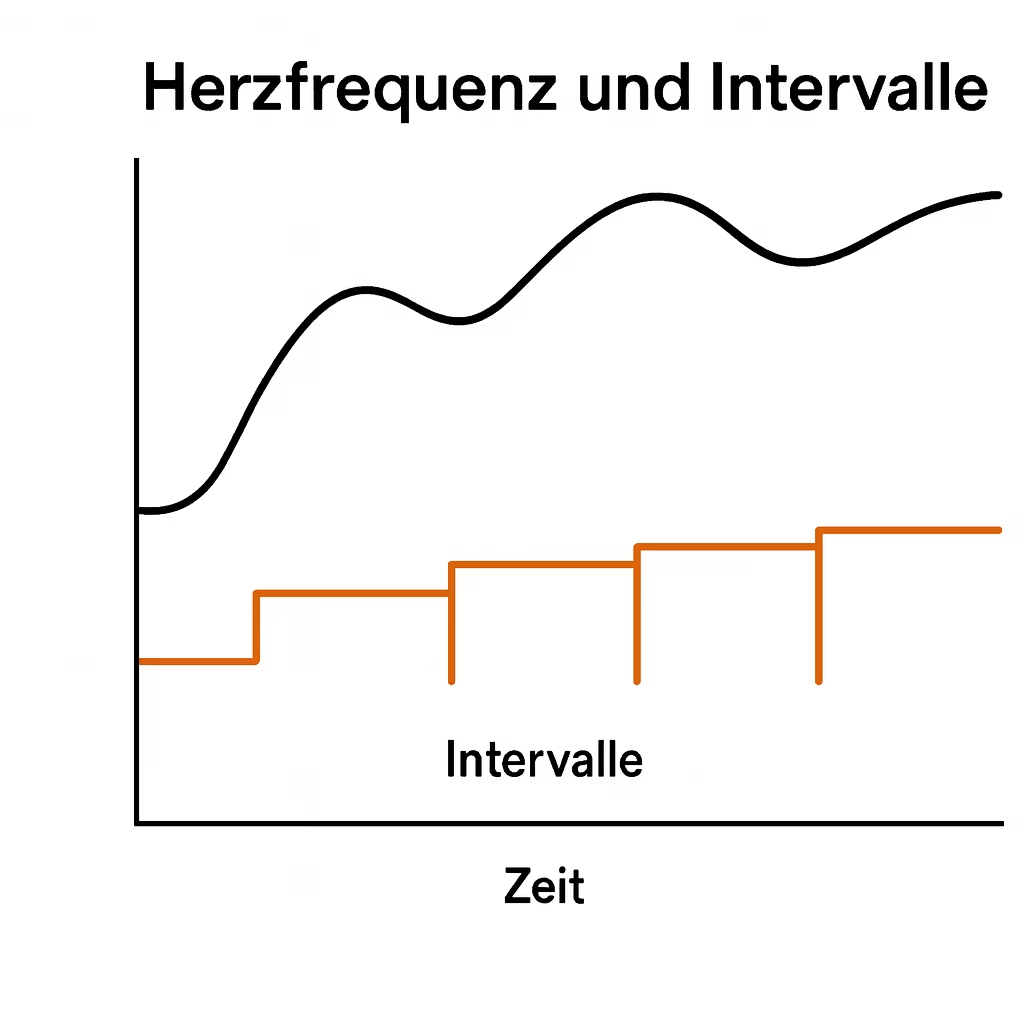
Looking at both is particularly useful during interval sessions: the power curve clearly shows whether you are hitting your targets, while the heart rate curve reveals how demanding the effort actually is for you.
How to read the curves:
Good signs
- Power is in the target range and heart rate stays stable.
- Heart rate drops quickly during recoveries.
- The last interval feels similar to the first.
Warning signs
- Heart rate keeps climbing from interval to interval.
- The same power output feels significantly harder.
- Heart rate barely drops during recoveries.
Why indoor trainers are perfect for power & heart rate training
On an indoor trainer, you primarily use power in watts as your guide: no traffic lights, no traffic, no wind, just you and a steady power output. You use heart rate as an additional check to monitor your body's response to the effort.
- Smart trainers maintain consistent power ranges, ideal for GA2, sweet spot & VO2max.
- You see directly how your heart rate responds to a prescribed power output.
- Repeatable conditions: the same session, the same route, the same temperature, perfect for measuring progress through power.
This turns the indoor trainer into your power control centre, while your heart rate provides additional information about fatigue, recovery & your condition that day.
In our indoor trainer comparison, you will find models particularly well suited to precise power-based training, from entry-level trainers to high-end smart bikes, with heart rate available as an additional check.
Common mistakes in power-based training
Power-based training is a powerful tool, but only if you use it correctly. You may notice these typical mistakes in yourself or others and can take steps to avoid them.
Common pitfalls
-
Overestimating FTPYou constantly ride too hard, feel tired all the time and make no progress. An overly optimistic FTP may flatter your ego, but it makes every session unnecessarily demanding.
-
Looking only at power and ignoring heart rateIf you only watch the numbers on your power meter, you often miss early warning signs of overload. A noticeably high heart rate at an otherwise moderate power output can indicate stress, fatigue or the start of an infection.
-
Every session in the sweet spotAlways riding somewhere between somewhat hard and still manageable means it is neither properly easy nor properly hard. The result: you become tough but do not really improve, because recovery and clear training stimuli are missing.
-
Not adjusting your zonesIf your FTP rises but your zones stay the same, training is too easy. If fitness drops and you adjust nothing, you constantly ride too hard. Both hold back your development.
FAQ – short answers to common questions
-
1. Is training by power always better than by heart rate?No. Power is more accurate for controlling intensity, while heart rate better shows how your body responds. In practice, the combination of power and heart rate is strongest.
-
2. How often should I test my FTP?Every 6–10 weeks is a good guideline, or whenever you feel you have become significantly stronger or weaker.
-
3. Can I train by power without a power meter?Yes. With a smart trainer that measures your power, you can train very effectively by power indoors, even if you do not yet have a power meter on your bike outdoors.
-
4. Why do power and heart rate zones sometimes differ significantly?There is no 1:1 mapping between power and heart rate zones. Depending on your condition that day, e. g., zone 2 power may only produce zone 1 heart rate, or vice versa. This is normal. What matters is understanding which training stimulus you want to create.
0 Comments