

Clothing: the biggest aero gain
Improve road bike aerodynamics with the right clothing. If I had to name one thing that makes you more aerodynamic quickly and easily, it would be clothing. A flapping jersey, loose gilet or wrinkles around shoulders and arms act like small braking parachutes. They increase frontal area and create turbulence exactly where the wind first meets the rider.
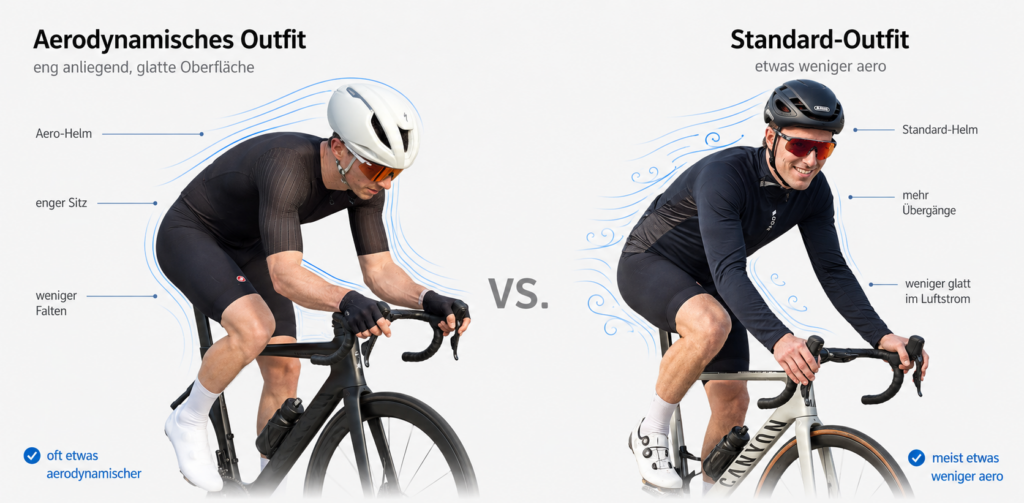
The difference between loose clothing and a well-fitting aero jersey or skinsuit can realistically be around 10 to 30 watts. The upper limit applies more at higher speeds, from a poor starting point and with very loose clothing. Switching from a flapping jersey to a close-fitting skinsuit can genuinely approach 20 to 30 watts. If you already wear a well-fitting jersey, the gain is more likely around 5 to 15 watts.
The reason is simple: smooth, close-fitting clothing reduces turbulence. The shoulders, upper arms, chest and back are especially important because they face the wind directly. An aero skinsuit can also prevent fabric overlap between shorts and jersey, wrinkles or pockets exposed to the airflow.
Everyday riding does not always require an extreme race suit. A close-fitting aero jersey with well-fitting bib shorts is often a huge improvement already. Nothing should flap, sleeves should fit neatly and rear pockets should not hang in the wind like a backpack. On long rides, also make sure the clothing remains comfortable as well as fast. An aero advantage means little if you are tense and cramped on the bike after two hours.
Aero socks: a small area with a surprisingly good effect
Aero socks may look like a typical professional trend, but they can work. Anyone wanting to improve road bike aerodynamics does not always need a new aero bike immediately. The lower legs generate considerable drag because they constantly move through the wind and create turbulence. This is exactly where aero socks act: their textured surface is intended to guide air more cleanly around the leg and reduce resistance.
Realistically, aero socks can save around 2 to 8 watts. For some riders, at certain speeds and with suitable socks, it may be slightly more; for others, almost nothing. The effect depends heavily on speed, leg shape, sock height and whether the fabric genuinely works aerodynamically.
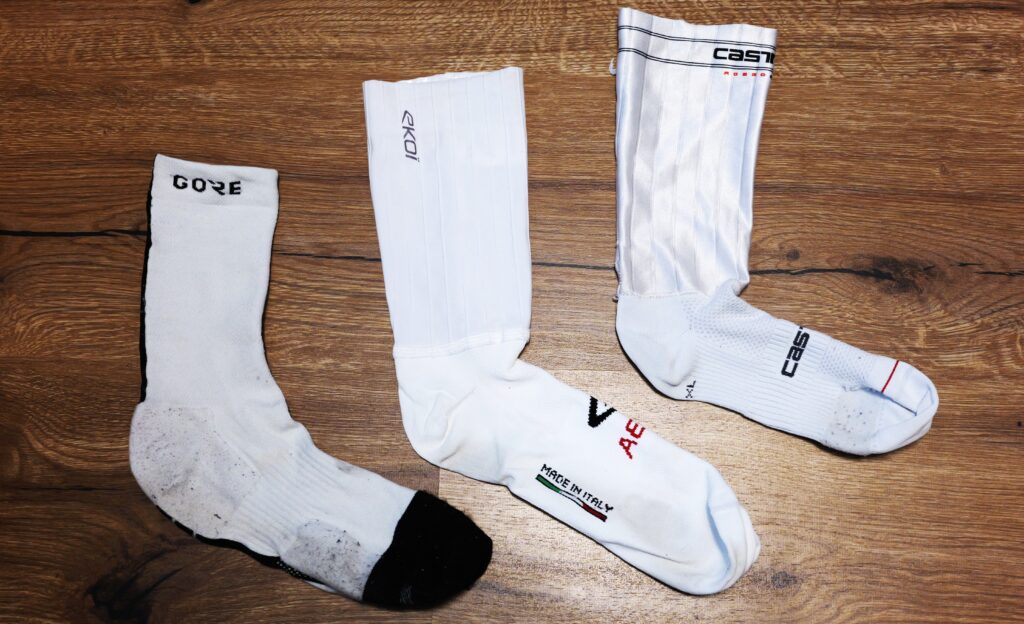
Left: beginner socks with poorer aerodynamics. Centre: Ekoii aerodynamic socks with very good aerodynamics. Right: Castelli aerodynamic socks with very good aerodynamics.
Price is the major advantage. Compared with wheels, frames or cockpits, aero socks are inexpensive. Around 20 to 50 euros buys models frequently used in road cycling. For me, they are therefore among the simplest upgrades for gaining some free speed without much effort.
* These are the aero socks I wearImportantly, taller is not automatically better and compression does not automatically mean faster. The socks must fit closely, stay wrinkle-free and be designed for aerodynamics. Normal tall sports socks may look good but do not automatically save watts.
Helmet: improving road bike aerodynamics can be this simple
Helmets are interesting because they sit directly in the wind and affect airflow over the head, shoulders and back. A very airy climbing helmet is pleasant on hot days but rarely ideal aerodynamically. An aero road cycling helmet can offer a good middle ground: faster than a traditional highly ventilated helmet, but much more practical for everyday use than a time trial helmet.
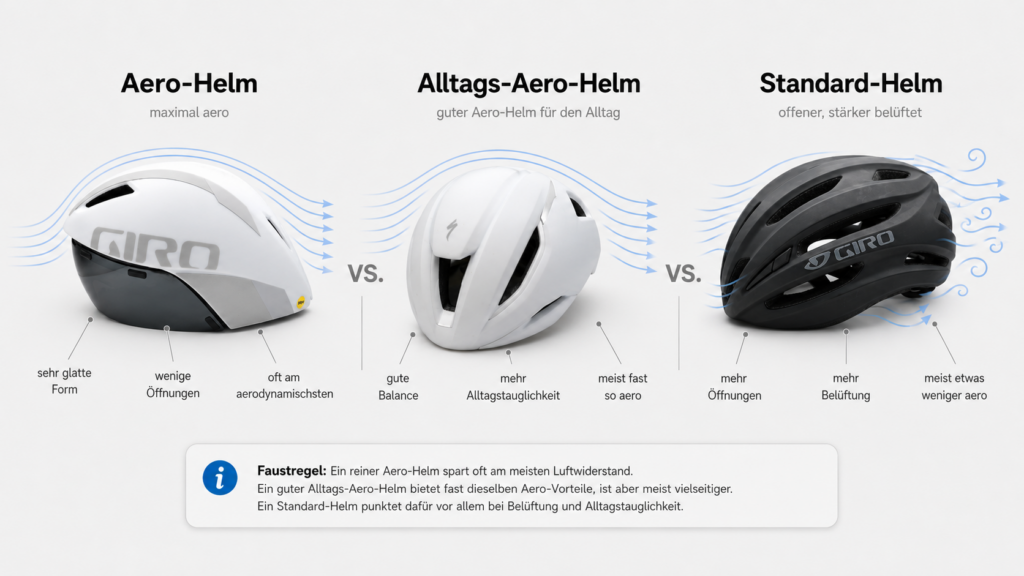
An aero road cycling helmet can realistically save around 3 to 10 watts compared with a very open standard helmet. The helmet therefore provides a comparatively simple starting point for anyone wanting to improve road bike aerodynamics. At higher speeds and from an unfavourable starting point, the difference can appear slightly larger. A true TT or time trial helmet can provide more depending on rider and head position, roughly 10 to 20 watts compared with a normal road helmet. Nevertheless, this is not practical for most road cyclists in everyday use, as TT helmets are hotter, less convenient and visually very distinctive.
The crucial point is that a helmet never works alone. It must suit head position and back shape. An aero road cycling helmet can be fast when the head is held steadily and relatively low. If you constantly look down or to the side, the same helmet may work less effectively. A modern aero road helmet is therefore the more realistic choice for most riders. It offers a measurable benefit without making you look ready to start the time trial world championships.
A good aero road cycling helmet usually costs between 120 and 300 euros. Relative to potential savings, that remains fairly reasonable, particularly if you need a new helmet anyway. Purely for aerodynamics, however, clothing is often the better first step. Feel free to explore our road cycling helmet comparison too: Road cycling helmets compared
Riding position: the biggest brake is on the bike
Riding position is probably the biggest free aero opportunity of all. The rider creates most drag, so a small change to arms, shoulders and head can achieve more than an expensive carbon component. Anyone wanting quick, simple improvements to road cycling aerodynamics can start here at no cost.
Riding very upright on the hoods, with straight arms and broad shoulders, exposes you strongly to the wind. Simply moving into a lower, narrower position can save roughly 10 to 30 watts. This does not mean folding yourself completely in half. Slightly bending the elbows, narrowing the shoulders and avoiding an unnecessarily high head position are often enough.
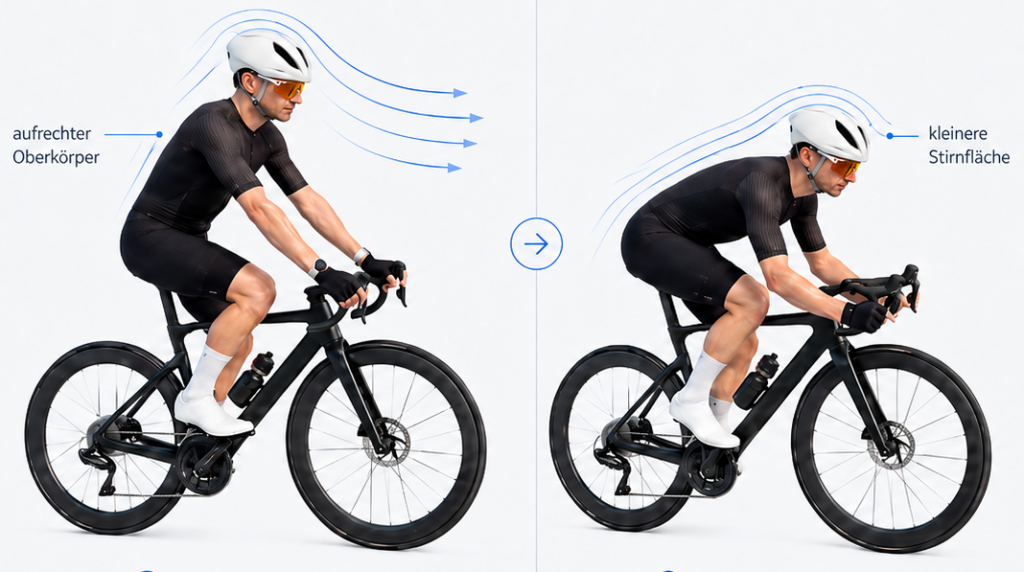
The traditional drops position can save around 5 to 15 watts compared with an upright posture, depending on how low it actually takes you. The modern aero hoods position is often even more interesting: hands on the brake hoods, bent elbows, relatively flat forearms and narrow shoulders. This can save around 10 to 25 watts compared with straight arms on the hoods and is more sustainable for many riders than an extreme drops position.
Head position is also often underestimated. Lowering the head slightly without losing visibility can save a few more watts. Around 3 to 10 watts is realistic, sometimes more. Safety always comes first, however. An aerodynamic position is good only if you can ride in control.
The most important principle is that the fastest position is not the one you can hold for ten seconds in a photograph, but the one you can maintain cleanly for many minutes. Saving 20 watts aerodynamically while producing 30 watts less through an extreme posture gains nothing. Improve position gradually and test it on longer rides.
Wheels: fast, attractive and expensive
Aero wheels are among the most popular upgrades because you see and hear them and immediately feel that the bike is faster. Deeper rims can improve airflow, particularly at higher speeds. The effect is real, but not always as enormous as marketing suggests. A good aero wheelset can save roughly 5 to 15 watts over basic, shallow standard wheels. Very fast riders, ideal conditions and suitable tyres may yield slightly more. In everyday use, the benefit depends heavily on crosswinds, tyre width, rim shape and speed.
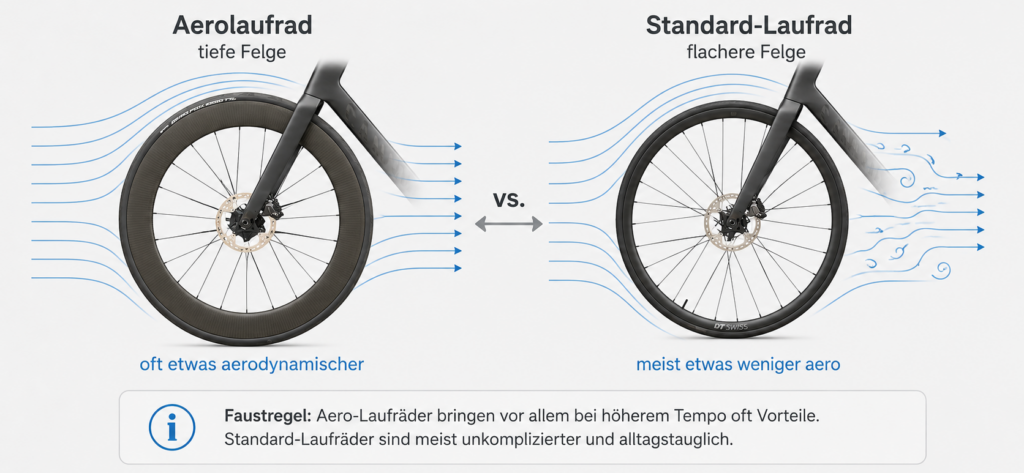
Cost is the major drawback. Solid aero wheels often start at around 800 to 1,200 euros, while premium models quickly reach 1,500 to 3,000 euros or more. Watts saved per euro are therefore considerably less favourable than with clothing, aero socks or a better position.
Riders already using good tyres and an optimised position can sensibly improve further with aero wheels. As a first upgrade, however, they are usually not the most efficient choice.
Aero frames: a lot of money for a smaller difference
An aero frame looks fast and can be faster. Shaped tubes reduce drag, cables are integrated, transitions are smoother and frontal area is optimised. Nevertheless, honesty matters: the frame is not the largest source of drag. The rider remains much more important. Compared with a traditional lightweight road frame, a modern aero frame can save roughly 5 to 15 watts. Some manufacturer claims are higher, but often arise under tightly controlled conditions and at higher speeds. On ordinary roads, the actual advantage is usually smaller.
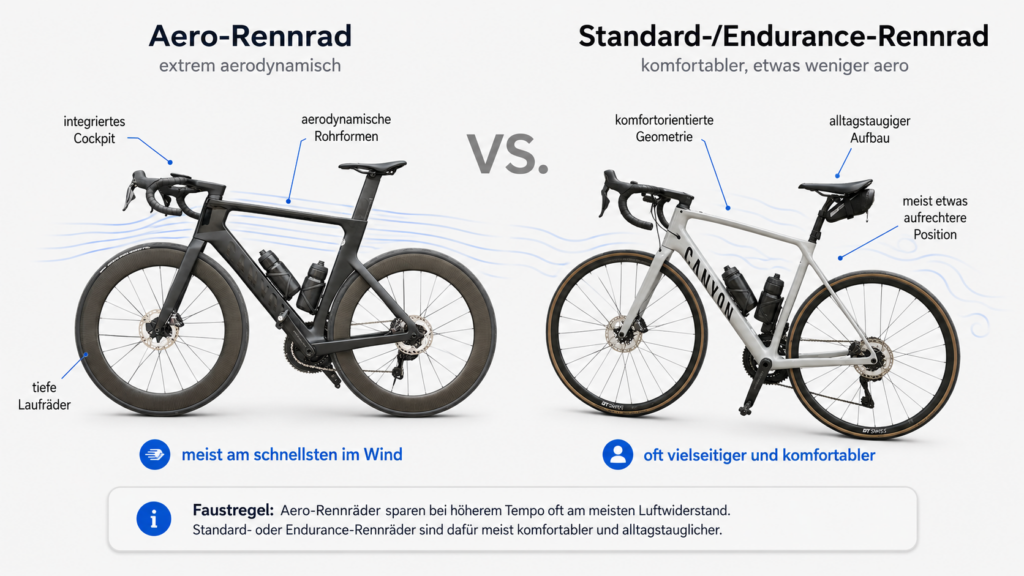
Costs are correspondingly high. An aero frameset often costs between 2,500 and 6,000 euros, with complete aero road bikes quickly reaching 4,000 to 12,000 euros. This can be worthwhile if you race, already want a new bike or simply enjoy technology. Anyone seeking only more speed should first examine clothing, riding position, helmet and tyres. An aero frame is not pointless, but is more a final refinement than a first step.
Cockpit: a clean front, but a high price
The cockpit matters aerodynamically because it sits right at the front in the wind. An integrated aero cockpit with internal cable routing can improve airflow and tidy the bike's front end. Narrower handlebars can also help significantly by bringing the arms closer together, reducing the rider's frontal area and improving road cycling aerodynamics.
An aero cockpit alone may save 2 to 8 watts. A narrower handlebar can help further, particularly if it creates a narrower, steadier riding position. The overall effect may then approach 5 to 15 watts. The real gain therefore often comes not solely from the component, but from the better position it enables.
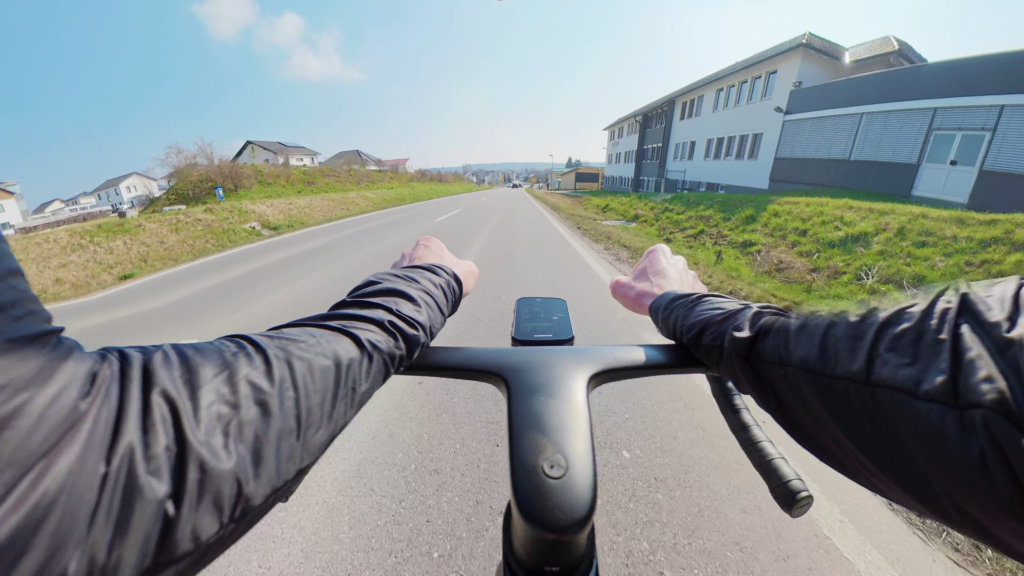
Pricing quickly becomes uncomfortable, however. An integrated cockpit often costs 300 to 800 euros, potentially with additional costs for hoses, bar tape, spacers, stem adjustments and workshop labour. Fully integrated systems can also make maintenance more involved. If you are rebuilding your bike anyway or having a suitable bike fit, a narrower, more aerodynamic cockpit is worth considering. For a few watts alone, I would not recommend it as the first upgrade.
Tyres and setup: more than aerodynamics, but still fast
Tyres affect aerodynamics as well as rolling resistance. Tyre and rim widths must work together. An overly wide tyre on a narrow rim can be aerodynamically unfavourable even if it rolls comfortably. At the same time, a high-quality tyre with good rolling resistance can offer more on the road than a slightly more aerodynamic but slower tyre.
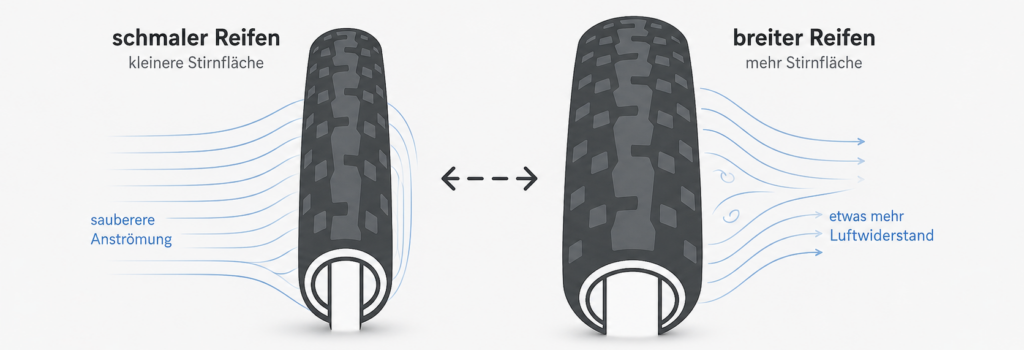
The purely aerodynamic saving from a well-matched tyre and rim setup might be 1 to 5 watts. However, the total speed gain from better tyres can be significantly greater because rolling resistance also decreases. Cost: around 80 to 180 euros for two good tyres, depending on the model. This often makes tyres one of the most worthwhile upgrades of all, even if they do not look as spectacular as carbon wheels.
* These are the tyres I rideThe correct tyre pressure matters too. More pressure is not automatically faster on real roads. Riding at a suitable pressure saves energy, improves comfort and helps you maintain your aero position for longer.
What I would change first
If you want to improve your road bike aerodynamics quickly and easily, I would start with clothing. A close-fitting jersey or a good skinsuit, aero socks and a well-fitting helmet offer a lot for relatively little money. Next comes body position. It costs nothing but requires attention and some practice.
Only after addressing these simple things would I consider expensive upgrades such as wheels, an aero frame or an integrated cockpit. These parts can make you faster, without question. But they are expensive and often deliver less than expected if the rider is still sitting in the wind like a parachute.
Aerodynamics need not be complicated. No flapping clothing, narrow shoulders, bent elbows, a steady head and a suitable helmet are often enough to make you noticeably faster and reduce aerodynamic drag on your road bike. That is precisely what makes aero in road cycling so interesting: the biggest watt savings do not always come from the most expensive equipment, but from the simplest changes.
0 Comments