

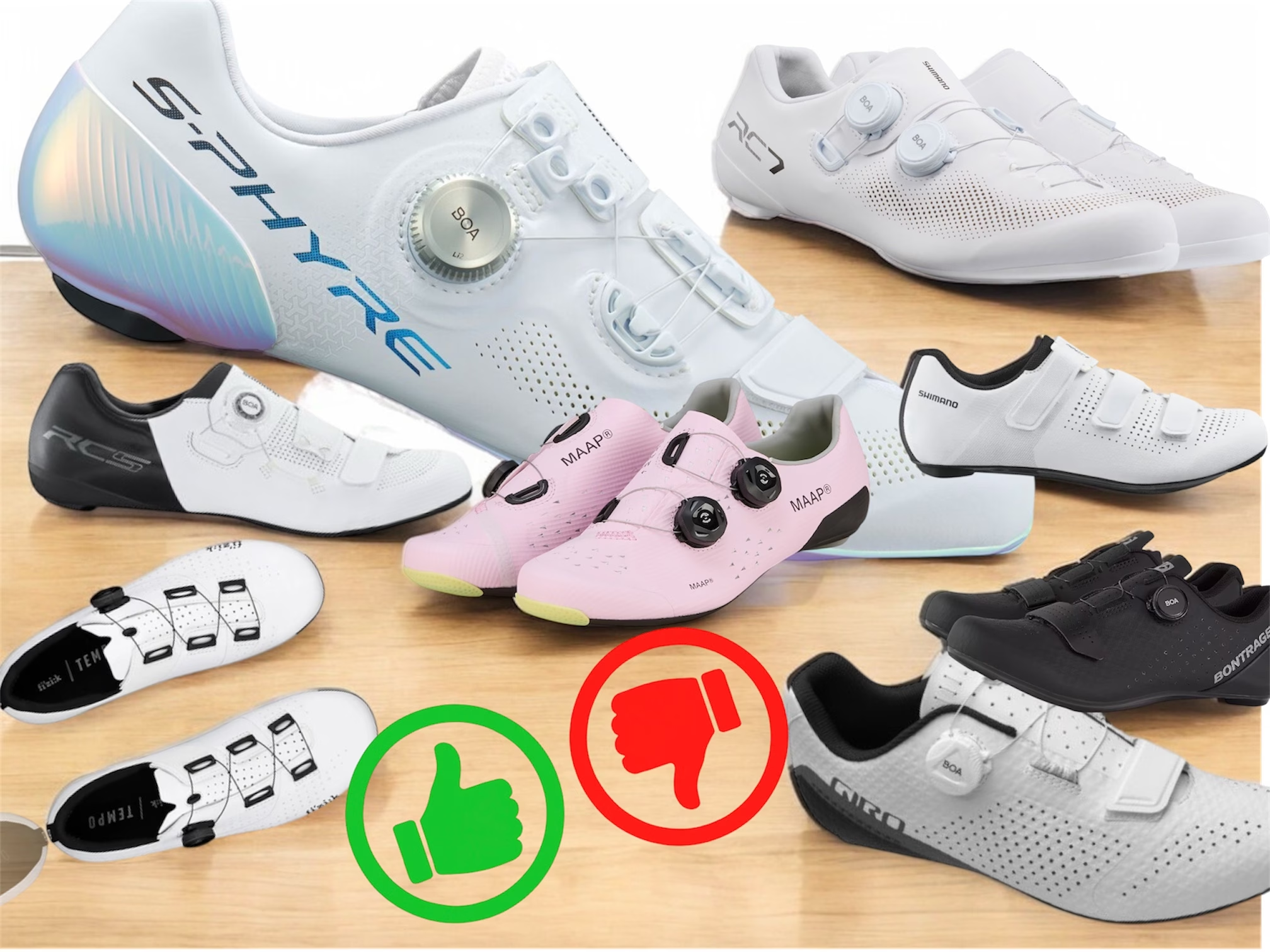
Which road cycling shoes suit your pedals, feet and rides? Here are eight current road models, from entry-level shoes to carbon racing shoes, with product images, clear differences and direct shop links.
The eight road cycling shoes compared directly
The table shows the key differences. Select a model name to jump to its more detailed section. On small screens, swipe the table sideways.
| Model | Use | Features | Offer* |
|---|---|---|---|
 Shimano RC302 | Regular rides, first BOA shoe | 1 × BOA L6 Fibreglass-reinforced nylon | Check price*Amazon |
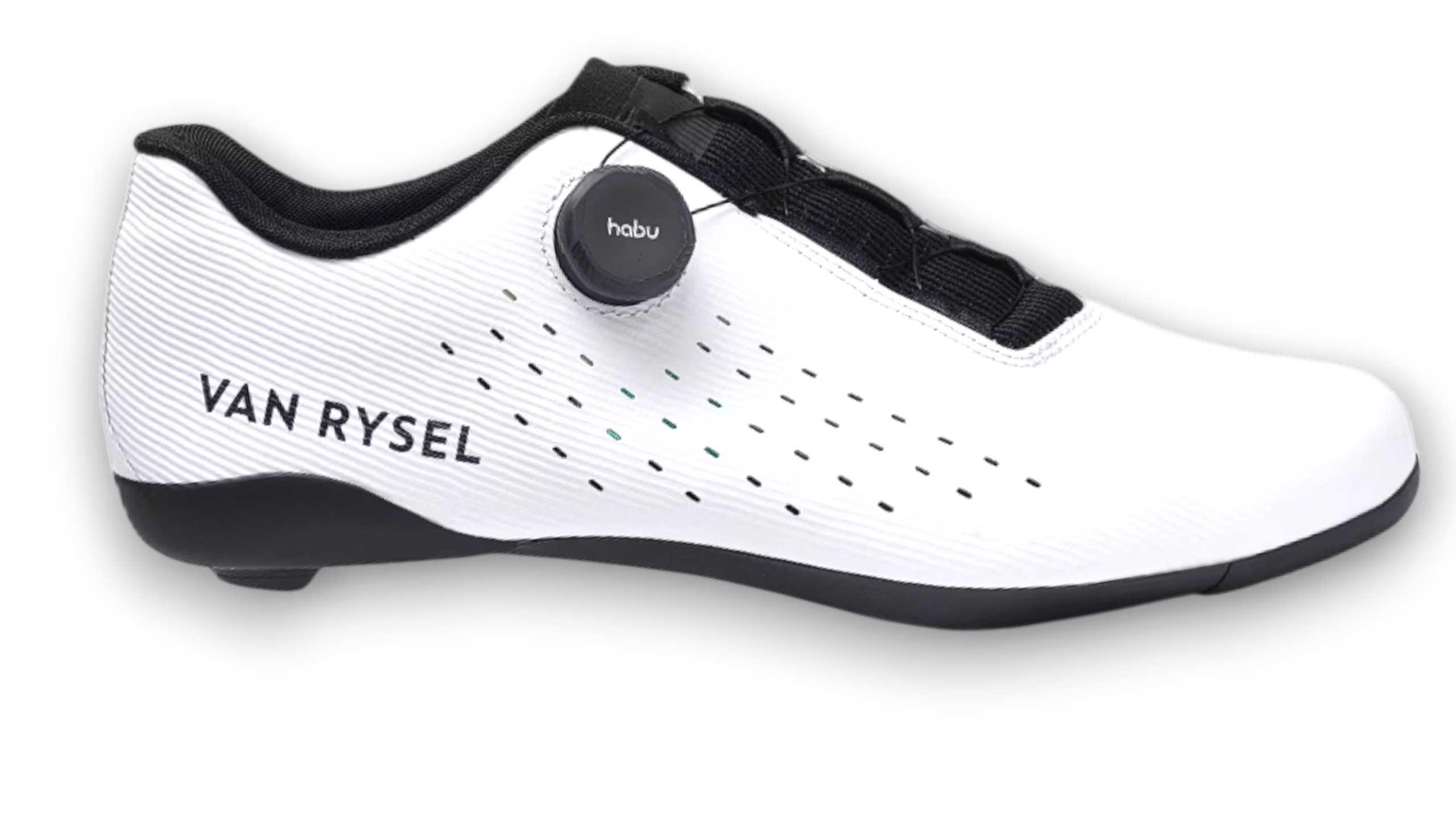 Van Rysel EDR | Touring and regular training | 1 × habu Fit System Li2 Fibreglass-reinforced nylon | Check availability on Amazon*Decathlon |
 Shimano RC503 | Ambitious training and long rides | 1 × BOA L6C Carbon-fibre-reinforced nylon | Check price*Amazon |
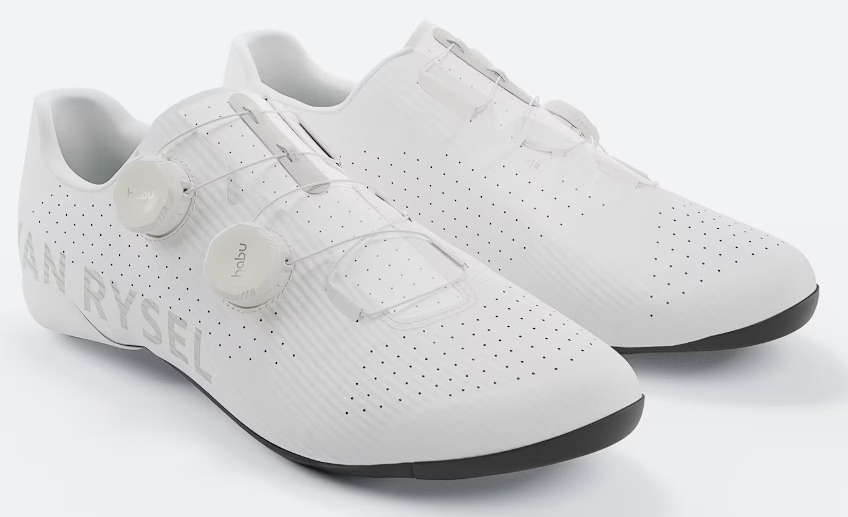 Van Rysel RCR-R | Racing and performance-focused training | 2 × habu Fit System Li2 100% carbon according to the manufacturer | Check availability on Amazon*Decathlon |
 Shimano RC703 | Fast training and racing | 2 × BOA L6 Type Z Hollow carbon midsole | Check price*Amazon |
 Fizik Vento Omna Wide | Training, touring and more forefoot space | 1 × BOA L6 R5 nylon composite sole | Check price*Amazon |
 Shimano S-Phyre RC903 | Racing and demanding training | 2 × BOA Li2 Carbon racing sole | Check price*Amazon |
 Sidi Shot 3 | Racing, precise adjustment, premium | 2 × NUUN 001C R1FC carbon with Nexus Bridge | Check price*Amazon |
* Affiliate links: If you buy through a link marked this way, I may receive a commission. There is no additional cost to you. Product images load only after you approve the relevant media service. Prices, colours, widths and available sizes may change.
This road cycling shoe review and comparison combines current manufacturer data and checked product offers with our linked practical S-Phyre test. The other models are compared editorially; no additional joint practical test of all eight shoes has taken place.
The current road cycling shoes in detail
1. Shimano RC302
- Use: Regular rides, first BOA shoe
- Closure: 1 × BOA L6
- Sole: Fibreglass-reinforced nylon
- Fit: Standard; Wide depending on the version
The RC302 is a sensible starting point if you want a proper road cycling shoe with a dial closure. Its fibreglass-reinforced nylon sole is less uncompromising than a pure carbon racing sole. A BOA dial tightens the lacing routed over the forefoot. This is a straightforward concept for training and touring. Trying it on remains crucial: even an affordable shoe must hold your heel without constricting the forefoot.
- Easily readjusted dial closure
- Training-focused sole rather than maximum racing stiffness
- Only one jointly controlled closure zone
- Limited suitability for walking with road cleats
Manufacturer information / current product page. The product image and retailer's offer may show a particular size or colour.
2. Van Rysel EDR
- Use: Touring and regular training
- Closure: 1 × habu Fit System Li2
- Sole: Fibreglass-reinforced nylon
- Fit: Check the size chart and toe room
EDR is the current name of the Decathlon shoe previously listed as NCR. A Li2 dial closure and fibreglass-reinforced nylon sole make it an interesting choice for budget-conscious riders who train regularly. The focus is a touring and training shoe with good adjustability. Check the fit with your cycling socks before fitting cleats: the closure should distribute pressure evenly, particularly over the instep.
- Li2 dial closure in a budget-conscious specification
- Mesh and training-focused sole construction
- One closure zone rather than two independent dials
- Not a pure carbon racing sole
Manufacturer information / current product page. The product image and retailer's offer may show a particular size or colour.
3. Shimano RC503
- Use: Ambitious training and long rides
- Closure: 1 × BOA L6C
- Sole: Carbon-fibre-reinforced nylon
- Fit: Standard; Wide depending on the version
The RC503 is the current RC5 generation and successor to the RC502. Shimano uses a carbon-fibre-reinforced nylon midsole and revised lacing with a BOA L6C dial closure. The RC503 is interesting if you want performance-focused equipment without immediately needing an expensive full-carbon shoe. When buying, check whether Standard or Wide suits your foot better. More tension on the dial cannot replace the correct shoe width.
- Current RC5 construction with revised lacing
- Performance-focused features below the top models
- No independently separated forefoot and instep adjustment
- Fit and the correct width remain crucial
Manufacturer information / current product page. The product image and retailer's offer may show a particular size or colour.
4. Van Rysel RCR-R
- Use: Racing and performance-focused training
- Closure: 2 × habu Fit System Li2
- Sole: 100% carbon according to the manufacturer
- Fit: Performance-focused; trying it on is especially important
The RCR-R remains relevant because it combines a full-carbon sole with two separate dial closures. This allows more targeted adjustment over the instep and forefoot than a single-dial system. The construction targets riders clearly focused on road cycling. Nevertheless, do not buy it solely for a stiffness rating: a hard shoe that creates pressure is the worse choice over long distances.
- Full-carbon sole
- Two separately operated dial closures
- Performance-focused fit does not suit every foot
- Limited walking comfort with external road cleats
Manufacturer information / current product page. The product image and retailer's offer may show a particular size or colour.
5. Shimano RC703
- Use: Fast training and racing
- Closure: 2 × BOA L6 Type Z
- Sole: Hollow carbon midsole
- Fit: Standard and Wide as different versions
The RC703 adopts several design ideas from the S-Phyre range. These include a low stack height and a stiff carbon midsole with ventilation openings. Two Type Z BOA L6 dials allow separate adjustments. Compared with the RC503, it focuses more strongly on a direct, race-oriented connection to the pedal. Check that the offer specifies RC703 and the correct width; RC702 is the older generation.
- Two independently operated BOA dials
- Carbon construction with ventilation openings
- Performance fit requires careful sizing
- Higher price than entry-level models
Manufacturer information / current product page. The product image and retailer's offer may show a particular size or colour.
6. Fizik Vento Omna Wide
- Use: Training, touring and more forefoot space
- Closure: 1 × BOA L6
- Sole: R5 nylon composite sole
- Fit: Wide version; do not confuse it with Regular
The Omna Wide adds an explicitly wider fit to the comparison. Particularly if a standard shoe presses at the sides, the correct width is more useful than simply choosing a longer size. Fizik combines a single BOA L6 dial closure with an R5 nylon composite sole. The focus is regular road cycling rather than maximum carbon stiffness. The linked product is the Wide version; the regular Omna uses a different last.
- Dedicated Wide version for more foot volume
- Training-focused nylon composite sole
- Only one shared closure adjustment
- The extra volume may be a disadvantage for narrow feet
Manufacturer information / current product page. The product image and retailer's offer may show a particular size or colour.
7. Shimano S-Phyre RC903
- Use: Racing and demanding training
- Closure: 2 × BOA Li2
- Sole: Carbon racing sole
- Fit: Close race fit; check Wide separately
The RC903 remains in the selection as a continuing S-Phyre model. It combines a carbon racing sole with two BOA Li2 dial closures and a stabilising heel construction. Rennradguru has its own practical test of this shoe, which also focuses on its close, performance-oriented fit. This is a shoe for riders who like a very firm connection to the pedal; its price and fit argue against an impulsive purchase as a first shoe.
- Finely adjustable Li2 dial closures
- Race-oriented carbon construction and our own experience report
- Premium price
- Performance fit is not a universal comfort solution
Manufacturer information / current product page · Read our own practical test. The product image and retailer's offer may show a particular size or colour.
8. Sidi Shot 3
- Use: Racing, precise adjustment, premium
- Closure: 2 × NUUN 001C
- Sole: R1FC carbon with Nexus Bridge
- Fit: Millennium last; follow Sidi's size chart
The Shot 3 replaces the Shot 2S in the current selection. Sidi uses two NUUN 001C aluminium dial closures, an R1FC carbon sole and an individually adjustable heel construction. The manufacturer lists the shoe in its SS26 collection. It is interesting for riders who like the Sidi fit and place high value on adjustability. The higher price is worthwhile only if the last suits your foot.
- Current Shot generation with two dial closures
- Carbon sole and adjustable heel retention
- Very high price
- Always try them on to check the last and sizing
Manufacturer information / current product page. The product image and retailer's offer may show a particular size or colour.
Buying road cycling shoes: fit before carbon
A good road cycling shoe holds the heel, leaves enough toe room and distributes closure pressure evenly. A stiffer or more expensive model is therefore not automatically better. For touring and regular training, the RC302, EDR or RC503 may be more sensible than a very firm premium racing shoe.
Which road cycling shoes suit wide feet?
Start with the last shape and explicitly offered width. The Fizik Omna Wide is already linked as a wider version in this selection. Some Shimano ranges are also offered in Wide; check the exact version in the relevant shop. Simply ordering a larger size often mainly adds length and can reduce heel retention. Foot length, width, instep height and the specific size chart are what matter.
How to try on road cycling shoes
Wear the cycling socks you will use on the bike. Tighten the closure moderately at first and check that the heel stays stable when lifting. Your toes should be able to move while the foot remains supported laterally. Keep the shoes on for a few minutes. If securing the forefoot requires extreme tightening, or you feel pressure points before applying any load, the shape probably does not fit. Clarify return conditions before fitting cleats or riding outside.
BOA, habu and Sidi: one dial closure or two?
A single dial is quick and straightforward. Two separate dial closures allow more targeted pressure distribution between forefoot and instep. This can help with a sensitive instep or close performance fit, but it does not guarantee a better fit. Systems also differ in how they release and readjust. Try the controls before buying and follow the instructions for the particular system.
Carbon or nylon: how stiff should the sole be?
Carbon racing soles target riders who prefer a very direct, firm pedalling platform. Nylon and composite soles can provide a budget-conscious, training-focused alternative. Stiffness ratings from different brands cannot be compared on a common scale. A 12 from one brand therefore does not prove a measurable advantage over a differently labelled sole. The overall fit, including the insole and cleat position, matters when buying.
Distinguishing SPD-SL, Look Kéo and SPD correctly
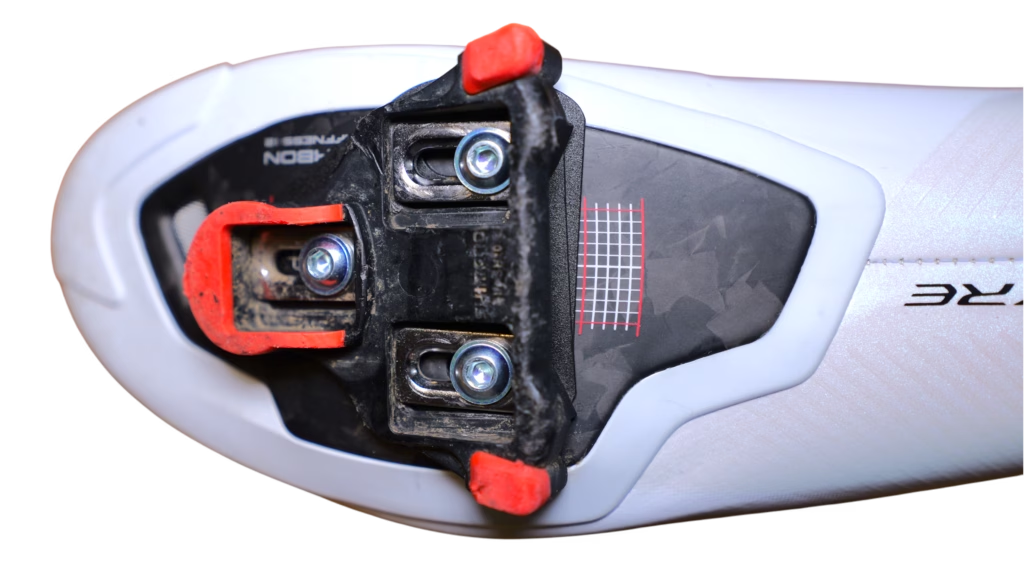
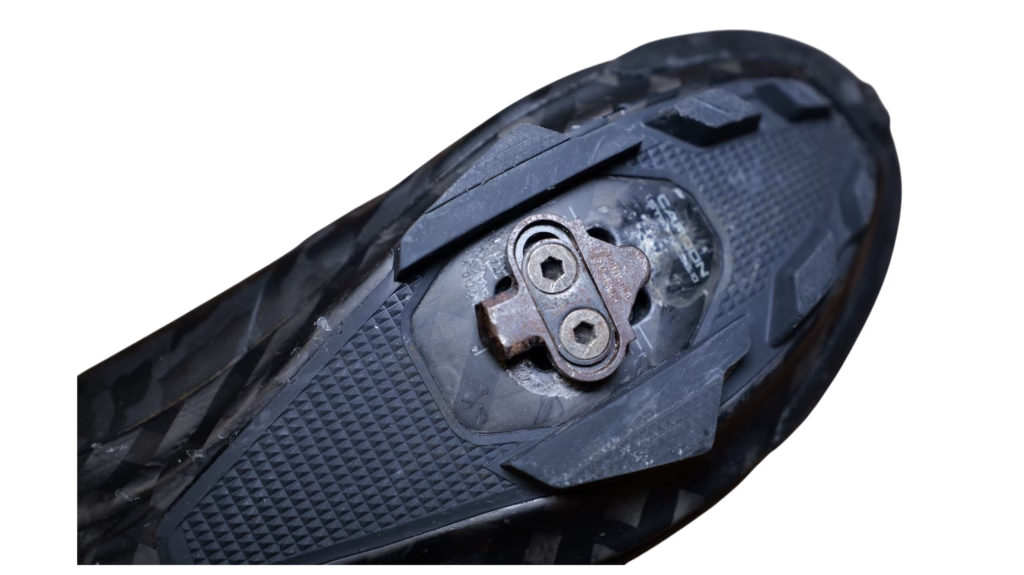
All eight selected shoes here are road models for a 3-bolt cleat mount. Typical systems include Shimano SPD-SL and Look Kéo. Cleats nevertheless remain system-specific: a Shimano cleat does not automatically fit a Look pedal simply because both shoes use the same hole pattern.
SPD with two bolts is a different system. It requires a compatible 2-bolt shoe, usually from the gravel, touring or MTB category. If you frequently walk longer distances, a shoe with a recessed 2-bolt cleat is generally more practical. Speedplay may require a suitable adapter plate on compatible 3-bolt shoes; check approval for the specific combination.
Which choice suits your riding?
For beginners: Compare the RC302 and EDR by fit first. For regular performance-focused training: The RC503 and RC703 offer different levels of ambition in sole and closure design. For carbon racing shoes: The RCR-R, RC903 and Shot 3 are suitable candidates to try on. For a wider forefoot: Start with the Omna Wide and, where appropriate, specifically check Wide versions of Shimano models.
Care and durability
Wipe shoes with a damp cloth after wet or dirty rides and let them dry at room temperature. Remove insoles if they are damp. Direct heat from radiators can stress materials and adhesives. Check cleat bolts according to the manufacturer's instructions and replace heavily worn cleats in good time. For longer walks, protective covers compatible with your cleat system may be useful.
Frequently asked questions about road cycling shoes
Which road cycling shoes make sense for beginners?
A well-fitting 3-bolt shoe such as the RC302 or EDR is sufficient for many first rides. Budget for compatible pedals, cleats and any necessary setup. The most expensive shoe offers no advantage if its shape does not suit your foot.
Do road cycling shoes always run small?
There is no reliable rule for all brands. Use the specific manufacturer's size chart and measure both feet. Compare widths too. A blanket recommendation to buy one or two sizes larger is not sensible.
Can I use these shoes with my existing pedals?
Check the pedal model first, then its associated cleat system and finally the shoe's mounting pattern. Cleats often need to be purchased separately. All three must match; “clipless pedal” alone is not sufficient compatibility information.
Do I need two dial closures for long distances?
No. A suitable last, enough toe room and evenly distributed pressure matter more. Two closures offer extra adjustment options but cannot make a fundamentally unsuitable shoe fit.
Why are some older models absent from the comparison?
The selection focuses on currently offered models relevant to road cycling. The RC502 and Shot 2S make way for their newer generations. Old clearance stock may still be useful, but it is not the basis of this updated buying guide.
Conclusion: the shoe that fits wins
For many riders, the best place to start is a comfortable training model. Those specifically racing gain additional stiffness and adjustment options with the RC703, RCR-R, RC903 or Shot 3. For wide feet, explicitly choosing the correct width is the more important first step. Always compare model, size, width and cleat mount in the retailer's offer.
0 Comments