
Buying the Right Road Bike
1. Choose the Right Type of Road Bike
If you want to start road cycling and are still a beginner, choosing the right road bike is the most important step into this fascinating sport. A well-chosen road bike not only improves your riding experience but also prevents discomfort such as back pain, knee problems or numbness. To make your introduction to road cycling as enjoyable and motivating as possible, pay particular attention to the following points:
For anyone who likes to push hard: aerodynamic, responsive and built for speed, particularly on fast rides when you turn power into pace.
- Aero focus: saves noticeable energy at high speeds.
- Race handling: agile and precise on tarmac.
- Efficiency: built for speed rather than mixed terrain.
Gravel is a relaxed introduction to ‘anything is possible’: larger tyres provide grip and confidence, and let you ride routes that would quickly become frustrating on a pure road bike.
- Versatile: tarmac, gravel and country tracks – you stay flexible.
- Controlled: more stable, forgiving and beginner-friendly.
- Adventure: perfect for exploring and finding new favourite routes.
An endurance road bike is your companion for ‘simply enjoying longer rides’: more comfortable, calmer and dependable – just right for building endurance without your body complaining early on.
- Comfortable position: easier on your back and neck.
- Everyday riding & training: ideal for regular rides.
- Forgiving: stable, predictable and beginner-friendly.
2. Choose Your Frame Material
Each feature is compared side by side so you can immediately see which material suits your riding style.
Carbon
PerformanceAluminium
Price / Everyday UseMaximum ‘race feel’: efficient, stiff and designed for speed.
Fast enough for training & events, but less focused on high-end racing.
You feel the benefit particularly on climbs and when accelerating.
A little heavier, but often perfectly fine in practice with the right components.
Can be very comfortable, depending on the frame’s lay-up and design.
Solid – comfort often comes from tyre width, pressure and wheels.
More expensive, but worthwhile if you really use the performance.
Great on a budget: more money left for the groupset, wheels and tyres.
Needs more ‘babying’: you tend to be more careful about crashes and transport damage.
Straightforward: ideal for training, commuting, storage in a cellar or hallway, and transport.
Repairs are possible, but not everywhere and not always cheaply.
Usually more straightforward – ideal if you simply want to ride.
3. Choose the Right Components
As a beginner, you do not need a high-end groupset with 24 gears. A 2×8 or 2×9 groupset is often more than enough to tackle a wide range of routes.
-
Shimano Sora Robust, reliable and a true classic for beginners.
-
Shimano Tiagra A little higher quality, with smoother shifting and very common on entry-level road bikes.
-
SRAM Apex A very solid entry-level groupset with reliable shifting and often a practical gear range, making it well suited to hilly routes too.
-
SRAM Rival Noticeably higher quality than Apex, with more precise shifting – a popular step towards sportier riding without going straight to the high end.
-
Shimano 105 A classic for ambitious riders: very reliable, crisp shifting and strong value for money.
-
Shimano Ultegra Lighter, with an even smoother shifting feel – ideal if you ride often and value performance.
-
SRAM Force Light, sporty and very precise – a strong choice for fast training rides and longer outings.
-
SRAM Red The top model, focusing on minimum weight and maximum performance – particularly appealing if you ride a lot or focus on racing.
4. The Right Frame Size
Frame size is crucial for your riding position and power transfer. If a bike is too large or too small, it can cause poor posture and, over time, pain, particularly in the back, neck or knees.
Online Calculator: The Right Frame Size (Road / Gravel)
The calculator gives you a very good initial recommendation if you measure your inseam correctly. For the final choice, always check the manufacturer’s size chart because stack and reach vary.
Your Measurements
Your Result
*Saddle height starting point: bottom bracket centre → top of saddle measured along the seat tube.
Accuracy note: Frame measurements are not standardised (seat tube length ≠ stack/reach). Two ‘56’ frames can ride very differently, which is why a range is given.
5. Find the Right Pedals
It is no secret that most road bikes are supplied without pedals. It is therefore worth looking for suitable pedals early on. For beginners, flat pedals or combination pedals are suitable because you can also use them with ordinary shoes, making the transition easier.
However, almost everyone in road cycling uses clipless pedals for better power transfer, greater efficiency and control. Flat pedals really only make sense for your first rides or while getting used to the bike. My tip: save money and buy clipless pedals straight away!
Traditional Road Clipless Pedals
Maximum Efficiency-
Very good power transfer Ideal for training, group rides and long outings on tarmac.
-
For typical road cycling shoes Usually lighter & more efficient, but less comfortable for walking.
MTB / Gravel Clipless Pedals
Everyday Use & Control-
Beginner-friendly Often easier to walk in (shoes with recessed cleats) and practical for everyday use.
-
Great for gravel & Stop- & -Go Very popular for frequent stops, gravel riding and adventure routes.
Practise clipping in and out on a patch of grass, a quiet road or beside a wall you can hold onto. Start with one foot clipped in, roll off slowly and practise deliberately unclipping before stopping until it becomes routine. Small tumbles at the beginning are normal – a little practice quickly builds confidence.
The Right Road Cycling Accessories
When you start road cycling, you do not need professional equipment straight away. But certain items are essential for both safety and comfort. For beginners in particular: functionality and safety come first.
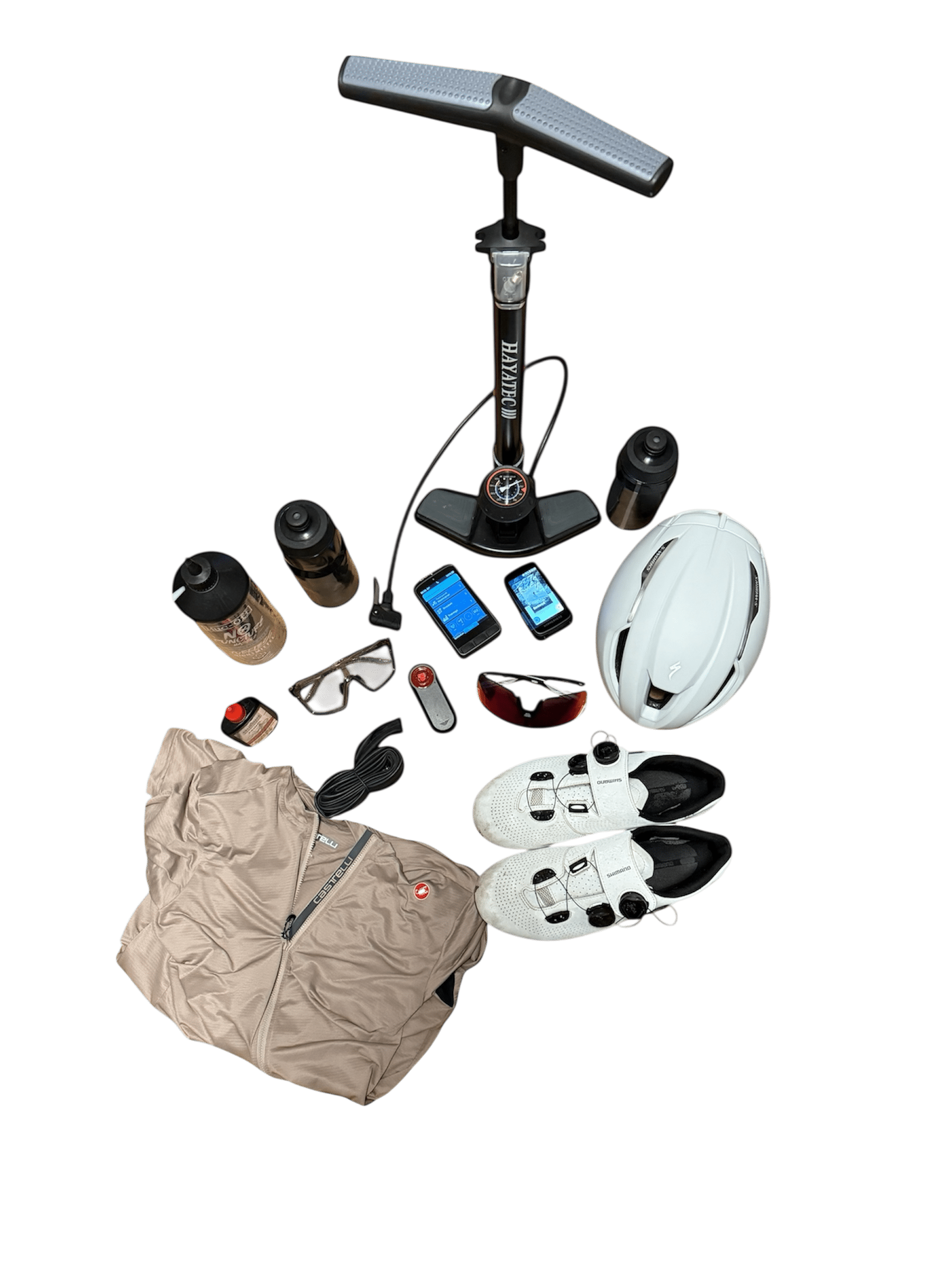
These essentials should be part of every ride, especially when you are starting out in road cycling.
Essential Equipment
-
Bike helmet Essential for your safety. Look for a good fit and certification, such as CE/TÜV.
View road bike helmet reviews 2026 → -
Padded cycling shorts Essential for comfort: reduce pressure points and saddle discomfort, especially at the beginning.
View recommendation* -
Road cycling jersey Breathable and moisture-wicking, with rear pockets for snacks and tools.
View jersey* -
Cycling shoes & pedals Clipless systems, such as SPD-SL/Look, improve efficiency & control. Many riders switch quickly.
Cycling shoes & pedals guide →
Practical Accessories for Your Ride
-
Multitool Compact (Allen keys / screwdriver, possibly a chain tool) – ideal for minor repairs.
View multitool* -
Spare inner tube & tyre levers Punctures happen – a spare tube + tyre levers belong in every bag.
View spare inner tube* -
Mini pump or CO₂ cartridge Get riding again quickly after changing a tube. Check compatibility with Presta/Sclaverand valves.
View mini pump* -
Water bottle & bottle cage Essential, especially in summer, so you can drink safely at any time.
View set*
You do not need a professional setup, but you should not go without the right essentials. A helmet, cycling shorts, a jersey and a few essential tools make road cycling safer and more enjoyable for beginners, so minor problems do not leave you stranded.
When you start road cycling, you do not need professional equipment straight away. But certain items are essential for both your safety and your enjoyment
Technique & riding practice
Road cycling is not simply ‘cycling faster’; it differs from everyday cycling in many ways. Beginners should deliberately take time to learn the right techniques and get used to the different feel of the bike. Here are the most important tips, from riding position to cornering.
Riding Position: The Right Posture Makes the Difference
An ergonomic riding position is the foundation for efficient, comfortable cycling. As a beginner, pay particular attention to:
-
Sporty but comfortable Lower than on a city bike, but without tensing up. Stay relaxed.
-
Keep your hands relaxed on the bars Use a light grip and change position regularly (tops / hoods / drops).
-
Back slightly bent A natural, gentle curve – neither rounded nor overarched.
-
Head up, eyes ahead Do not stare at the front wheel – spot obstacles early.
A professional bike fit helps beginners in particular find their optimal riding position.
Shifting & pedalling: ride efficiently
Many beginners pedal with too much force and too low a cadence. A higher cadence of around 90–100 rpm is usually more efficient and easier on the joints.
-
Smooth shifting Shift early, before climbs, to protect the chain and drivetrain.
-
Use easier gears Ride smoothly and steadily to reduce muscular fatigue.
-
Pedal rather than push Use a smooth, even pedal stroke rather than jerky, brute force.
For beginners, consistent cadence matters more than maximum muscular force.
Cornering Technique: Safely Around Every Bend
-
Adjust your speed beforehand Brake before the corner, not halfway through it.
-
Look where you want to go Look through the corner, towards where you want to ride, not just ahead of the front wheel.
-
Lower your centre of gravity Lean the bike gently into the corner and shift your weight in a controlled way.
-
Outside pedal down Keep the outside pedal down + apply pressure for stability and grip.
Corners are challenging at first, but a little practice will quickly build your confidence.
Braking: Control Rather Than Panic
-
Apply the front brake progressively Most braking power comes from the front – brake smoothly and evenly.
-
Do not brake hard in a corner Make only small corrections while leaning, otherwise you risk sliding.
-
Use both brakes Balance front + rear braking to stay stable and in control.
Your First Riding Practice: Practice Makes a Road Cyclist
Take your time and start on quiet routes with little traffic. Tarmacked cycle paths or farm tracks, access roads and flat loops that require little technical skill are ideal. Practise shifting, braking and cornering, and test your riding position – your confidence will grow with every ride.
Clipping into Clipless Pedals
Practise clipping in and out in a safe environment first, such as grass, a quiet road or beside a wall. Start with one foot clipped in and practise unclipping before stopping until it becomes routine.
Learn Technique, Build Confidence
Keep your shoulders relaxed, your upper body steady and your eyes looking ahead. With patience and repetition, you will quickly become more efficient and confident.
The best start comes from patience, practice and the right basics: posture, a high cadence, good cornering technique and controlled braking. This quickly builds confidence and helps you get the most out of your road bike.
Road cycling is not simply ‘cycling faster’; it differs from everyday cycling in many ways. Beginners should deliberately take time to learn the right techniques and get used to the different feel of the bike. To help you ride safely and efficiently, here are the most important road cycling technique tips for beginners, from the right riding position to ideal cornering technique.
Training Plan for Road Cycling Beginners
A structured plan helps you start without overdoing it: first get used to the bike & practise technique, then build base endurance before your first longer ride. Increase gradually – your body adapts step by step.
Weeks 1–2: Easy Riding & Getting Used to the Bike
Easy RidingGoal: Get used to the road bike, riding position and basics (shifting, braking, cornering).
-
Ride where traffic is light Cycle paths and farm tracks – focus on control, not speed.
-
Practise hand positions Tops / hoods / drops – avoid tension.
-
Understand your gears Experiment with the gears and shift appropriately before the effort gets hard.
-
Plan stops Adjust your riding position and clothing – small changes make a big difference.
Weeks 3–4: Base Endurance & Improving Technique
BaseGoal: Build solid base endurance + introduce your first moderate efforts. As a guide, you should still be able to talk while clearly working.
-
1× easy ride 60–75 min – ride gently, pedal smoothly and consolidate your technique.
-
1× hilly ride 2–3 short climbs – find the right gear and keep pedalling smoothly.
-
1× faster sections 3–5 min at a brisk pace with easy riding between – develop a feel for speed.
Weeks 5–6: Complete Your First Longer Rides
Long RideGoal: Complete 60–80 km in one go with steady riding, good pacing and nutrition you have already tested.
-
1× short & more intense 45–60 min with changes of pace (controlled, not all-out).
-
1× medium-distance ride Around 50 km – ride steadily and maintain good technique.
-
1× long ride 60–80 km – start gently; breaks after ~90 min are useful.
Nutrition & Recovery
RecoveryRoad cycling also teaches you about energy: give your body fuel and time. Progress happens during recovery.
Carbohydrate-rich food, such as oats or toast with honey.
Water + snacks every 45–60 min (banana, bar, gel).
Protein + carbs (yoghurt + banana or pasta + vegetables).
With targeted effort, clear goals and patience, you will become noticeably fitter and more confident in 6 weeks. Increase gradually, listen to your body and maintain good technique to enjoy road cycling from the start.
Common Mistakes Made by Road Cycling Beginners
1) Incorrect Riding Position: A Classic Beginner Mistake
A poorly adjusted road bike is not just uncomfortable; over time it can strain your back, neck, knees or hands – a common reason people become frustrated early when they start road cycling.
-
Bike fitting Have your setup adjusted professionally (saddle height, handlebars, stem) – small changes make a huge difference.
-
Self-check Your knee should be slightly bent with the pedal horizontal, and your upper body relaxed and leaning forwards.
-
Take warning signs seriously Numb fingers or tingling toes are signals – do not ignore them.
2) Increasing Training Too Quickly: More Is Not Always Better
Motivation is high, especially when you want to start road cycling. The most common mistake is increasing speed, distance or the number of sessions too quickly – your body needs time to adapt.
-
Build gradually Increase volume by no more than around 10–15% per week – your tendons & joints will thank you.
-
Plan rest days At least 1–2 rest days per week are essential, especially at the beginning.
-
Listen to your body Tired, exhausted or in pain? Take a break rather than risk overloading yourself.
3) Not drinking & eating enough: loss of energy and concentration
Even shorter rides use fluids and energy. Many underestimate this when starting road cycling and are surprised by drops in performance or ‘bonking’.
-
Eat before riding Choose carbohydrate-rich food, such as porridge or a banana with peanut butter, for steady energy.
-
Drink during the ride Take a few sips at least every 20 minutes, even in cool weather.
-
Pack snacks From ~60 min of riding: bars, gels or fruit – energy crashes often come suddenly.
4) Neglecting Technique: Safe Riding Is a Skill to Learn
Road cycling for beginners involves technique as well as endurance. If you do not practise braking, shifting and cornering, you will ride less confidently and lose enjoyment sooner when starting road cycling.
-
Plan technique rides Practise on quiet routes: braking, cornering lines, where to look and controlling your pace.
-
Shift before the climb Shift down early, before it gets hard, to keep your pedal stroke smooth.
-
Practise clipless pedals safely Practise clipping in and out in a safe place, such as a car park, until it becomes automatic.
-
Handlebar position & brake hoods Change positions and practise controlled braking with both hands.
Whether riding position, training progression, nutrition or technique, typical beginner mistakes are easy to avoid if you start thoughtfully. Take your time, listen to your body and keep going so starting road cycling is enjoyable from the outset and you make safe progress on two wheels.
Staying Motivated
When you first start road cycling, the initial excitement is often huge. But after a few weeks, bad weather, setbacks or everyday stress can make your motivation waver. To help you keep enjoying road cycling over the long term, here are the best tips for sticking with it, recognising progress and keeping it fun.
1. Set Small, Realistic Goals
Especially at the beginning, specific, achievable goals help you stay on track and enjoy one success after another. Instead of aiming straight for a cycling marathon, start with smaller milestones:
- Example: Ride 100 km in a month
- Next step: Get on your bike 3x a week
- Technique goal: Use clipless pedals confidently or improve your cornering
These small goals make progress visible and keep you motivated. Every tick on your list encourages you to continue!
Tip: Use an app or a training diary to record your goals and celebrate your achievements.
2. Find Like-Minded Riders: It Is More Fun Together
Road cycling for beginners does not have to be a solitary activity. Quite the opposite: anyone starting out benefits enormously from sharing experiences with others. Online or locally, riding together brings motivation, advice and, above all, enjoyment.
How to Find People to Ride With:
- Strava: Join local clubs or follow friends to connect online.
- Facebook groups: Look for road cycling groups in your area.
- Clubs and beginner groups: Many cycling clubs offer dedicated beginner groups, often with experienced ride leaders.
Tip: Arranging rides with others strengthens your commitment, making it much more likely you will get on your bike even when the weather is uninspiring.
3. Record Your Progress and Celebrate It!
Nothing is more motivating than visible progress. Whether you are getting faster, riding for longer or simply training more regularly, seeing your progress keeps you motivated.
Tools & ideas:
- Strava, Komoot or Wahoo: record routes, elevation gain and times
- Traditional training diary: Write down how you feel after each ride
- Before-and-after comparisons: Ride the same routes in the first and sixth weeks – you will be surprised!
Tip: Regularly remind yourself of what you have already achieved, not just what remains to be done.
4. Plan Varied and Scenic Routes
Road cycling for beginners can quickly become monotonous if you always ride the same loop. Yet there are so many ways to keep your rides exciting!
Ideas for Motivating Routes:
- Enjoy nature: Choose quiet back roads, fields, woods or riverside cycle paths.
- A destination with a reward: Plan a café, an ice cream shop or a viewpoint as a stop.
- Routes through Komoot: Get suggestions for inspiring routes in your area.
Tip: Save your favourite routes for days when you want to set off without much planning.
5. Put Enjoyment Before Performance, Especially at the Start
For road cycling beginners in particular, it is important not to fixate on numbers, power figures or average speed. Of course, progress is motivating, but the most important factor remains enjoyment.
- Start by riding in a relaxed way rather than pushing too hard.
- Enjoy the surroundings and the sense of freedom on two wheels.
- Do not compare yourself with others too much – your pace is right for you.
Tip: Leave the bike computer at home sometimes and ride by feel. These are often the most enjoyable rides.
Road Cycling for Beginners: Motivation Can Be Trained
Starting road cycling is a great decision for fitness, freedom and inspiration. But perseverance is especially important at the beginning. Realistic goals, beautiful routes, the right company and a focus on enjoyment will keep you motivated beyond the first few weeks.
Remember: every kilometre counts, both for your training and for your personal sense of achievement on the road bike.
Bonus: Maintenance & Care for Your Road Bike
A clean, well-maintained road bike is not only more reliable and safer but also more enjoyable to ride, especially when you are just starting out. Simple, regular care can prevent many mechanical problems. And do not worry: with a little practice, even road cycling beginners can keep their own bikes in good condition.
Why Bike Care Is So Important for Road Cycling Beginners
For road cycling beginners in particular, poor maintenance can quickly become frustrating. A creaking chain, a flat tyre or rubbing brakes do not just spoil the fun; they can also be dangerous. A few basic rules will keep your road bike in shape and your rides worry-free.
1. Clean and Lubricate the Chain Regularly
The chain is the heart of your drivetrain and deserves care. Dirt and dust cause faster wear and unnecessary loss of pedalling power.
How to Do It:
- Clean every 100–200 km or after wet rides
- Wipe with a chain cleaner or a cloth & degreaser
- Then lubricate with dedicated chain oil – not too much!
Tip: A clean, quiet-running chain is the best sign of a well-maintained road bike.
2. Check Tyre Pressure Regularly for Greater Efficiency & Safety
Many road cycling beginners underestimate the importance of correct tyre pressure. Too little air makes the bike sluggish and more prone to punctures. Too much pressure can reduce comfort.
Optimal Tyre Pressure:
- Narrow tyres (23–25 mm): 6.5–8 bar
- Slightly wider tyres (26–28 mm): 5.5–7 bar
- Depends on rider weight, surface and tyre type
Tip: A good track pump with a pressure gauge is worthwhile – check the pressure before every longer ride.
3. Check Your Brakes Regularly for Safety
For road cycling beginners in particular, safety comes first. That includes working brakes, especially at high speeds and on descents.
What to Check:
- Brake pads: Are they worn? The grooves should still be visible.
- Braking performance: Do the brakes engage evenly and firmly?
- Cables / hydraulics: Check for smooth operation; adjust or have them bled if necessary
Tip: If you are unsure, leave the adjustments to professionals at a bike shop.
4. Adjust Your Gears, or Have Them Adjusted, for Smooth, Precise Shifting
Noisy or delayed shifting can become frustrating and also wear components out more quickly. Many road cycling beginners do not realise that vibration, dirt or minor knocks can easily put a drivetrain out of adjustment.
How to Keep Your Gears Working Well:
- Check cables regularly (on mechanical groupsets)
- Align the rear derailleur: A bent derailleur hanger is a common culprit
- Fine-tune using the shifters’ barrel adjusters
Tip: A quick functional check once a month will save you plenty of trouble in the long term.
5. A Professional Bike Shop Check Is Recommended Every 6 Months
Even if you do basic maintenance yourself, a professional inspection never hurts, especially when you are new to road cycling and do not yet know every bolt.
What the Check Includes:
- Adjust the brakes & gears precisely
- True the wheels
- Check the chain and cassette for wear
- Check bearings (bottom bracket, headset, hubs)
- Check bolts & tighten if necessary
Tip: Plan a major service in spring and, if needed, another before winter – your road bike will thank you!
Extra: A Thorough Clean to Keep Your Road Bike Like New
Treat your bike to a thorough wash now and then:
- Lukewarm water, a sponge & gentle bike cleaner
- Never use a pressure washer!
- Relubricate the chain after drying
Tip: A clean bike is motivating, and helps you spot problems early.
Road Bike Care for Beginners: Simple but Essential
Anyone starting road cycling should also pay attention to maintenance and care. Do not worry: you do not need to be a professional mechanic. A few simple tasks, some routine and regular checks will keep your road bike in top condition. That means more enjoyable riding, greater safety and fewer unplanned roadside stops.
Verdict: Road Cycling for Beginners – The Right Start for Enjoyable Riding
Starting road cycling does not just introduce you to a new sport; it opens up a whole new way to spend your free time, challenge yourself and see the world from another perspective. If you want to start road cycling, the key is to take a structured but relaxed approach: the right road bike, suitable equipment, a little technical knowledge, a smart training plan and, above all, curiosity and a desire to get moving.
👉 Your next step? Get on your bike, head into nature and enjoy the air rushing past. The adventure starts now.
Ich freue mich, dass ihr euch für meinen Beitrag über Rennradfahren für Anfänger interessiert! Beim Schreiben war es mir besonders wichtig, die häufigsten Stolperfallen und Unsicherheiten am Anfang aufzugreifen – denn ich weiß aus eigener Erfahrung, wie überwältigend der Einstieg manchmal sein kann.
Jetzt interessiert mich eure Meinung:
Was hat euch am Anfang am meisten geholfen oder überrascht? Gibt es Themen, die ihr euch in einem weiteren Beitrag wünscht? Ich freue mich auf eure Erfahrungen und Tipps – gerade andere Einsteiger profitieren davon ungemein!
Vielen Dank für den guten Artikel.
Wie finde ich Gleichgesinnte als Anfänger, um mehr Sicherheit vor allem auch mit den Klickpedalen zu bekommen?
Viele Grüße
Sabine
Hallo Sabine,
vielen Dank für deinen Kommentar! Für mehr Sicherheit mit Klickpedalen hilft am Anfang vor allem Üben in ruhiger Umgebung – im Optimalfall erst einmal auf der Rolle.
Gleichgesinnte findest du oft über lokale Radsportvereine, Rennradgruppen, Fahrradläden, Strava oder Komoot. Achte am besten auf Einsteiger- oder Genussrunden, damit Tempo und Atmosphäre passen. Vielleicht gibt es ja auch im Freundes- oder Familienkreis jemanden, der ebenfalls mit dem Rennradfahren anfangen möchte.
Viele Grüße