

Why the Right Road Bike Saddle Bag Matters
Choosing the right saddle bag is important for many cyclists who want an efficient, safe riding experience. A road bike saddle bag is much more than somewhere to store spare parts or tools. Its construction, size and position can significantly affect riding comfort, with aerodynamics, capacity and mounting method central to the choice.
Why Less Is More on a Road Bike
Every gram counts in road cycling. Unlike trekking or everyday bikes, the priority is not carrying a complete range of equipment but efficiency, speed and a direct connection between rider and machine. This article therefore deliberately focuses on small road bike saddle bags that carry only the essentials for emergencies on a ride.
A compact saddle bag usually holds only a spare tube, a small multitool, two or three patches and perhaps a CO₂ cartridge. Anything more adds weight, affects aerodynamics and ultimately conflicts with the basic idea of performance-focused road cycling. That is why this article concentrates on discreet, light and functional solutions for riders who want to be prepared for punctures without carrying unnecessary bulk.
It is also important to distinguish this from bikepacking. Large saddle bags or systems involving panniers and frame bags for long-distance touring or off-road adventures are outside this article's scope. The focus is not transporting clothing, food or camping equipment, but compact bags for everyday performance road cycling.
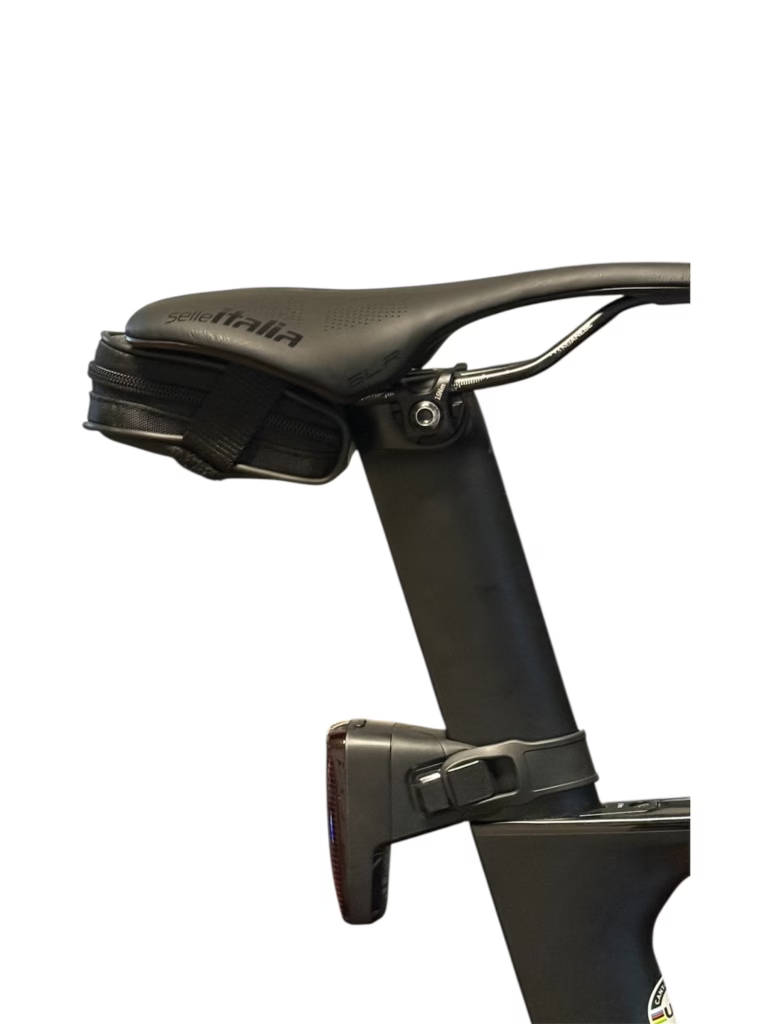
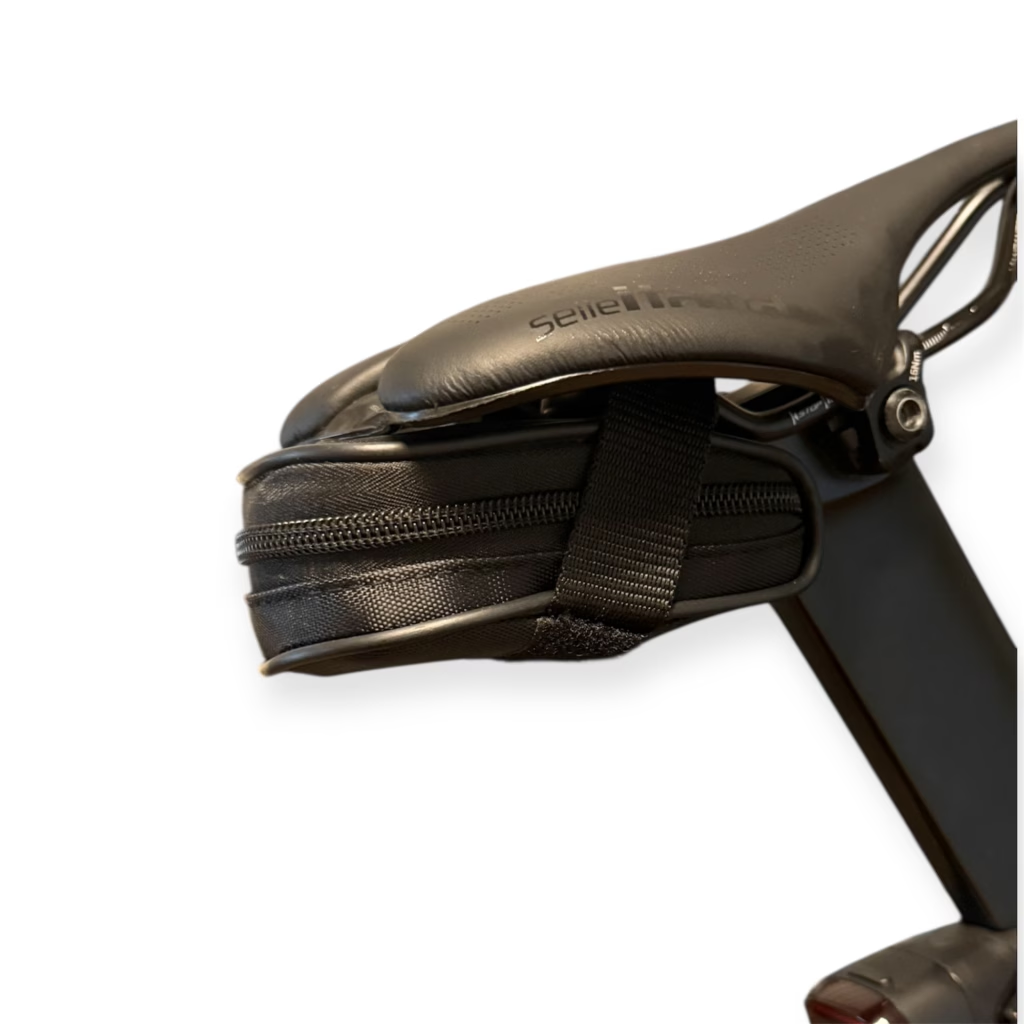
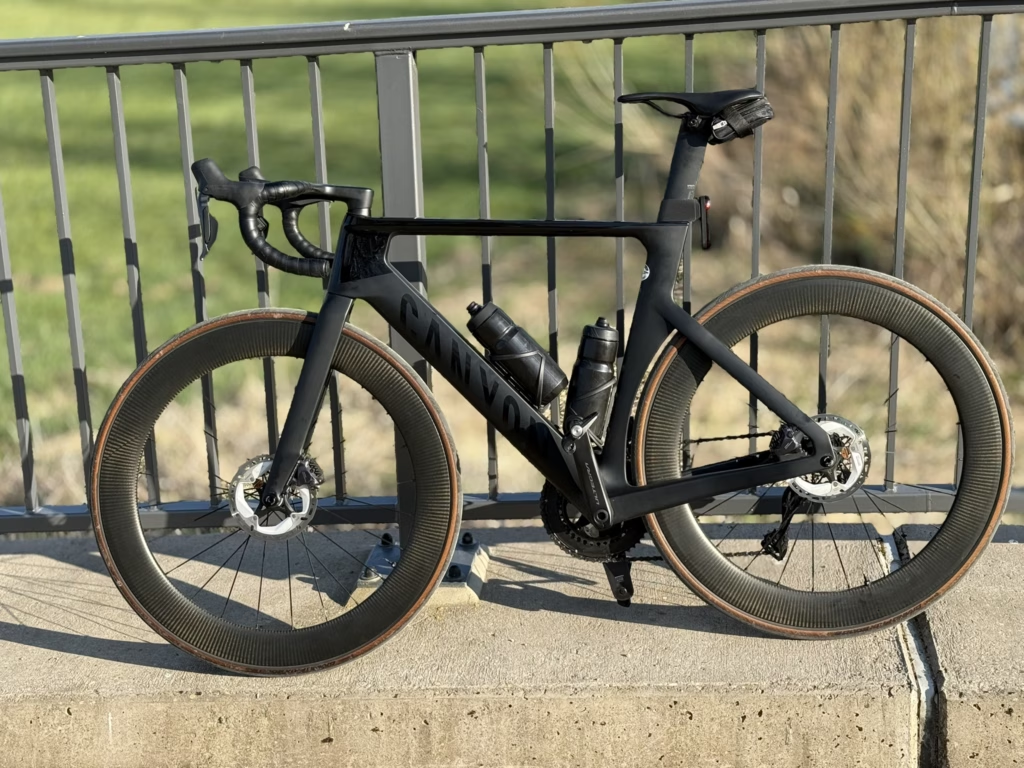
Also pictured is the new Wahoo Trackr Radar. Interested? Read the review here.
Compact and Efficient: Small Road Bike Saddle Bags
A good road bike saddle bag should first be discreet, light and securely mounted. Many cyclists, particularly performance-focused riders, value their bike's appearance and clean lines. A bulky or poorly fitted bag can spoil those looks, while an awkward position can also affect aerodynamics. Many therefore prefer a small road bike saddle bag*, carrying only the essentials while sitting securely and compactly beneath the saddle.
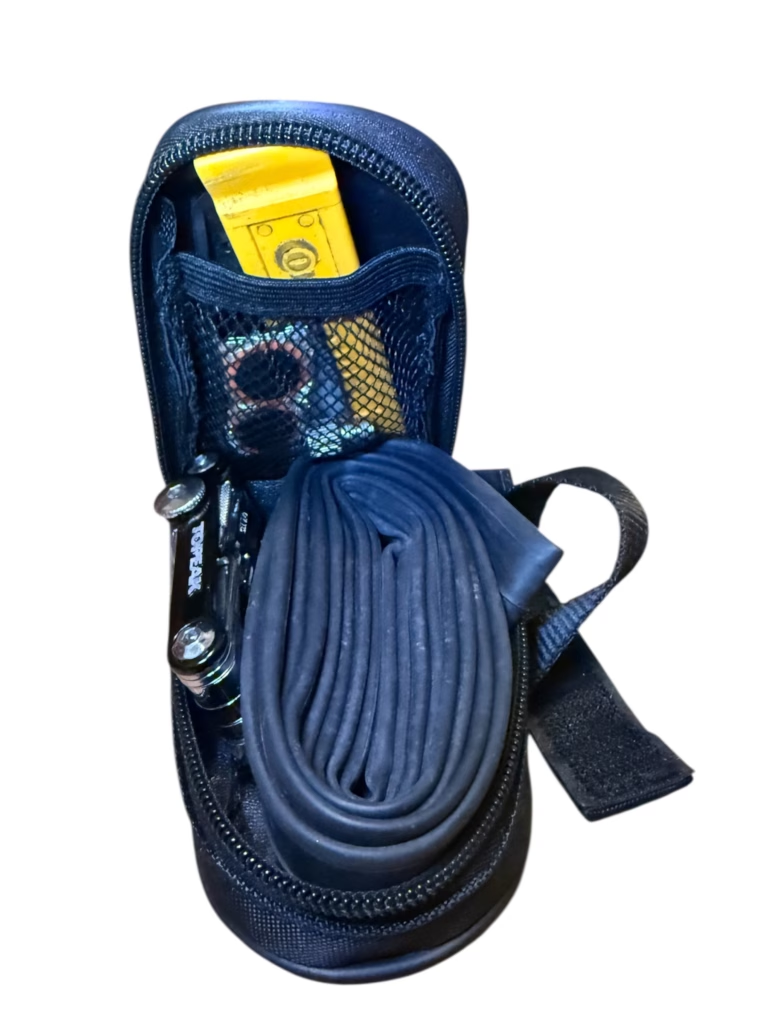
These bags are usually just large enough for a spare tube, tyre lever, CO₂ cartridge kit and perhaps a small set of Allen keys. Carrying more, such as a multitool, puncture repair kit or even a mini-pump kit, requires a slightly larger version, though shape and fit remain important.
Practical Mounting and Material Choices
Models that attach securely to saddle rails or the seatpost using a clip system or hook-and-loop straps are particularly popular. These systems ensure the bag beneath the saddle does not move or fall off during a ride. Quality materials such as water-repellent nylon or TPU-coated textiles also help protect the contents in difficult weather.
Weight matters too. Since every gram counts on a road bike, many models are designed to minimise weight without sacrificing stability. Bag shape also affects handling: narrow designs have less influence on airflow and are therefore particularly popular with performance-minded riders.
Finding Your Way Through the Options: Road Bike Saddle Bag Reviews
For an informed buying decision, consult a road bike saddle bag review. These often reveal important differences in build quality, waterproofing, mounting systems and capacity. Some bags also include reflective details for better visibility at dusk or in poor weather, an often underestimated safety feature.
The opening system, whether a zip or roll-top, also matters for quick access or complete sealing. A zip offers fast access, while a roll-top often seals better, particularly in heavy rain. Tests frequently show that seemingly small differences have a substantial effect in practice.
For Minimalists: Road Bike Inner-Tube Bags
The best saddle bag depends heavily on intended use. Performance riders who mainly take short training rides tend to prefer a small bag that can remain discreetly on the bike. An inner-tube bag is often enough: an extremely compact option designed only for a spare tube and perhaps a CO₂ inflator.
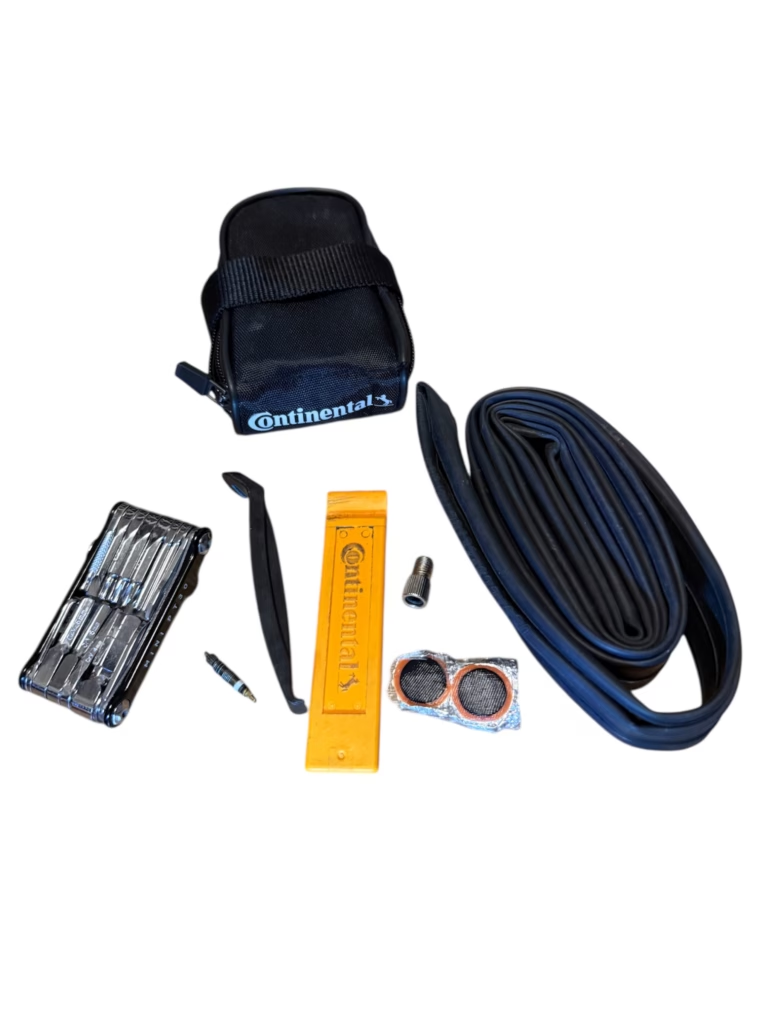
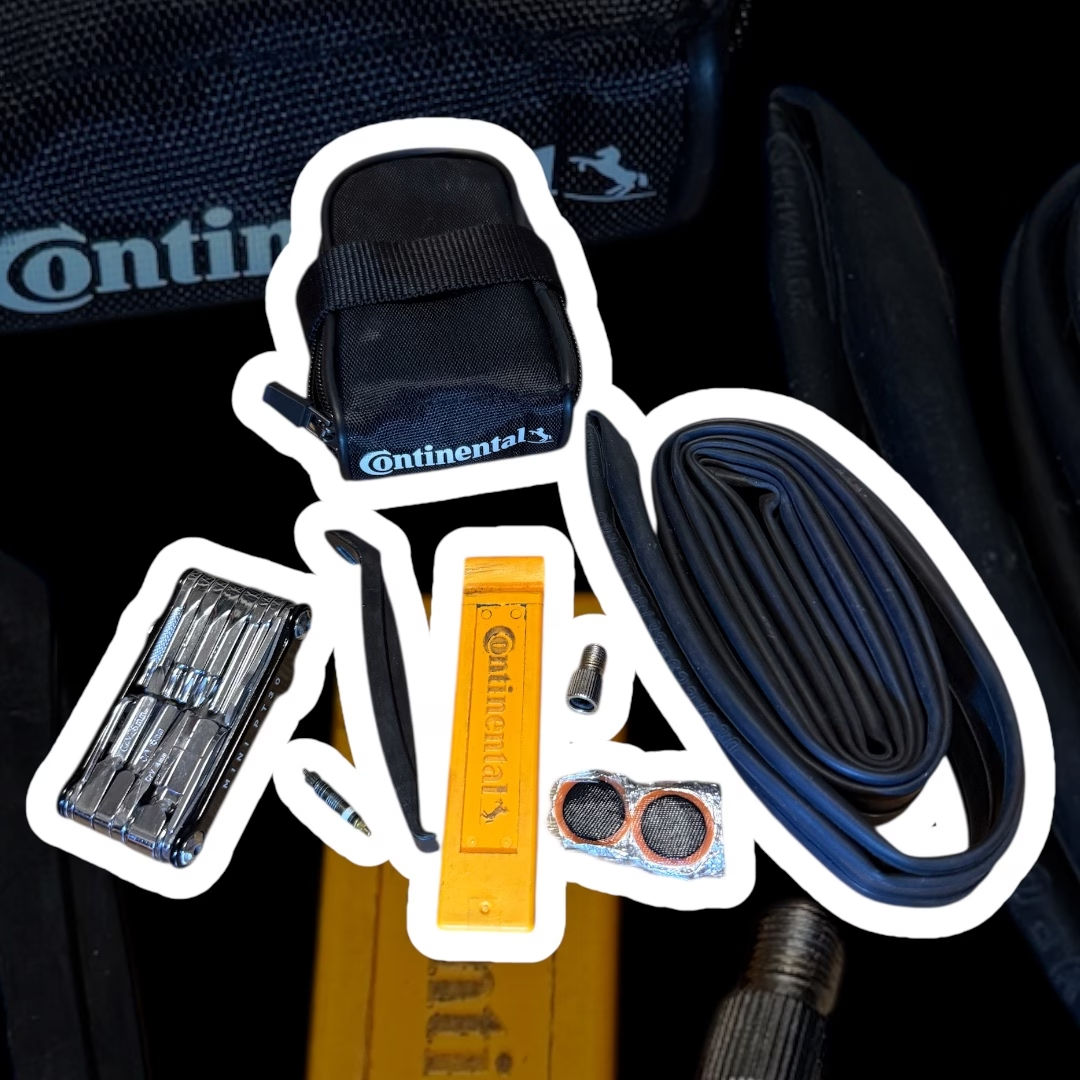
Pictured: a 28-inch road bike inner tube with an 80mm valve, this multitool*, two tyre levers, a valve adapter and a spare valve,
Its minimalist design is an excellent match for aerodynamically focused road bikes. It usually mounts beneath the saddle without disrupting the bike's appearance and can often be removed in one motion, practical for races or training sessions where weight and aerodynamics are priorities.
More Than Storage: Road Bike Tool Bags
For many long-distance riders, a road bike tool bag is an important safety feature. It is designed to make minor repairs quick and straightforward on a ride. Typical contents include a multitool with various Allen keys, screwdrivers and possibly a chain tool.
Tool bags can be used as standalone saddle bags or part of a modular system. Some manufacturers provide dedicated compartments or elastic retainers to keep tools organised and prevent rattling. Better internal organisation makes the bag more practical on the road.
Sustainability, Care and Everyday Practicality
Sustainability is increasingly important in road bike saddle bags too. Manufacturers are using more recycled materials or improving longevity through robust zips and abrasion-resistant fabrics. A well-made bag lasts for years and can easily move between bikes, provided the mounting systems are compatible.
Ease of cleaning is another consideration. After a wet or dusty ride, the bag should be simple to clean, ideally with a damp cloth or even in a washing machine if the material allows. This keeps it functional, hygienic and looking good.
For Specialist Frames: Adapted Road Bike Bags
Although many manufacturers offer standard sizes, specialist options are available too. Ultra-compact models are designed specifically for aero saddles, whose construction can make conventional mounting difficult. These solutions particularly appeal to ambitious amateurs and professionals seeking maximum efficiency.
If your bike does not have a conventional seat tube diameter, such as a carbon frame with a D-shaped seatpost, check that the mounting system suits its geometry before buying. Otherwise, unwanted vibration or an insecure fit can result, a risk avoidable through careful selection.
Design, Noise and Everyday Use
Appearance should not be underestimated either. Many riders want the bag beneath the saddle to suit the bike visually. Subtle colours such as black, dark grey or navy are particularly popular because they blend in unobtrusively. Brighter options are available too, deliberately creating contrast and a sportier look.
Noise is often overlooked. Loose items in a poorly padded bag can rattle annoyingly during a ride. A quality small saddle bag avoids this through clever compartments or integrated padding, so constant rattling does not spoil the ride on cobbles or rough roads.
Our Recommendation: Functional, Discreet and Surprisingly Affordable
After looking closely at different models, mounting systems and the requirements of a good road bike saddle bag, one model particularly stood out to us. It is compact, discreet and highly practical, meeting what many road cyclists want: small enough not to affect aerodynamics, but with sufficient room for essentials such as a spare tube, multitool, a few patches and perhaps a CO₂ cartridge.
Particularly positive is that it is among the more affordable models without compromising construction or functionality. Mounting is secure and quick, the material feels durable and water-repellent, and even after several rides it stays firmly in place without slipping or rattling.
If you want to take a look yourself, the recommended model is available here: Road Bike Saddle Bag on Amazon*. There is naturally a wide choice, and the right bag depends on individual needs. In our view, however, this model offers a particularly well-balanced combination of price, weight, functionality and everyday practicality.
Verdict: The Right Saddle Bag for Every Road Bike
A good road bike saddle bag is much more than somewhere to store things. It is a thoughtful addition to a performance-minded cyclist's minimalist kit. The right choice depends on riding style, distance, weather, required equipment and personal taste.
Whether a tiny inner-tube bag for an emergency kit or a roomier option for longer rides, the right saddle bag improves organisation, safety and independence. Reviews generally show which models have proven themselves and which are more of a compromise. The bag should be treated as an integral part of the bike rather than an afterthought: functional, light, attractive and reliable.
Mich interessiert jetzt eure Meinung: Welche Satteltasche nutzt ihr an eurem Rennrad – eher minimalistisch oder doch mit etwas mehr Stauraum? Habt ihr vielleicht ein Modell, das ihr besonders empfehlen könnt oder seid ihr sogar ganz ohne unterwegs? Schreibt’s mir gern in die Kommentare – ich bin gespannt auf eure Erfahrungen!