

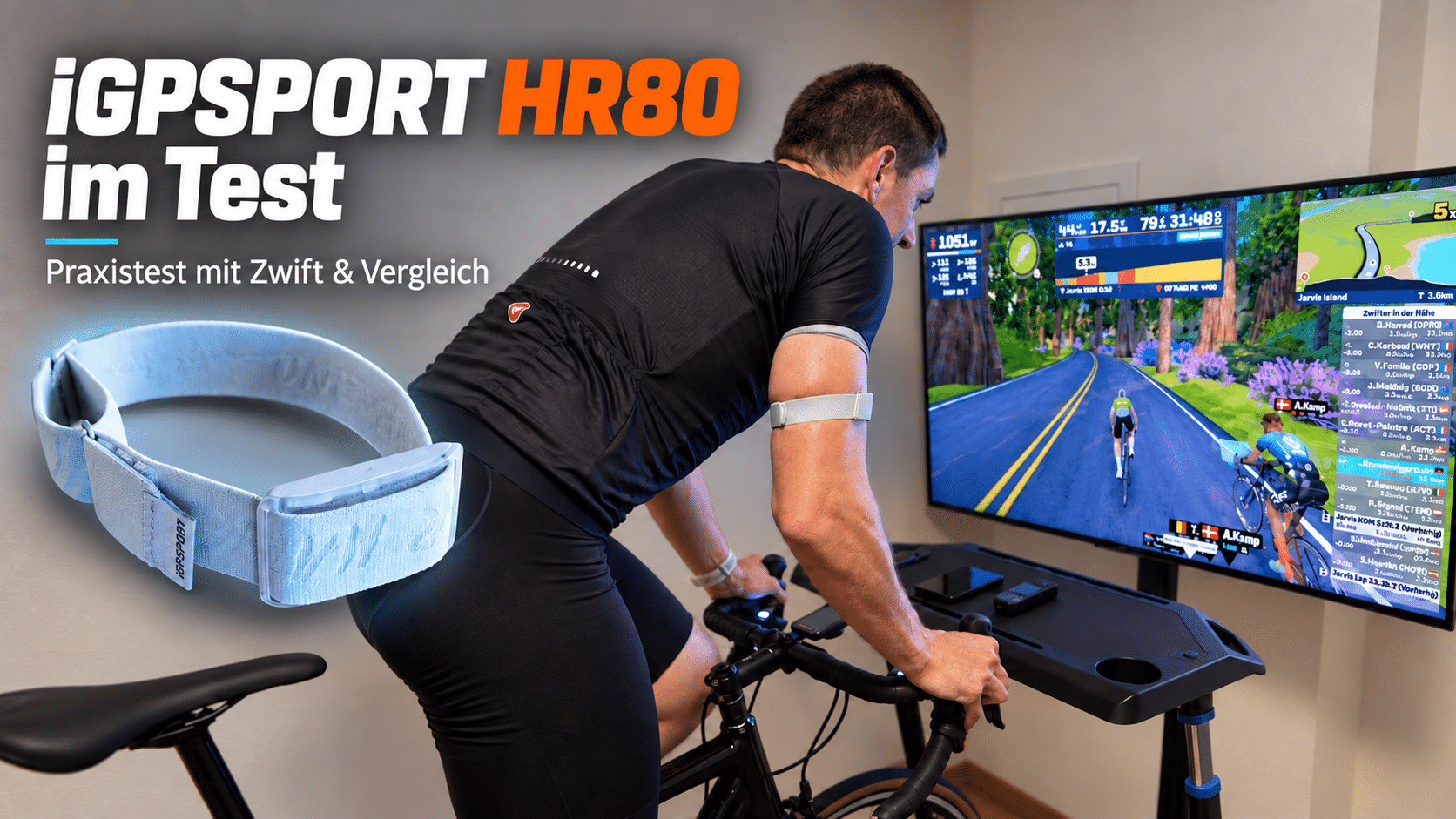
The New iGPSPORT HR80 Heart Rate
A chest strap usually provides reliable training heart rate data, but I do not always find it comfortable. Its close fit around the chest can be bothersome during longer sessions or indoor cycling. Optical upper-arm sensors are an interesting alternative.
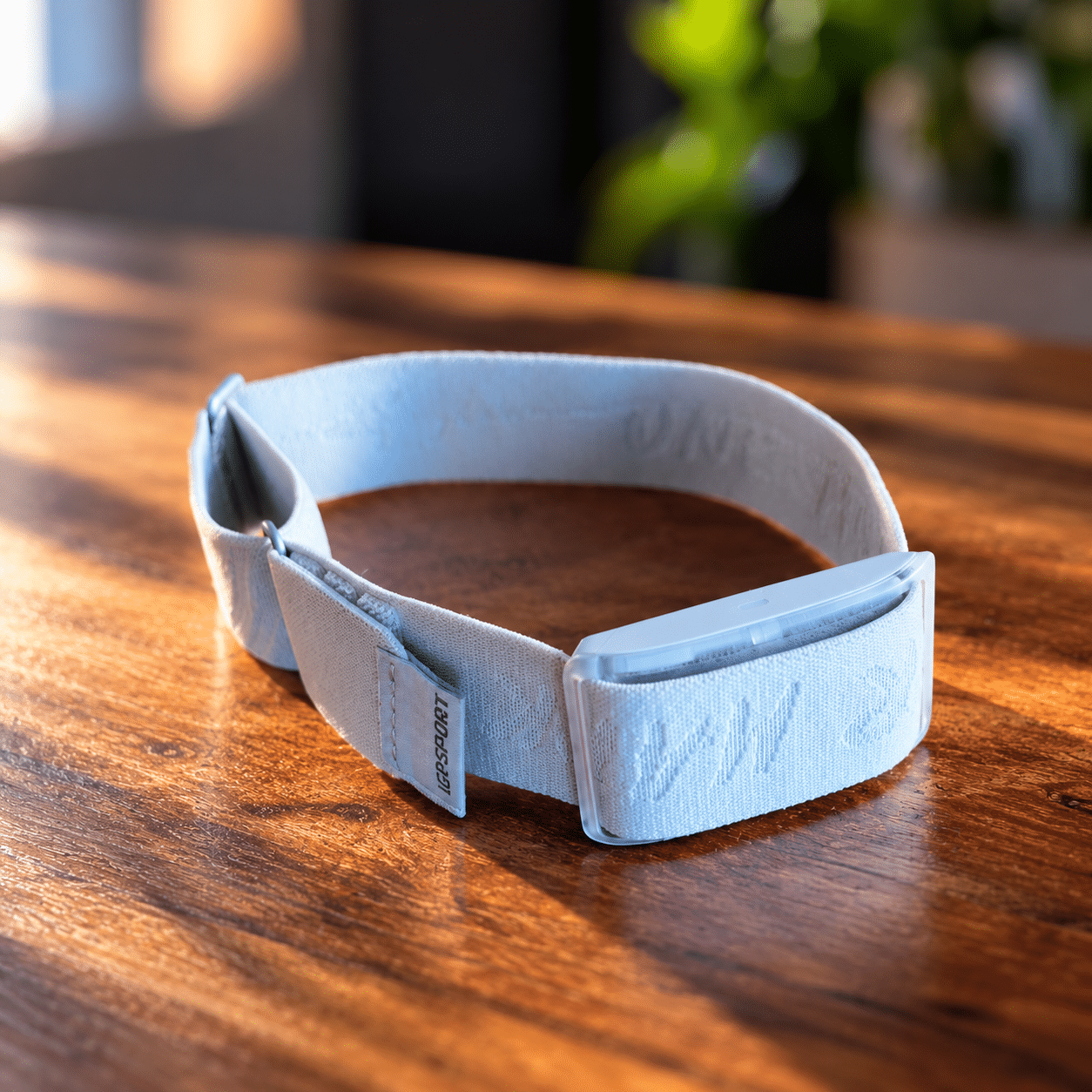

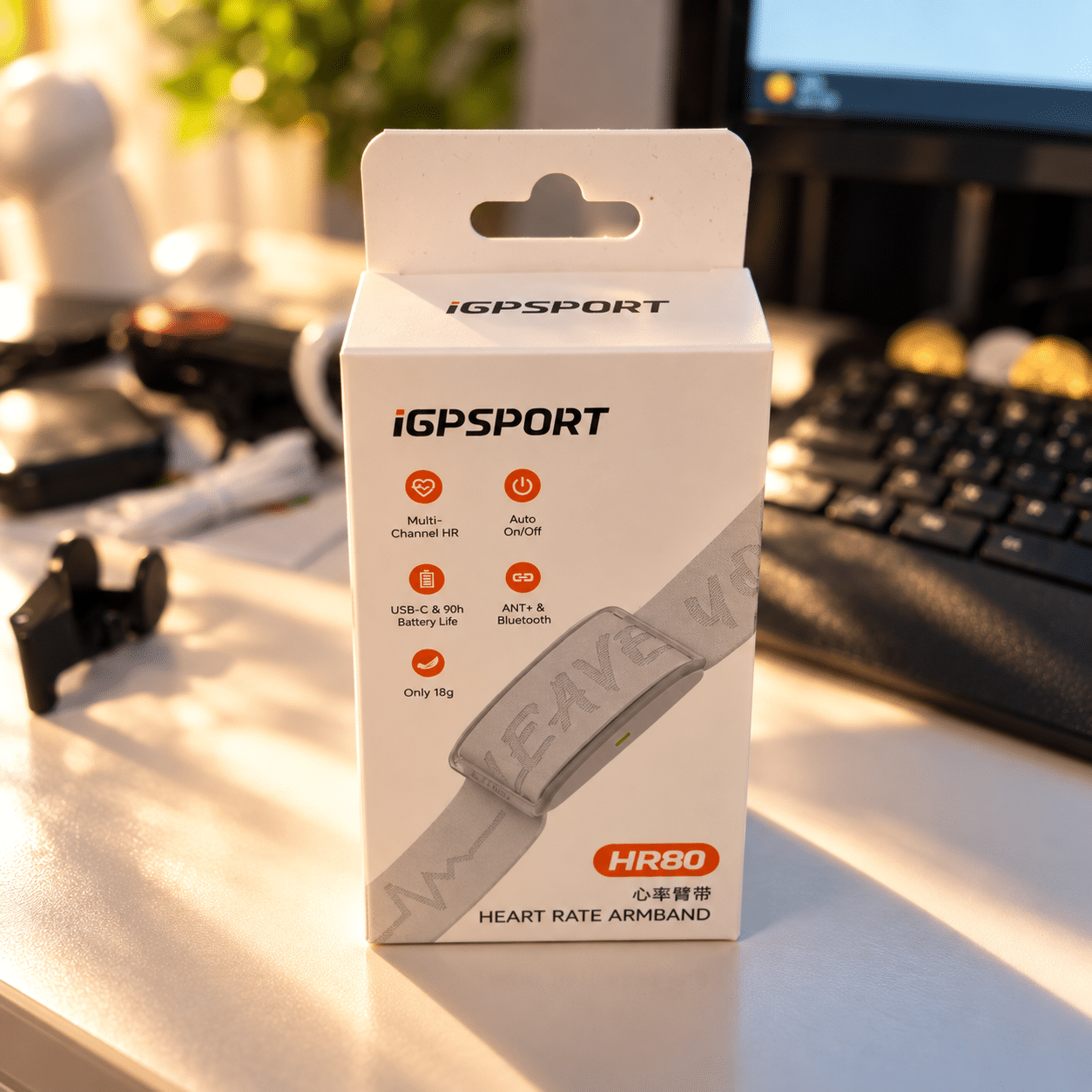
Upper-Arm Heart Rate Sensor
iGPSPORT HR80 Heart Rate
My Experience with the Lightweight Upper-Arm Heart Rate Sensor for Cycling, Indoor Training and Zwift:
-
Very Accurate Heart Rate Measurement
In my direct comparison, HR80 readings closely matched the Wahoo TRACKR chest strap for much of the session.
-
Comfortable on the Upper Arm
At only 18 grams total, the HR80 is very light. I find it considerably more comfortable in training than a conventional chest strap.
-
Bluetooth, ANT+ and Zwift
The HR80 supports Bluetooth LE and ANT+ and connected easily to Zwift in my test.
-
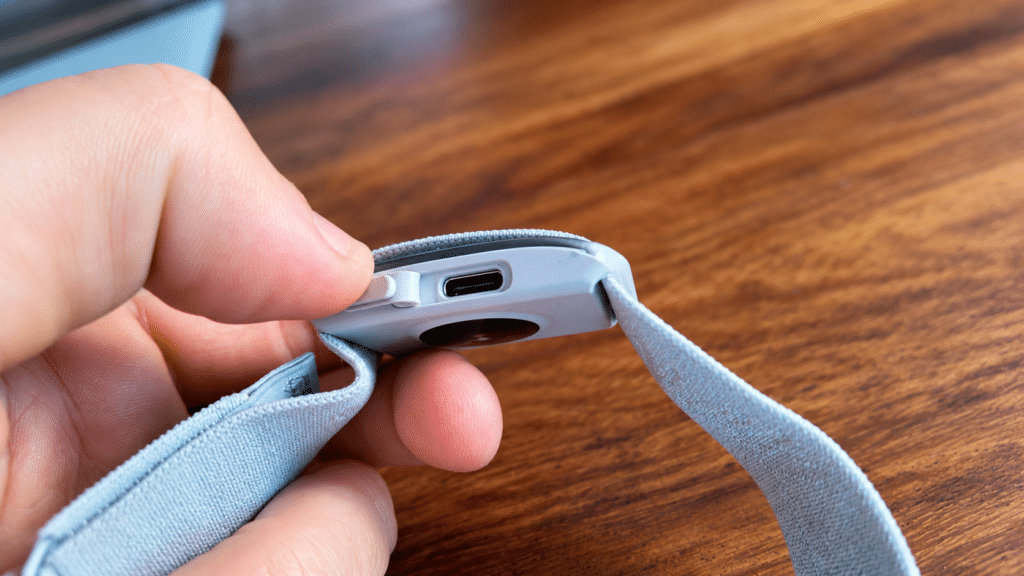
Long Battery Life with USB-C
iGPSPORT specifies up to 100 hours of continuous heart rate measurement, with convenient USB-C charging.
My Test Impression: The HR80 mainly impresses me with comfort and very close agreement with my Wahoo TRACKR. For Zwift, indoor cycling and longer rides, it is an interesting alternative to a conventional chest strap.
Check Price & Availability** Affiliate link: I may receive a commission if you buy through this link, at no additional cost to you.
I tried the iGPSPORT HR80 Heart Rate Monitor Strap while cycling, particularly in Zwift training. Comfort was not my only concern: I wanted to assess reliability and how closely it matched a chest strap. I therefore recorded it alongside a Wahoo TRACKR and the optical heart rate measurement of a Garmin Forerunner 970.
Accuracy
The most interesting part was direct comparison with other sensors. I used three measurement systems simultaneously:
- iGPSPORT HR80 on the upper arm
- Wahoo TRACKR chest strap as the reference
- Garmin Forerunner 970 with optical wrist measurement
The result is clear in the graph.
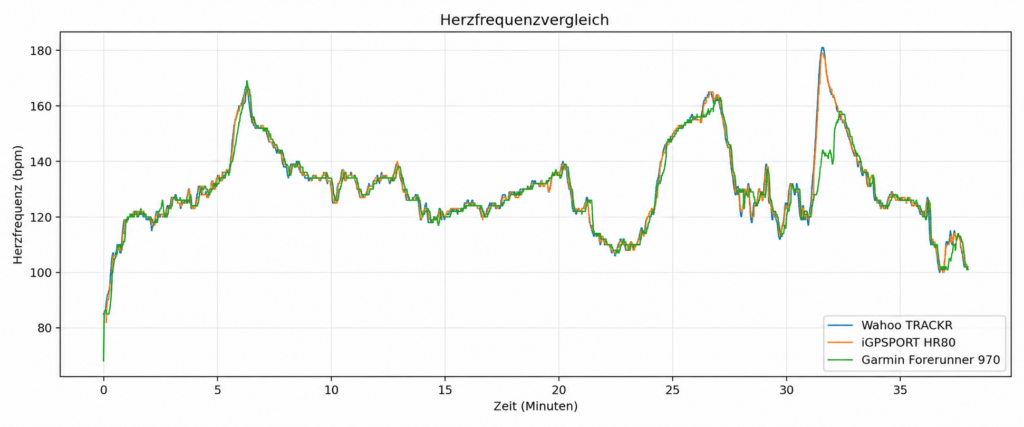
Across much of the roughly 38-minute session, iGPSPORT HR80 and Wahoo TRACKR are surprisingly close. The orange and blue curves are sometimes almost indistinguishable. Rapid effort changes are especially interesting: even through sharp rises and falls in heart rate, the HR80 closely follows the Wahoo strap in my test. This does not establish that an optical upper-arm sensor is generally as accurate as a chest strap. Agreement in this particular session was nevertheless convincing.
A Clear Difference from Wrist Measurement
The section after around 31 minutes is particularly revealing. Wahoo TRACKR and iGPSPORT HR80 show a rapid rise to approximately 180bpm, with nearly parallel curves. The Garmin Forerunner 970 initially reads considerably lower here and follows the actual effort with a delay. Such situations are one reason I find an external sensor interesting for structured training. Optical wrist measurement often works well at steady effort.
With very rapid effort changes, however, it can respond differently or temporarily deviate more. The upper arm is generally a more favourable optical sensor location: it can sit relatively firmly over a larger skin area and is less affected by wrist movement while cycling.
Pairing the iGPSPORT HR80
Use with Zwift was an important part of my test. The HR80 was pleasantly straightforward, immediately appearing as HR80 in my pairing menu. I only needed to select it as the heart rate source.
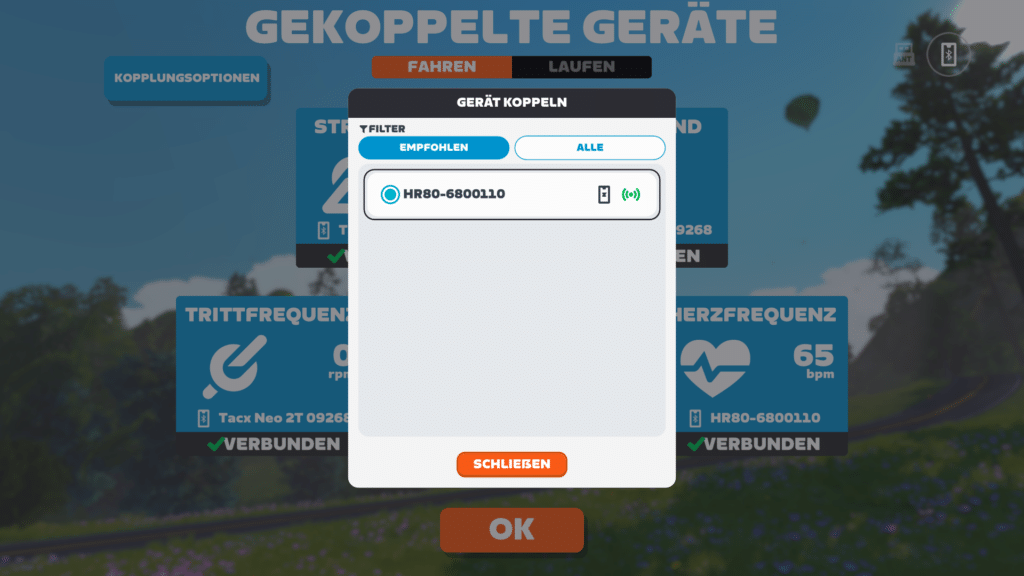
Once paired, the HR80 appears as the connected heart rate source in Zwift and transmits current readings directly. Pairing was quick in my test, exactly what I want from an external sensor: put it on, connect and train. Automatic activation is practical too. According to the manufacturer, it detects being worn and switches on automatically, returning to sleep roughly ten seconds after removal. There is therefore no constant need to operate a separate power button.
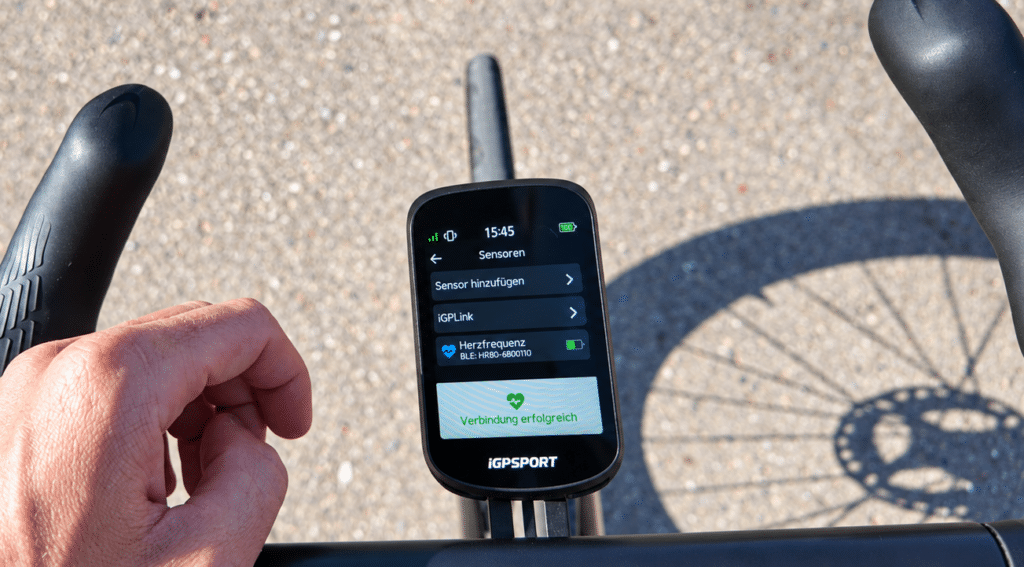
Pairing with the iGPSPORT BSC200 Pro also worked smoothly. It quickly recognised the HR80 as a heart rate sensor and connected directly, then displayed readings reliably. Existing iGPSPORT computer users can therefore integrate it easily.
HR80 in a Real Zwift Race
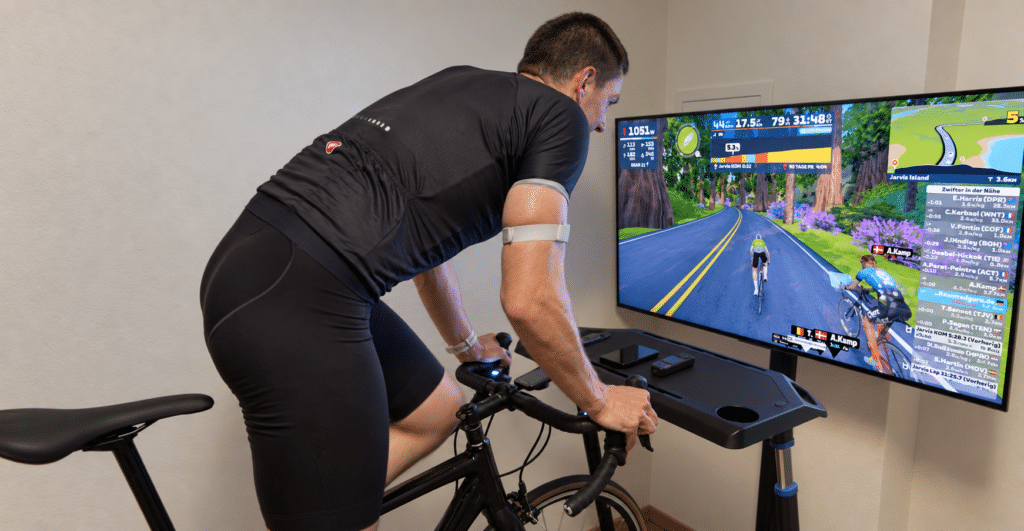
I used the iGPSPORT HR80 during a Zwift race as well as an easy test ride.
That is more interesting for a heart rate sensor than a steady base session. Effort changes regularly in races, with rapid heart rate rises during attacks and climbs followed by falls.
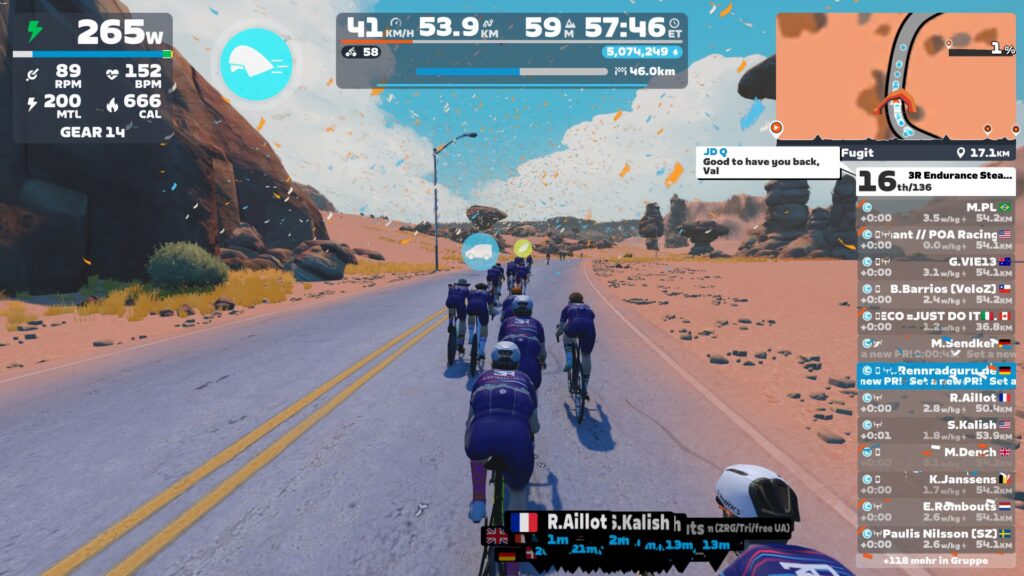
The race screenshot shows 152bpm, for example, transmitted directly from the HR80 to Zwift. That combination interests me: I can ride without a chest strap while still seeing heart rate directly in Zwift.
Armband or Chest Strap?
After testing, I mainly see the HR80 as an alternative for athletes who dislike chest straps. The Wahoo TRACKR remains my conventional reference for electrical heart rate measurement directly on the chest. The HR80 offers a clear comfort advantage, without obviously poorer readings on my test ride. Its curve was extremely close to the strap for much of the session. Based on my experience so far, I would readily use it for easy training, longer indoor sessions and even intense Zwift efforts.
Battery Life and USB-C
The HR80's battery setup is straightforward too. iGPSPORT specifies up to 100 hours of continuous heart rate measurement. Charging uses a normal USB-C port, which I prefer to proprietary magnetic adapters that seem to disappear precisely when needed. The manufacturer gives a full charging time of around an hour. Someone training five hours weekly should therefore need charging relatively rarely. Reaching the claimed 100 hours in long-term use would require a much longer test period to verify, however.
Comfort and Dimensions
For me, the HR80's design is a major advantage. Instead of a strap around the chest, the sensor sits relatively unobtrusively on the upper arm. I particularly like this indoors. It is light, takes little space and was barely noticeable while riding. The strap remains snug enough for reliable skin contact during exercise. This interests athletes wanting good heart rate data who find chest straps uncomfortable.
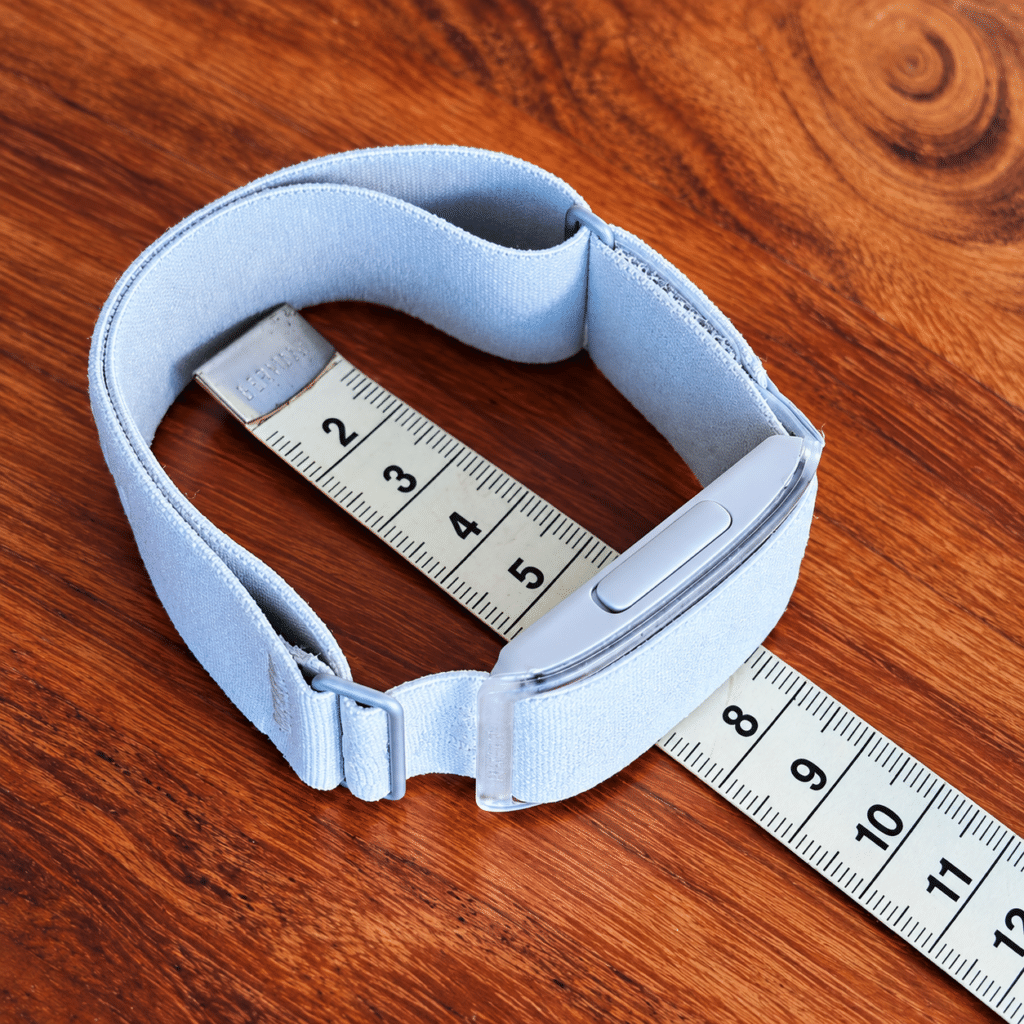
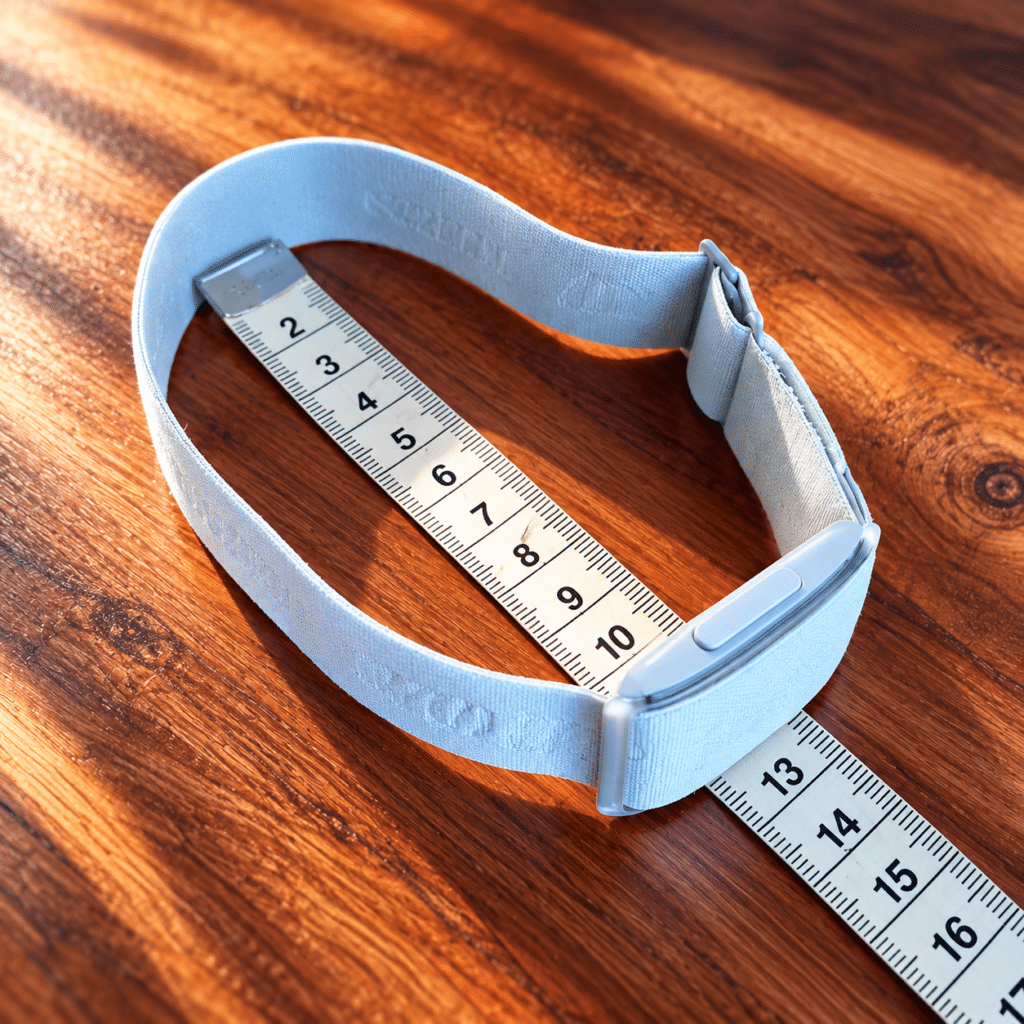
The strap adjusts flexibly to different upper-arm sizes. Without stretching, the manufacturer specifies roughly 18–32cm. Its elastic material stretches noticeably further, to approximately 40cm circumference. This gives a secure fit on slimmer and larger arms, snug enough for reliable measurement without cutting in uncomfortably
Verdict
- Measurement: Optical upper-arm heart rate measurement from 30 to 240bpm.
- Connection: Bluetooth LE and ANT+, with up to two simultaneous Bluetooth connections.
- Weight: Only 18 grams including the armband.
- Battery: Up to 100 hours of continuous measurement according to the manufacturer; USB-C charging.
- Compatibility: Paired smoothly with Zwift and iGPSPORT BSC200 Pro in testing.
Important: Designed for activities such as cycling and running. The manufacturer does not recommend swimming, diving or sauna use.
* Affiliate link: I may receive a commission if you buy. There is no extra cost to you.
My iGPSPORT HR80 Review Verdict: The HR80 particularly impressed me with comfort and reliable heart rate measurement. At only 18 grams, it is barely noticeable on the upper arm and considerably more comfortable for me than a chest strap.
Direct comparison with Wahoo TRACKR was especially interesting. Their heart rate curves were very close through much of my session, and the HR80 reliably captured even rapid effort changes.
I also recorded optical wrist heart rate from my Garmin Forerunner 970 in the same test. A clear difference appeared during an intense effort near the end: HR80 and Wahoo TRACKR captured the rapid rise towards 180bpm almost simultaneously, while wrist readings temporarily lagged noticeably.
The HR80 also proved itself in indoor cycling. Zwift connected smoothly, recognised it immediately as a heart rate source and reliably received readings during workouts and a race.
Pairing with the iGPSPORT BSC200 Pro was also trouble-free. The computer quickly recognised it as a heart rate sensor and connected directly.
I also find automatic activation practical. The HR80 wakes when worn and returns to sleep shortly after removal, eliminating manual switching during normal training.
Without stretching, the strap adjusts to around 18–32 centimetres. Elastic material stretches further to approximately 40 centimetres, accommodating a wide range of upper-arm sizes.
I like the simple charging too. Instead of a proprietary magnetic adapter, it has a normal USB-C port. iGPSPORT specifies up to 100 hours of continuous heart rate measurement.
I have not yet verified maximum battery life with a complete runtime test. The 100 hours should therefore be understood as a manufacturer figure.
Overall, the HR80 particularly interests athletes wanting reliable heart rate data who find chest straps uncomfortable. For cycling, indoor training and Zwift, it is a very comfortable alternative for me.
-
Very Good Readings
Values closely matched the Wahoo TRACKR strap through much of the direct comparison. -
High Comfort
Comfortable on the upper arm and, for me, more pleasant than a chest strap. -
Only 18 Grams
Sensor and strap are very light together and barely intrusive during training. -
Bluetooth and ANT+
Connects to many bike computers, sports watches, apps and training platforms. -
Two Bluetooth Connections
Up to two Bluetooth devices can connect simultaneously. -
Works with Zwift
Pairing was quick in my test, with direct heart rate transmission. -
Works with the BSC200 Pro
The iGPSPORT computer also recognised it smoothly in my test. -
Automatic On/Off
Activates when worn and returns to sleep after removal. -
USB-C
No special charging cable needed; charges through a normal USB-C port. -
Very Flexible Armband
Adjusts from roughly 18 to 32 centimetres and stretches to approximately 40. -
Long Battery Life
iGPSPORT specifies up to 100 hours of continuous heart rate measurement.
-
Not Designed for Swimming
Despite IP67, iGPSPORT does not recommend swimming, diving or sauna use. -
Optical Rather Than Electrical Measurement
Unlike a conventional chest strap, the HR80 measures optically on the upper arm. -
Correct Fit Matters
As with optical sensors generally, the strap should be snug enough for reliable skin contact.
You might also be interested in...
.
0 Comments