
Garmin Varia RCT716 tested on the road (video)
Anyone cycling regularly knows the risks in traffic, particularly in the city. With the Varia RCT716, Garmin combines a rear light, radar and dashcam in one device for the first time, promising greater safety on every ride. However, the added protection has a price: Garmin charges a substantial premium for this compact accessory. The test examines whether the investment is worthwhile and how the device's strengths and weaknesses appear in everyday use.

Garmin Varia RCT 716 *
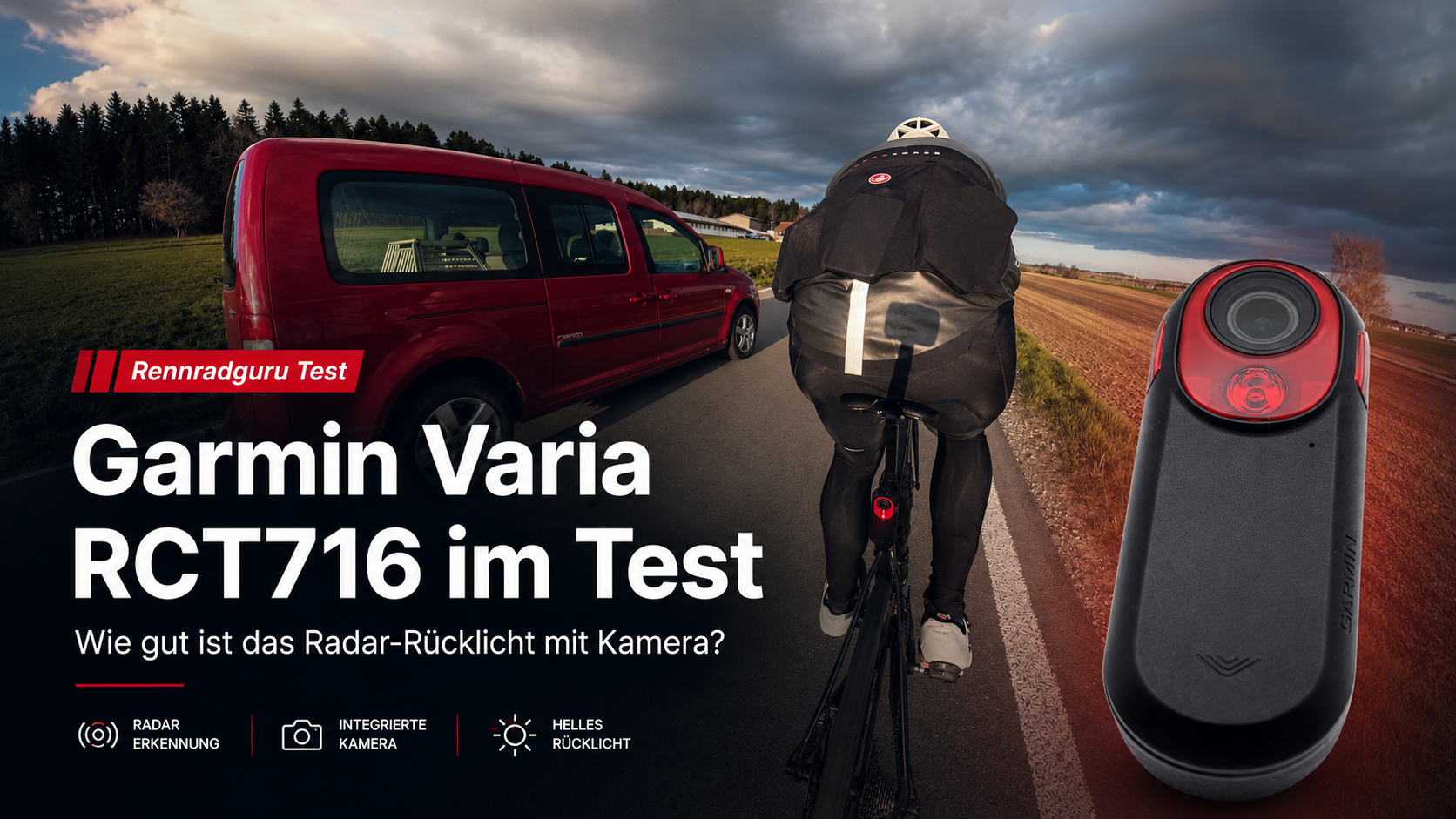
The Garmin Varia RCT 716 combines cycling radar with a bright rear light and integrated dashcam. It warns of vehicles approaching from behind and can capture critical traffic situations on video.
- Radar warnings for vehicles approaching from behind
- Integrated dashcam with incident recording
- Strong integration with Garmin Edge and the Varia app
Garmin Varia RCT716: what this cycling radar with dashcam offers
Radar remains at the heart of the Garmin Varia RCT716. It works similarly to the familiar Varia RTL516, aiming to alert cyclists early to traffic from behind. The device connects either to a smartphone, a compatible bike computer from manufacturers such as Wahoo or Hammerhead, or suitable Garmin smartwatches such as the Forerunner 970 or Fenix. According to the manufacturer, it detects approaching vehicles from up to 140 metres. In this test, I mainly used the Garmin Edge 850.
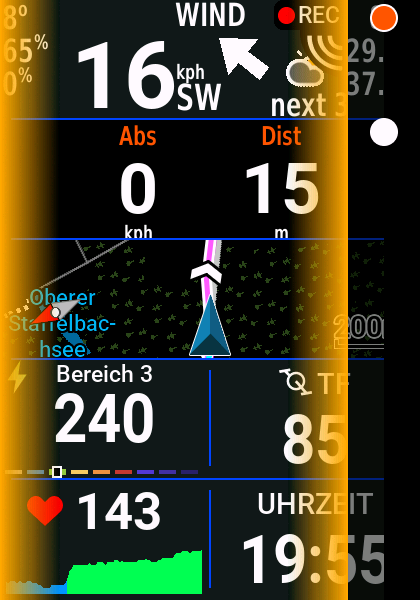
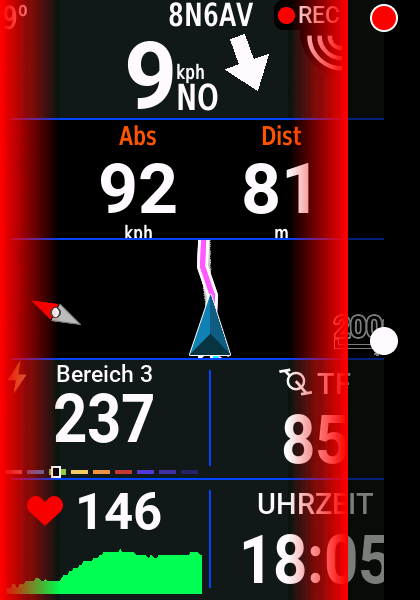

Warning presentation depends on the paired device. On a Garmin Edge 850, for example, detected vehicles appear as dots at the display edge. Colour coding indicates how critical the situation is considered: orange signals normal traffic from behind, while red indicates a particularly fast-approaching vehicle. Once the road user has passed, the display turns green. The system also sounds an alert when first detecting a vehicle, which can be disabled in settings.
Varia RCT716: reliable everyday radar warnings
In many situations, radar removes the need to keep looking over your shoulder, a noticeable advantage particularly on fast descents or busy roads. The system worked very reliably in the test and warned early of approaching traffic. However, the Varia RCT716 does not replace a shoulder check before turning. A vehicle following at the same speed as the bicycle is not detected. Only objects approaching from behind at a higher speed are recognised. You should therefore not rely on radar warnings alone.
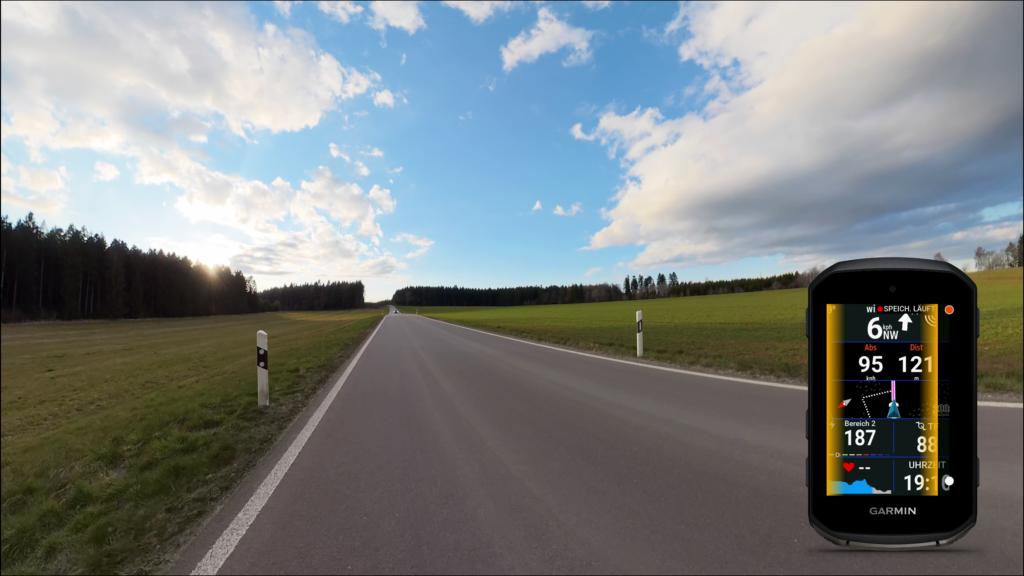
The data field showing an approaching vehicle's speed is not a standard Varia RCT716 feature. It requires an additional Connect IQ app and is available only with a compatible Garmin device.
Garmin Varia RCT716: dashcam with audio recording
Many cycling accidents involve direct interaction with cars, and responsibility is not always easy to establish afterwards. This is where the Garmin Varia RCT716's integrated dashcam comes in: it records video and sound and aims to provide additional evidence when needed.
When enabled, the camera records continuously and saves relevant sequences either through a button press on the device, through the Varia app or automatically after a detected crash. Saved clips each cover 90 seconds around the event, including before, during and after. Recording uses a wide 220-degree field of view and 1080p resolution.
Daytime video quality
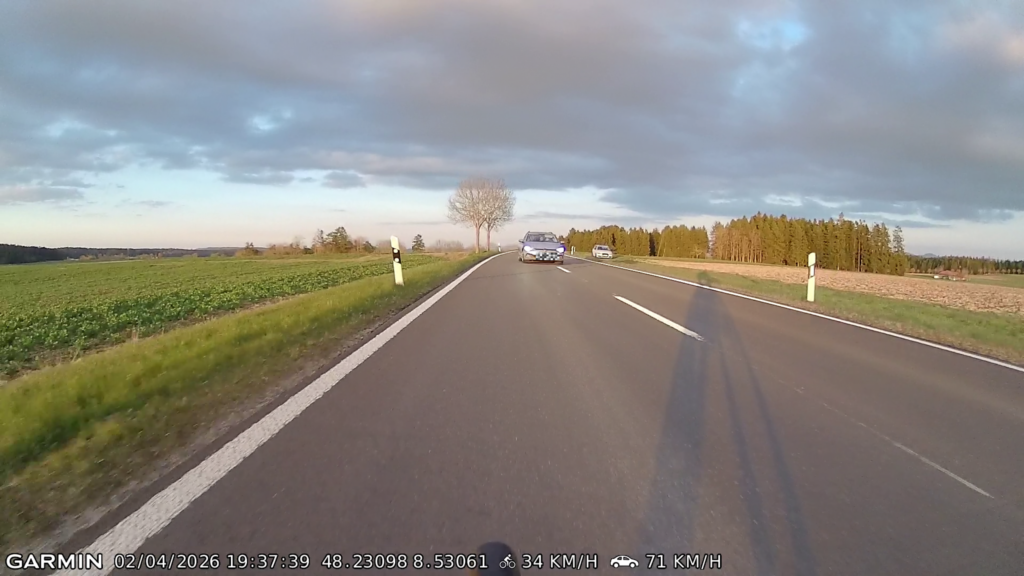
In daylight, the Garmin Varia RCT716 camera delivers quite usable video quality. Passing vehicles' number plates were reliably readable in the test, which could be an important advantage after an incident. Drivers themselves could be clearly identified in only two out of ten cases, mainly because of reflections in the windows. You should therefore not expect premium action camera footage from the integrated dashcam.
Night-time video quality
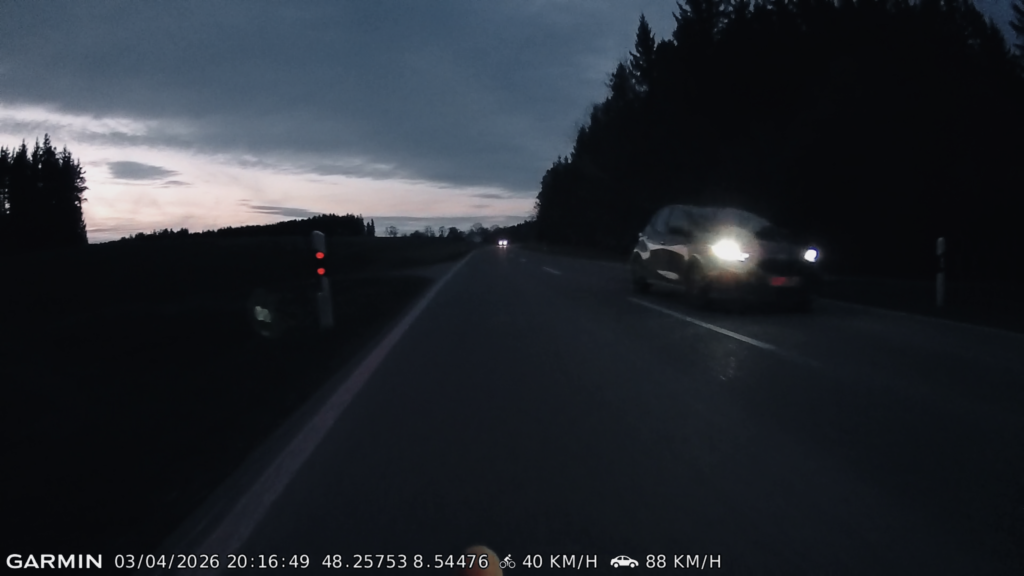
At night, the Garmin Varia RCT716 camera shows more obvious weaknesses. Darkness, headlights and motion blur made number plates difficult to recognise reliably in the test. This noticeably reduces the dashcam's practical usefulness in poor light. Although sufficient for broadly documenting a situation in darkness, the footage is only of limited use as robust evidence.
These situations remain unseen
When assessing the dashcam, remember that the Garmin Varia RCT716 records only backwards. Many typical traffic hazards are therefore not captured at all, such as a car failing to give way, coming dangerously close while turning or a car door opening suddenly. Recording does not help in these cases because the crucial action occurs outside the camera's view. Its evidential usefulness is therefore mainly limited to situations involving vehicles approaching from behind.
Battery Life
Radar, steady light and recording triggered by radar activity in light traffic: in this mode, battery endurance was quite good in the test and remains so in everyday use. With relatively little traffic, the camera activated only for detected vehicles or saved clips less frequently. Extrapolated runtime reaches up to seven hours. Continuous dashcam use with steady light and radar gives an expected battery life of around 4 hours.
Entirely sufficient for many training rides and shorter outings.
Pros and Cons
- Reliable radar warnings of vehicles approaching from behind
- Radar, rear light and dashcam combined in one compact device
- Good integration with Garmin Edge, compatible smartwatches and the Varia app
- Visual and audible warnings
- Usable daytime video quality with clearly readable number plates
- Automatic video clip saving after detected events possible
- A very practical safety benefit on country roads and longer rides with traffic approaching from behind
- Practical battery life in radar and incident-recording mode with little traffic
- High price compared with radar-only Varia models
- Camera records only backwards and misses many typical hazardous situations
- Night-time video quality significantly limited, with number plates difficult to read reliably
- Drivers often cannot be clearly identified because of reflections
- Video recording does not match action camera quality
- Audio recording is enabled by default and may be legally problematic
- Battery life falls significantly during continuous video recording
Why I now use only the RCT 716 anyway...
Why do I now ride only with the Garmin Varia RCT716? The device suits my riding very well. I rarely ride in the city, where dangerous situations often arise ahead or from the side. Instead, I ride mostly on country roads, where, in my view, the greatest danger comes from behind.
I also rarely ride at night.
Battery life is also more than sufficient for my rides, as I am usually out for less time than the battery would last. If a hit-and-run accident or similar incident ever occurs, I want at least some form of evidence.
Garmin Varia RCT716 technical specifications
| Device type | Radar rear light with integrated dashcam |
|---|---|
| Radar Range | Up to 140 m |
| Camera | integrated, rear-facing recording |
| Video resolution | up to 1080p at 30 fps |
| Incident recording | yes, automatic saving after detected incidents |
| Connection | ANT+, Bluetooth and Wi-Fi |
| Rear light | integrated, StVZO version available |
| Battery Life | 4 to a maximum of 7 hours with 1080p recording, up to 10 hours without the camera |
| Water Protection | IPX7 |
| Charging port | USB-C |
| Storage | microSD card, 16 GB memory card included |
| Weight | Approx. 147 g |
| Dimensions | approx. 106.5 × 42 × 31.9 mm |
| App support | Garmin Varia app |
| Compatibility | compatible Garmin Edge bike computers, selected bike computers and smartphone app |
Garmin Varia RCT716 verdict
The Garmin Varia RCT 716 is interesting cycling radar for anyone wanting not only warnings of approaching vehicles but also an integrated dashcam. It is particularly interesting for road cyclists, gravel riders and commuters who regularly ride on roads and want to document critical traffic situations.
Its main strengths are reliable radar detection, the integrated rear light, rear-facing video, automatic incident recording and strong Garmin ecosystem integration. The main compromises are price, size, weight and battery life, as a camera and radar naturally require more energy than a simple rear light.
German cyclists should also look carefully: depending on version and use, StVZO approval may be important, particularly when using the device on public roads.
My assessment: the Garmin Varia RCT 716 is less a budget alternative than a premium solution for anyone wanting radar, rear light and dashcam in one device. Those seeking maximum safety, video documentation and seamless Garmin integration get a very strong overall package. Anyone wanting only basic radar warnings can save money with cheaper models.
0 Comments