
Garmin RearVue 820
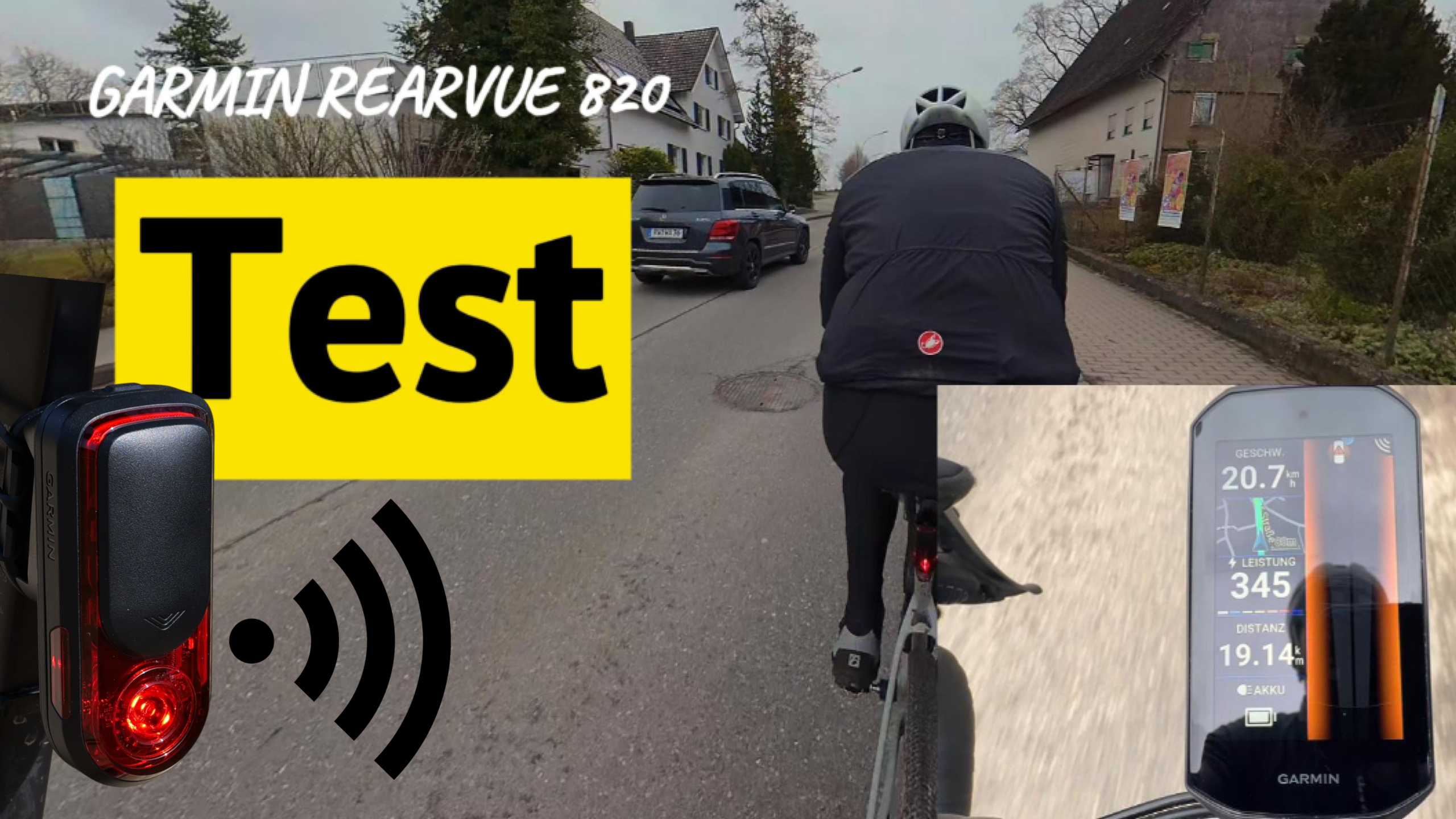
The Garmin RearVue 820 is a modern cycling radar with a rear light that detects approaching vehicles and sends information in real time to compatible bike computers, smartphones or Garmin wearables. Its StVZO-compliant rear light also improves road visibility. The system is primarily aimed at road cyclists, gravel riders and commuters wanting a noticeable improvement in road safety.
Garmin RearVue 820 *
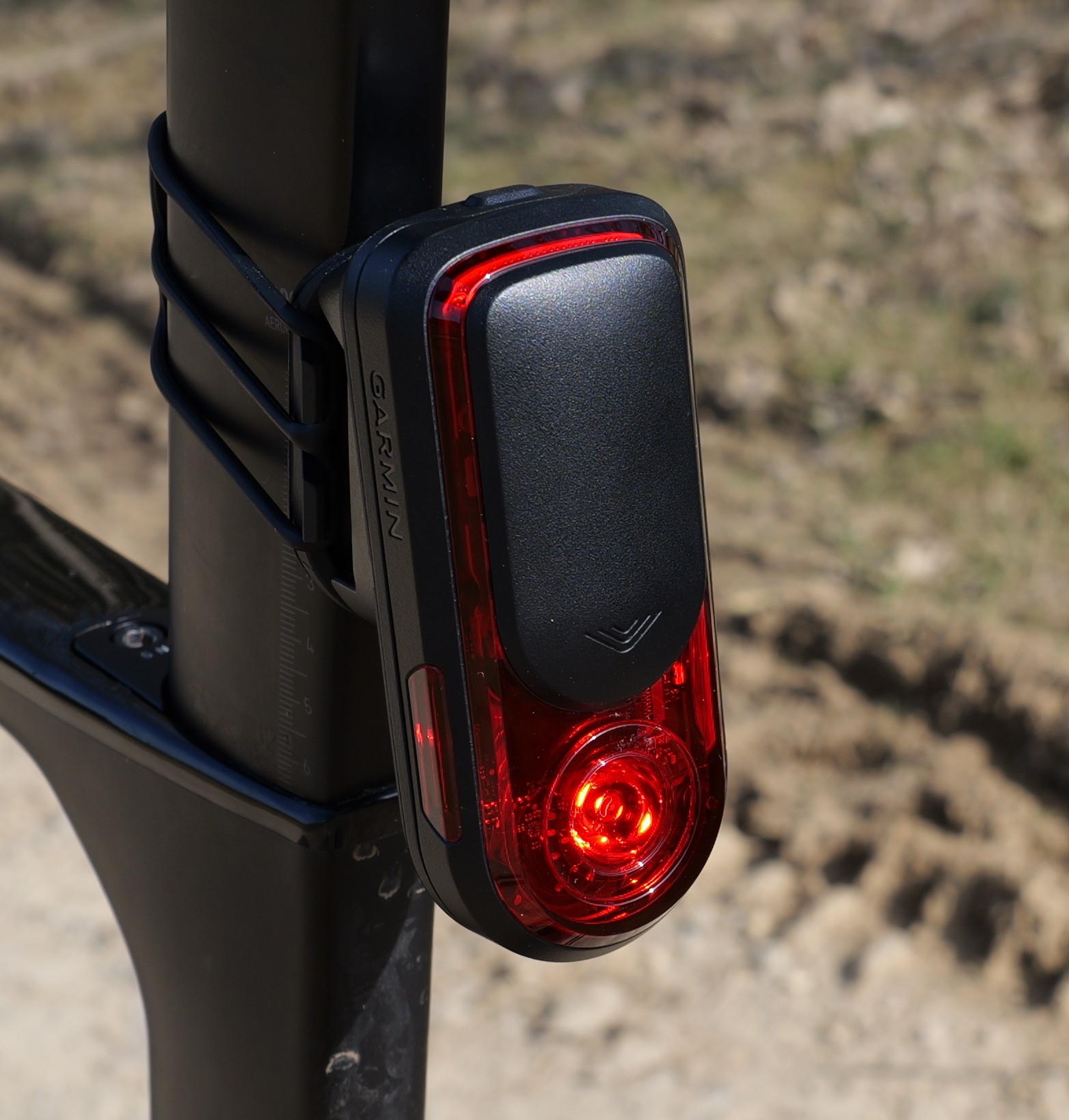
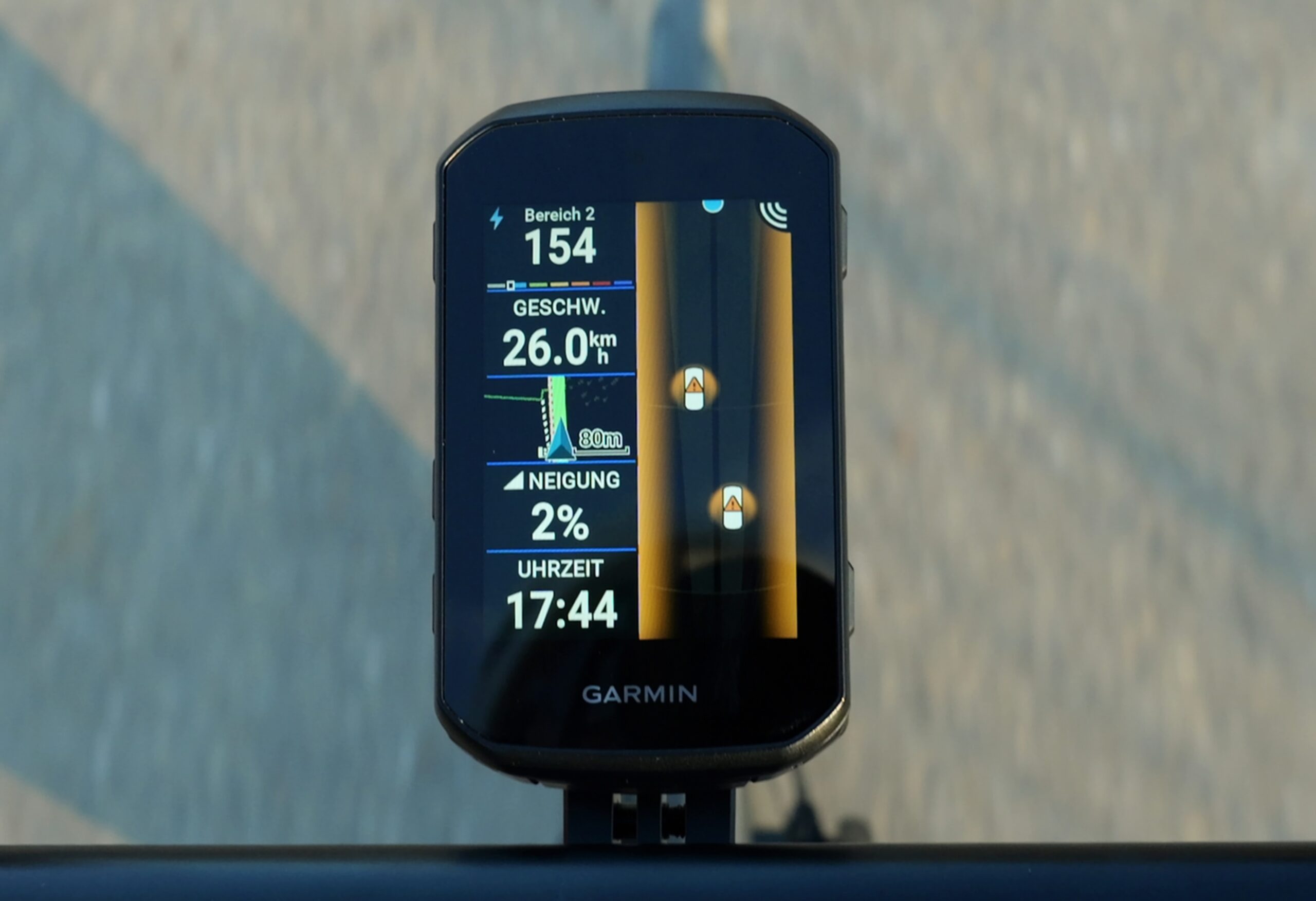
The Garmin RearVue 820 is a modern cycling radar with a rear light that detects approaching vehicles and warns you in real time. Combining a StVZO-compliant rear light, radar and app or bike computer connectivity makes it a strong safety solution for road cycling, gravel and commuting.
- Radar + Rear Light: detects vehicles behind you while increasing your visibility.
- Long Range: radar detection of approaching vehicles with real-time alerts.
- Long-Lasting: up to 16 hours with the rear light and up to 30 hours without it.
- ✓If you frequently ride on country roads or in mixed traffic.
- ✓If you want a StVZO-compliant radar rear light.
- ✓If you want greater safety on your road, gravel or commuter bike.
Who Is the Garmin RearVue 820 Worthwhile For?
The Garmin RearVue 820 is particularly worthwhile for cyclists who regularly ride country roads, commute or do fast training rides and want better awareness of traffic behind them. Road cyclists, gravel riders and performance-focused commuters will find it interesting because it improves visibility and gives early warnings of approaching vehicles. It is less relevant for those riding almost exclusively on cycle paths, car-free routes or short urban journeys.
What's Included, Mounting and Setup
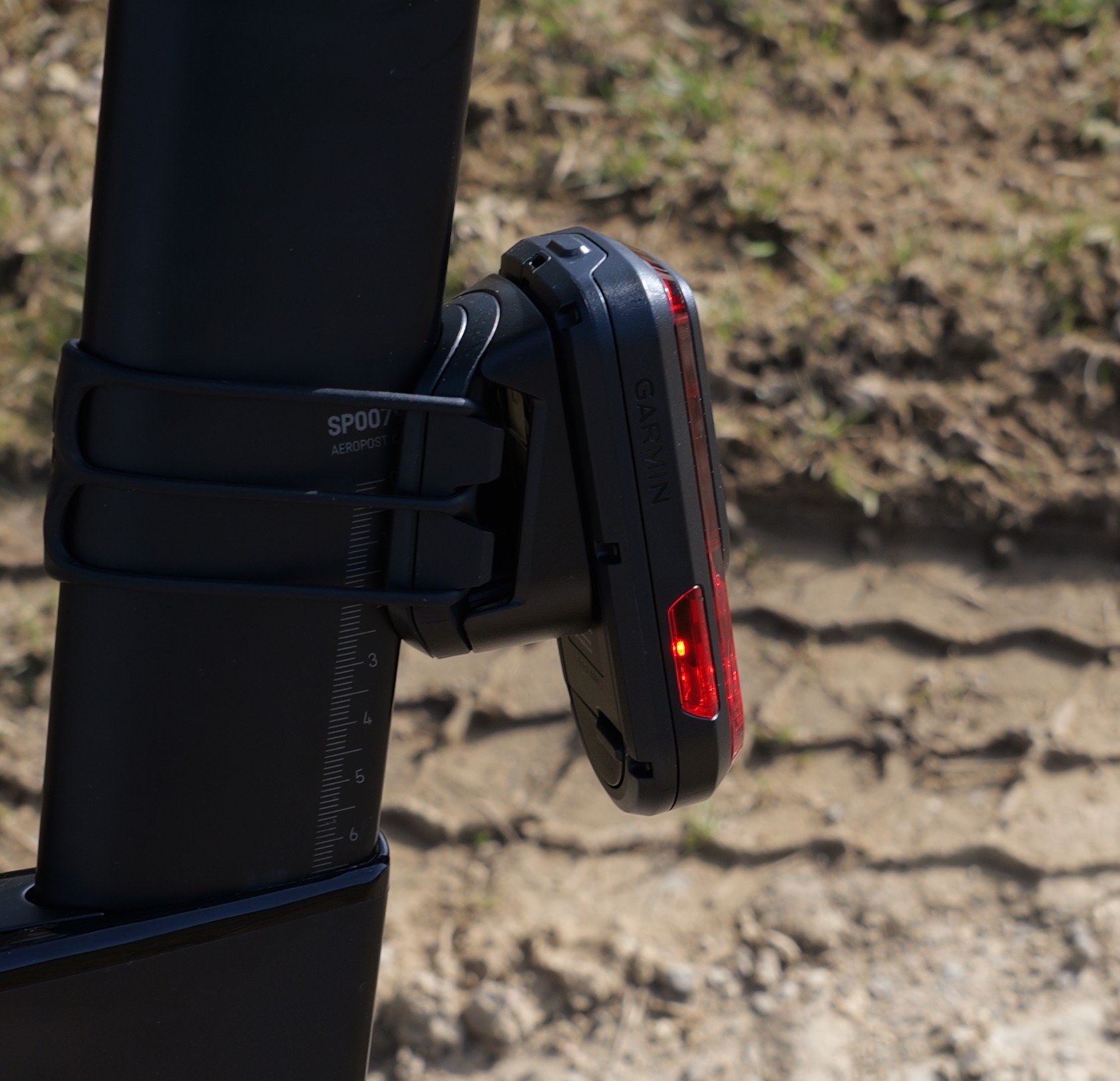
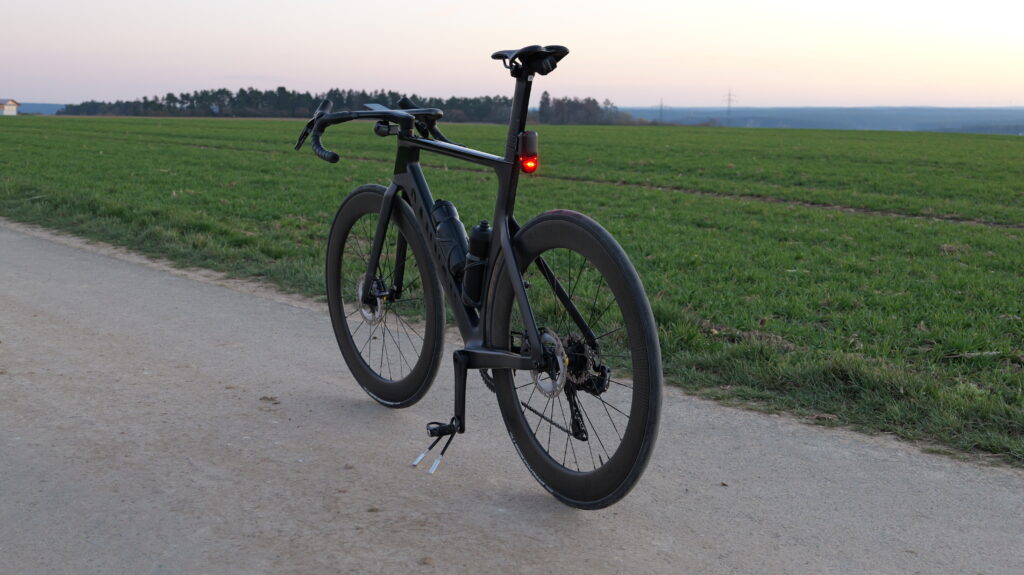
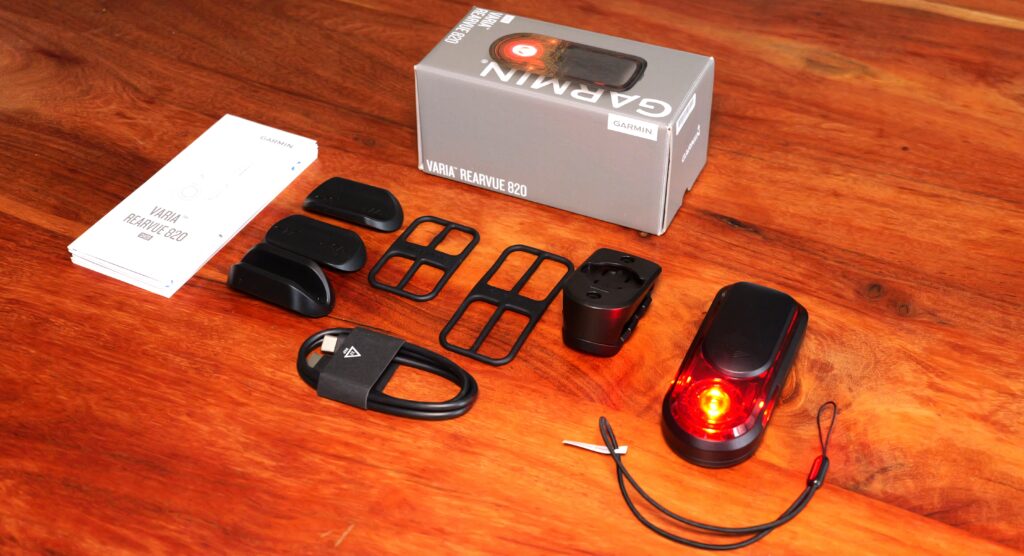
The Garmin RearVue 820 is quick to get started with but is clearly intended for riders who will mount and align it correctly. Garmin recommends placing it as high as possible on the bike, 250 to 1,200mm above the road and parallel to the direction of travel. Neither the rear light nor radar should be obstructed, and the mount should sit perpendicular to the road for reliable detection. Setup involves pairing with the Varia app, a compatible Garmin bike computer or a suitable Garmin watch.
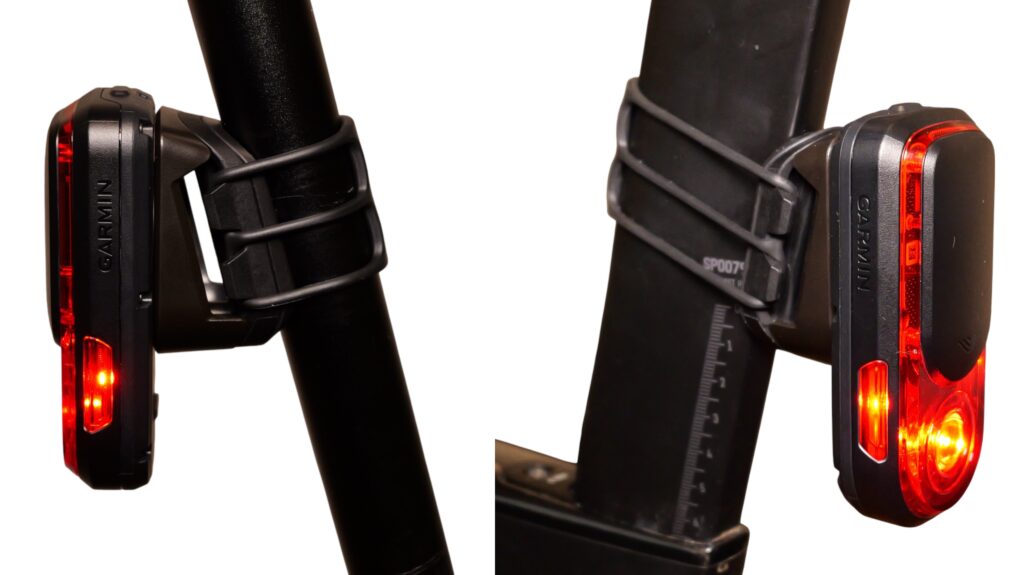
The Garmin RearVue 820 mounts flexibly on different bikes, fitting round seatposts and many aero posts. Mounting on the aero seatpost was not particularly easy, however, and the rubber strap needed considerable stretching. This flexibility is a real everyday advantage, making the radar light useful for traditional road bikes, modern aero bikes, gravel bikes and many commuters. Above all, correct, straight alignment is important for full radar performance.
Real-World Test (Video)
In everyday use, the Garmin RearVue 820 quickly shows why a modern radar rear light is more than a technical extra for many road cyclists, gravel riders and commuters. Its very long range particularly stood out in my test. Vehicles are often detected from far away, giving you a much earlier sense of what is happening behind. This is a real advantage in traffic: riding feels calmer, holding your line is easier and you are not constantly forced to look over your shoulder.
The RearVue 820 makes this advantage especially noticeable on open country roads and long straights. In my experience, it often detects approaching vehicles early enough to prepare mentally for the traffic situation rather than warning at the last moment. In everyday riding, it feels like an additional background layer of safety rather than something hectic. Detecting vehicles in the distance is particularly valuable because it gives you more time to assess the situation.
The alert logic also feels well considered in testing. The RearVue 820 reliably reports approaching vehicles to compatible bike computers, smartphones or Garmin wearables. Key information appears directly on screen without needing constant backward glances, making everyday riding considerably more relaxed, particularly on routes with regular car traffic.
The RearVue 820 clearly positions its rear light as a road safety product. The StVZO version is designed for German road use, complemented by strong battery life and modern USB-C charging. It therefore suits more than short after-work rides, covering longer training sessions, commuting and extended tours. Overall, it feels like a well-considered upgrade for anyone wanting greater road safety.
Correct mounting is crucial, however. Testing quickly shows that the device must be properly aligned to deliver its full radar performance. Detection may suffer if it is too low, crooked or partly obscured by luggage, mudguards or other components. Correctly mounted, the RearVue 820 delivers convincing range and alert quality.
Radar, Rear Light and Everyday Alerts
In everyday use, the Garmin RearVue 820 StVZO shows its greatest strength where conventional rear lights reach their limits: it makes traffic behind you easier to assess as well as visible. According to Garmin, it detects approaching vehicles up to 170 metres away, tracks up to eight simultaneously and provides 60-degree rear coverage. In practice, cars are often detected early enough to give you considerably more time to assess the situation behind.
The StVZO version makes full use of this advantage on country roads, fast commutes and long straights. Rather than reacting just before a vehicle overtakes, you receive very early notice of something approaching from behind. This makes riding calmer, helps you hold a steadier line and reduces hurried backward glances. For me, that everyday safety benefit matters considerably more than many specification figures.
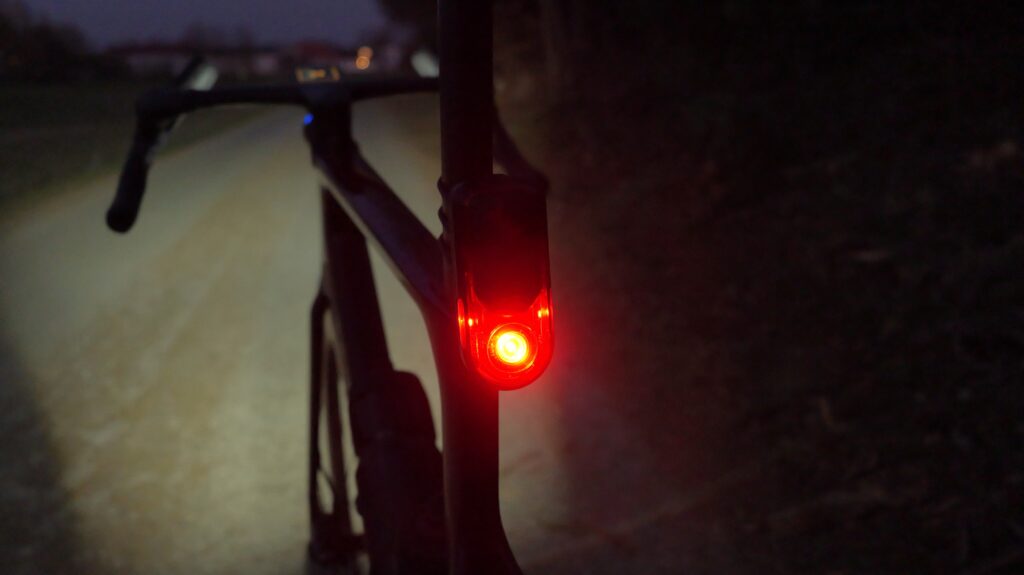
One important point: Germany gets the StVZO version, with noticeably restricted lighting features. It offers a fixed, approved rear light and radar, but lacks the flashing modes of the international version. Garmin explicitly lists Solid, Peloton, Night Flash and Day Flash for the international model, with automatically changing flash patterns when approaching traffic is detected. Its German support documentation also notes that Peloton mode is unavailable on certain regional versions.
Honestly, this is one of the few aspects of the German version that annoys me. In my opinion, it is complete nonsense that useful features such as flashing or certain dynamic lighting modes cannot be used here when, from a safety perspective, they seem more helpful than harmful. On a product like the RearVue 820, specifically designed to improve road visibility and awareness, I find this restriction difficult to understand. That is my personal view; legally, of course, German StVZO rules apply, which is why Garmin offers an adapted version.
The international version clearly offers more varied lighting. Alongside steady light, it has Peloton mode, night flashing, daytime flashing and, according to Garmin, automatically adjusted flash patterns when a vehicle approaches. Retailers and media also mention a brake light function, visibility up to 2km and up to 24 hours in Day Flash mode for that version. Garmin specifies up to 16 hours with the rear light on, or 30 hours without it, for the German StVZO version.
The StVZO version nevertheless remains strong for everyday German use because its radar function is unaffected. Long range, early vehicle detection and clear alerts remain. That is why the RearVue 820 StVZO is still one of the most interesting radar rear lights for road cycling, gravel and commuting to me, even though I would personally prefer Garmin to be allowed to unlock more international lighting features in Germany.
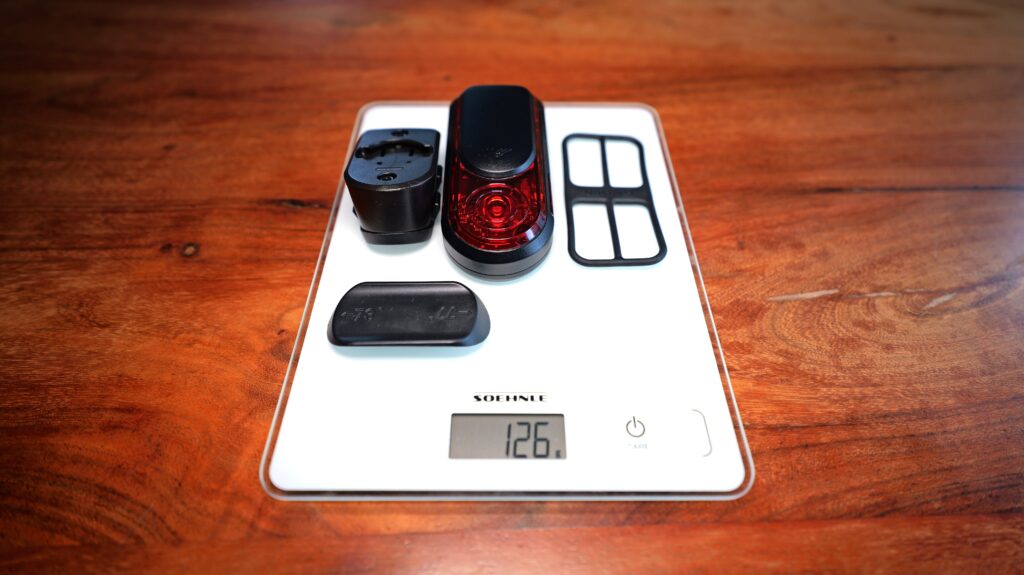
Weight
Battery Life and Operation
Everyday use of a radar rear light such as the Garmin RearVue 820 StVZO depends on ease of operation and reliable battery life as well as radar performance. The new Garmin feels very mature in these respects. Garmin specifies up to 16 hours with the rear light on and up to 30 hours with it off for the StVZO version. This makes it suitable for short training rides, longer outings, daily commuting and extended weekend tours.
USB-C charging is particularly welcome in everyday use, making charging considerably more convenient than on older devices with outdated connectors. According to the manual, it can even continue operating while charging. For safety, Garmin recommends using a power bank in a saddle bag or jersey pocket and routing the cable so it presents no hazard. This is practical for very long rides.
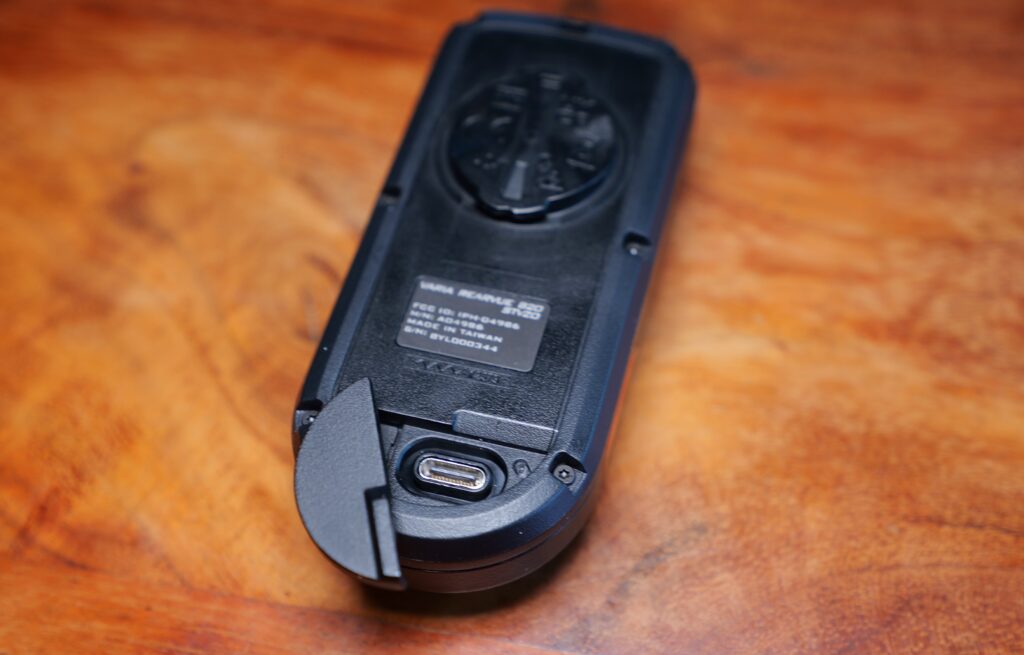
Operation is deliberately simple. The device has one button: a press controls the rear light, holding it switches the device on or off, and pressing it when the device is off enters pairing mode. This is convenient in everyday use without complicated menus. Most of the intelligence comes through connection to the Varia app, a compatible Garmin bike computer or a Garmin watch. These make the radar view, vehicle alerts and further settings meaningfully accessible.
The status LED is also practical, showing charge level and device status at a glance. During charging, it indicates whether the battery is below 15 percent, in the normal charging range or fully charged. In use, it also indicates active mode, pairing, standby or possible faults. It sounds minor but helps you quickly see whether the RearVue 820 is actually ready to use.
The system's real strength becomes apparent when controlled through the Varia app or a compatible Edge computer. The app graphically displays traffic behind you, with vehicle icons, battery status and a rear light on/off control. Sounds and alerts can also be adjusted, while newer Edge devices show rear traffic in a sidebar or dedicated radar view. This makes the RearVue 820 feel like an actively usable safety system rather than a passive gadget.
One small drawback remains for the German StVZO version: its lighting features are considerably reduced compared with the international version. Internationally, various flashing and special modes are available, while Germany gets the legally compliant variant. This simplifies operation but removes some flexibility. In practice, the RearVue 820 StVZO is very straightforward, although some users will consider it unnecessarily restricted.
Garmin RearVue 820 vs Garmin RTL 516, RCT 716, Wahoo TRACKR Radar and SIGMA RECO 80 LINK
Direct comparison quickly shows that the Garmin RearVue 820 StVZO is more than a minor update, clearly outperforming older and alternative radar rear lights in several areas. For me, radar performance is the biggest difference. Garmin specifies detection up to 170 metres for the RearVue 820, compared with around 140 metres for the Garmin RTL 516 and SIGMA RECO 80 LINK, and around 150 metres for the Wahoo TRACKR Radar. This is noticeable in everyday use: the RearVue 820 often reports traffic behind earlier, making road riding calmer.
Progress is particularly clear against the Garmin RTL 516/515. The RTL 516 remains a very good radar rear light and entirely sufficient for many riders, but is technically simpler. Its German version offers only a steady 5-lumen light, while the RearVue 820 adds modern functions such as vehicle size detection and threat-level assessment. The RearVue 820 StVZO also lasts longer, up to 16 hours with the light or 30 without, while simplicity remains the RTL 516's strength. For me, the RearVue 820 is therefore clearly the stronger overall package if you want maximum radar technology.
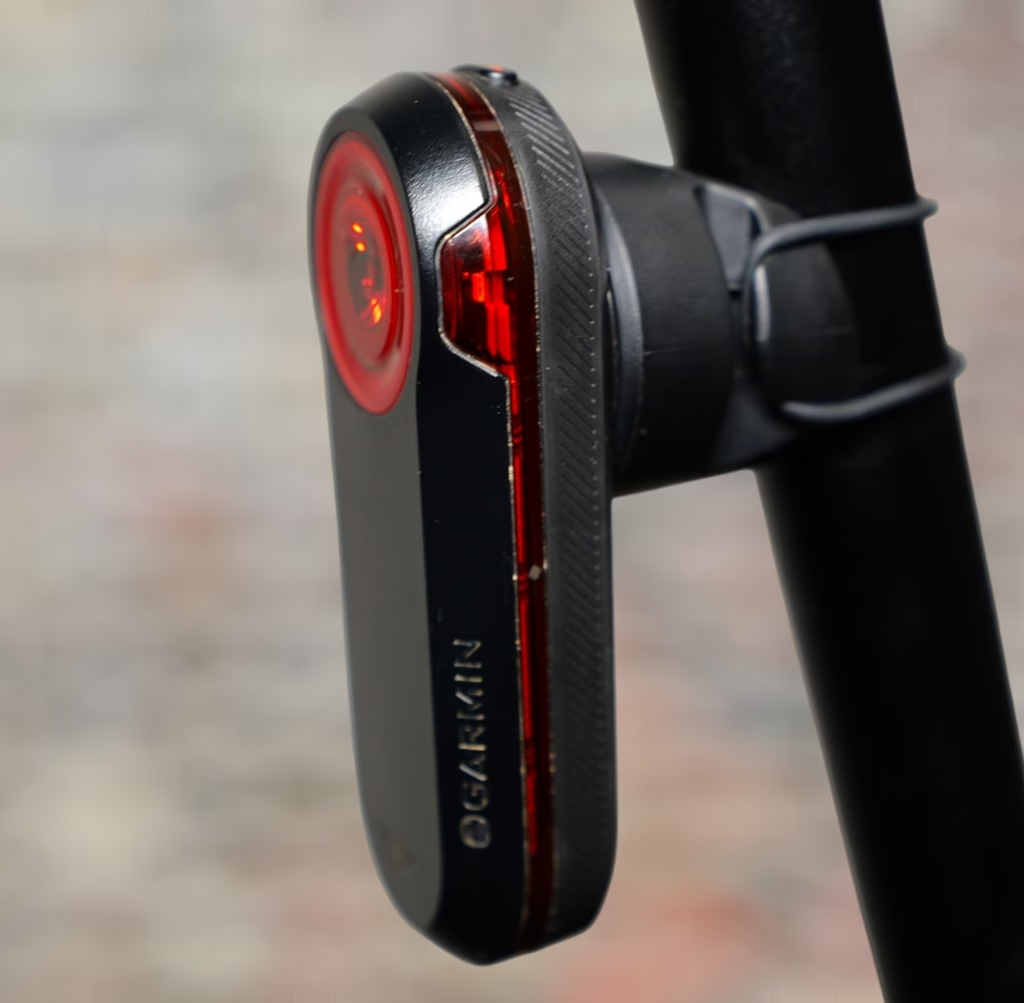
The Garmin RCT 716 occupies a different position because it includes a camera. Riders specifically wanting a cycling dashcam get an advantage the RearVue 820 cannot offer. However, the RCT 716 is heavier, more specialised and its practical battery life depends more heavily on video recording. Garmin specifies up to 5 hours with steady light and 1080p recording, or up to 8 hours with the camera off. For me, it remains the choice for riders who specifically want a camera. For radar, safety, visibility and everyday practicality alone, the RearVue 820 feels more modern and better balanced.
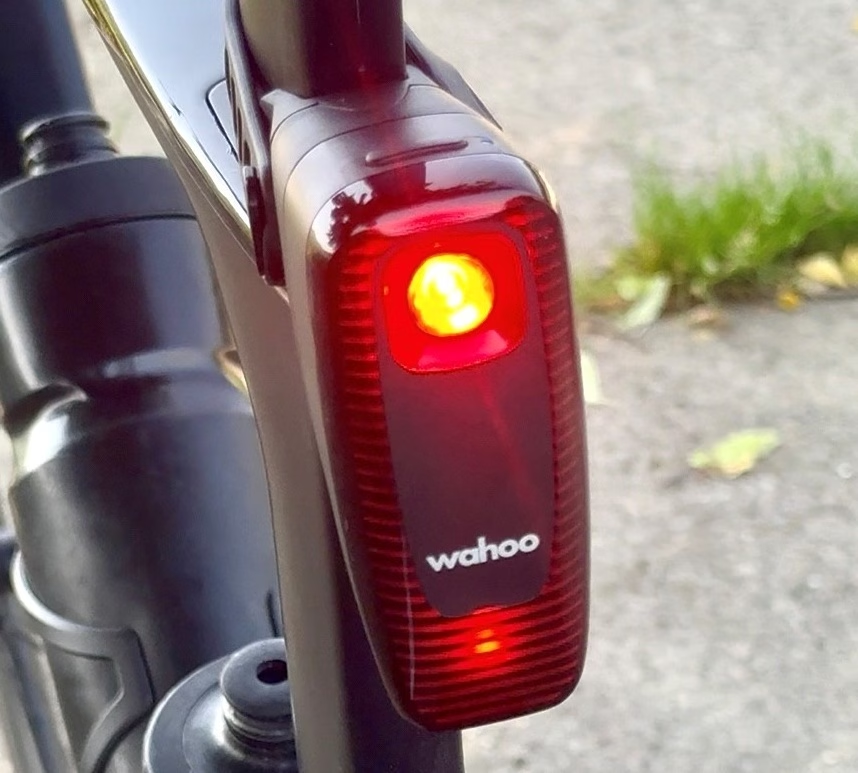
The Wahoo TRACKR Radar. is another interesting comparison. It is a serious rival, offering a powerful rear light with up to 53 lumens, a brake light, USB-C, up to 20 hours of battery life and radar detection up to 150 metres. It also has multiple light modes and battery-saving functions. The TRACKR is a strong package, especially for riders wanting a modern radar light with high light output and good app/computer integration. In my view, the RearVue 820 still leads in radar itself because its range is longer and Garmin additionally assesses vehicle size and threat level. Wahoo is a strong all-rounder, while the RearVue 820 feels even more focused on maximum radar safety to me.
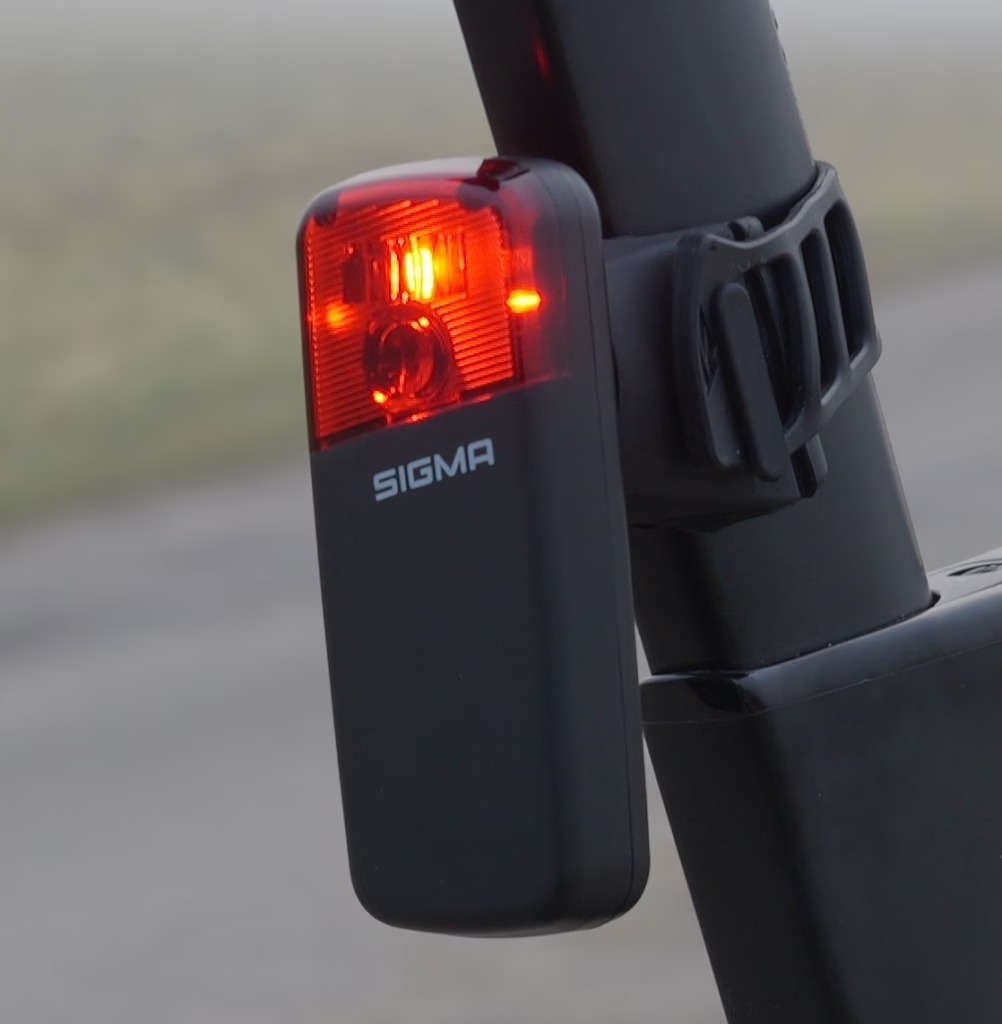
The SIGMA RECO 80 LINK is particularly interesting for riders wanting a StVZO-compliant radar light focused on the German market. Sigma specifies 140 metres of radar range, up to 8 vehicles, brake and emergency brake lights, rear light visibility up to 500 metres and up to 15 hours of use. This makes it technically competitive and a very good everyday option. Directly compared, the RearVue 820 feels even more modern and capable to me, mainly because of its longer radar range and additional traffic analysis. For maximum radar performance, I would lean towards Garmin. Sigma is an interesting choice for a strong StVZO alternative.
Overall, I would classify them as follows. The Garmin RearVue 820 StVZO is the best choice for the strongest current radar system and the earliest possible vehicle detection. The RTL 516 remains the simpler, often cheaper Garmin option. The RCT 716 is mainly worthwhile if a camera matters. The Wahoo TRACKR Radar is a strong rival with high light output and good battery life, but no German STVZO approval. The SIGMA RECO 80 LINK is an interesting StVZO alternative for a modern, German-road-approved radar rear light. On radar performance alone, the RearVue 820 currently ranks highest for me.
Pros and Cons
-
Extremely Early Vehicle Detection
The greatest advantage in testing: the Garmin RearVue 820 StVZO detects vehicles very early, giving you considerably more time to assess the situation behind. Particularly on country roads and fast commutes, this provides noticeably greater safety and a calmer ride. -
Very High-Level Radar Performance
Compared with many radar rear lights, the RearVue 820 feels particularly capable when vehicles appear far away. This makes a real everyday difference because you can react well before overtaking begins. -
StVZO Rear Light + Radar in One Device
Alongside an intelligent radar system, you get a rear light approved in Germany. This makes it particularly interesting for anyone seeking a legal, modern safety setup. -
Strong Battery Life and Modern USB-C
It also impresses in everyday use. Battery life covers training, commuting and longer rides, while USB-C makes charging more convenient than on older Micro-USB models. -
Very Useful for Road Cycling, Gravel and Commuting
Regular road users get a safety upgrade that is genuinely noticeable. Early warnings are particularly valuable on open roads compared with conventional rear lights.
-
High Price
The Garmin RearVue 820 is not inexpensive. Those who rarely ride among cars will notice less benefit than frequent riders, commuters or performance-focused country-road cyclists. -
Full Potential Requires a Compatible Setup
The radar's benefits are fully realised with a Garmin Edge, compatible watch or Varia app. Without a suitable display, you mainly have a good rear light rather than its real radar strengths. -
German StVZO Version Has Restricted Features
Compared with the international model, Germany lacks flashing modes and other lighting features. I consider this unnecessary because those features would tend to improve visibility in traffic. -
Correct Mounting Is Crucial
For full radar performance, the device needs correct, unobstructed mounting. Unusual seatposts, luggage setups or awkward positioning may make this more fiddly. -
No Substitute for Awareness
However capable the system, the RearVue 820 does not replace shoulder checks or defensive riding. It is valuable assistance, not permission to ride inattentively.
Verdict
For me, the Garmin RearVue 820 StVZO is currently one of the strongest radar rear lights for cyclists regularly using country roads, commuting routes or fast training circuits. The biggest difference from many models is its very early vehicle detection. This offers the greatest everyday benefit by letting you assess what is happening behind considerably sooner. Garmin specifies radar range up to 170 metres, up to 8 simultaneous vehicles, USB-C and battery life up to 16 hours with the light or 30 without for the StVZO model.
It is especially strong for anyone wanting a genuine safety upgrade for a road, gravel or commuter bike, beyond simply a rear light. The RearVue 820 improves both your visibility and, above all, your ability to assess traffic behind. That combination of radar, light and alerts makes a noticeable everyday difference.
There are still criticisms. The price is high, full potential needs a suitable Garmin Edge, watch or Varia app setup, and German StVZO lighting is clearly more restricted than the international model with flashing and other dynamic modes. Garmin documents these regional differences, including lighting modes unavailable in certain regions.
Garmin RearVue 820 StVZO FAQ
Here are the key questions and answers about the Garmin RearVue 820 StVZO, covering range, battery life, compatibility and differences between German and international versions.
What Is the Garmin RearVue 820 StVZO?
The Garmin RearVue 820 StVZO is a modern cycling radar with a rear light that detects approaching vehicles behind you and sends alerts to compatible devices. You know earlier what is approaching and can assess traffic situations considerably better.
This is particularly valuable on country roads, commutes and fast training rides because it increases visibility while improving awareness behind you.
What Is the Garmin RearVue 820's Radar Range?
The RearVue 820's great strength is very early vehicle detection. Vehicles are often spotted far away, giving you considerably more time to assess what is happening behind.
That makes the biggest everyday difference: calmer riding, fewer hurried backward glances and earlier notice of traffic approaching on open roads.
Is the Garmin RearVue 820 Legal in Germany?
Yes, the StVZO version is intended for German road use. That is why its lighting is restricted and differs from the international version.
Germany therefore gets the road-legal version, but without some flashing and special modes available internationally.
How Do the StVZO and International Versions Differ?
Lighting on the German StVZO version is much more tightly regulated. The international model offers extra flashing and special modes that are not permitted in Germany.
I think that is a shame because some would tend to improve traffic visibility. For the German market, however, the decisive point remains that only the appropriately adapted StVZO version is legal.
How Long Does the Garmin RearVue 820 StVZO Battery Last?
Battery life is practical and strong enough for training, commuting and longer tours. Particularly against older models, the RearVue 820 feels more modern and better prepared for everyday use.
Garmin's use of USB-C is practical too, making charging considerably more convenient and up to date.
Does the Garmin RearVue 820 Work with Wahoo or Other Brands?
Yes, in principle. The Garmin RearVue 820 works with other brands if they support the appropriate radar profile. This includes various Wahoo ELEMNT devices, for example.
However, this does not fully exploit the RearVue 820's real strengths. Basic alerts for approaching vehicles work, but the system's advanced displays and more modern analysis particularly come into their own with the Varia app or newer Garmin Edge devices.
Using the RearVue 820 only with another brand therefore provides the basic functionality, but not the full experience it was designed for.
Why Is the Display Better on Garmin Than on Other Brands?
Because Garmin integrates the RearVue 820's advanced functions best within its own ecosystem. These include a more modern radar view and extra displays unavailable on some other devices.
In practice, Wahoo and other compatible devices provide radar alerts, but do not fully realise the new RearVue 820's visual presentation and particular strengths.
Do I Need a Garmin Edge for the RearVue 820?
No. You can also use it with the Varia app on a smartphone or other compatible devices.
If you want the most from the RearVue 820, however, a modern Garmin setup is clearly the best solution. That is where its display and operation work most effectively.
Is It Worth Upgrading from the Garmin RTL 516 to the RearVue 820?
Yes, particularly if even earlier vehicle detection, modern technology and stronger overall radar performance matter to you.
The RTL 516 remains a good radar rear light, but the new-generation RearVue 820 feels clearly more mature and capable.
Who Benefits Most from the Garmin RearVue 820?
The RearVue 820 is most worthwhile for road cyclists, gravel riders using roads and performance-focused commuters regularly riding among cars.
Those using almost exclusively cycle paths or car-free routes will notice considerably less benefit than riders on open roads.
Does the Garmin RearVue 820 Replace Shoulder Checks?
No. The RearVue 820 is a valuable safety upgrade, but no substitute for awareness, shoulder checks and defensive riding.
It helps you assess traffic behind considerably better, but responsibility on the road always remains with the rider.
Tip: prices, availability and delivery times vary between shops, so a quick comparison is worthwhile.
0 Comments