
Road Bike Handling for Beginners: More Control and Safety
Safe road cycling starts with solid basics. Clipping in and out, braking, cornering, avoiding obstacles, riding one-handed and reaching for a bottle must become familiar before speed, group rides or long descents feel truly relaxed.
Ride Your Road Bike Safely: These Basics Give You More Control.
Many road cycling beginners initially focus on speed, power or new equipment. Real confidence comes from proper beginner handling skills: clipping in and out safely, controlled braking, calm cornering, avoiding obstacles, giving hand signals and reaching for a bottle while riding.
This guide provides simple road bike handling exercises for beginners. You only need a quiet car park, empty road or wide cycle path, rather than a dedicated training area. Practise slowly, repeat movements deliberately and increase speed only when you feel stable.
Handling Checklist: Essential Skills Road Cycling Beginners Should Master
You can clip in and out confidently without becoming flustered when stopping.
You can brake in a controlled way without tensing up or making the rear wheel unstable.
You use front and rear brakes deliberately and modulate braking pressure precisely.
You corner with appropriate vision, a relaxed upper body and a suitable speed.
You can avoid a pothole, branch or stone without abrupt steering.
You can briefly ride one-handed to signal or adjust your glasses.
You can reach for your bottle and replace it without staring down.
You hold a steady line even while looking over your shoulder.
You regularly practise these skills slowly before needing them at speed or in traffic.
Clipping In and Out: The Most Important Basic Skill for Beginners
For many riders, clipping in and out is the most important foundation of road bike handling for beginners. This is where most early uncertainty arises: starting, stopping and riding slowly. Without automatic unclipping, falls often happen at a standstill rather than at speed.
The good news is that simple exercises quickly teach you to clip in safely and, above all, unclip early. This builds confidence on a road bike and reduces fear of clipless pedals.
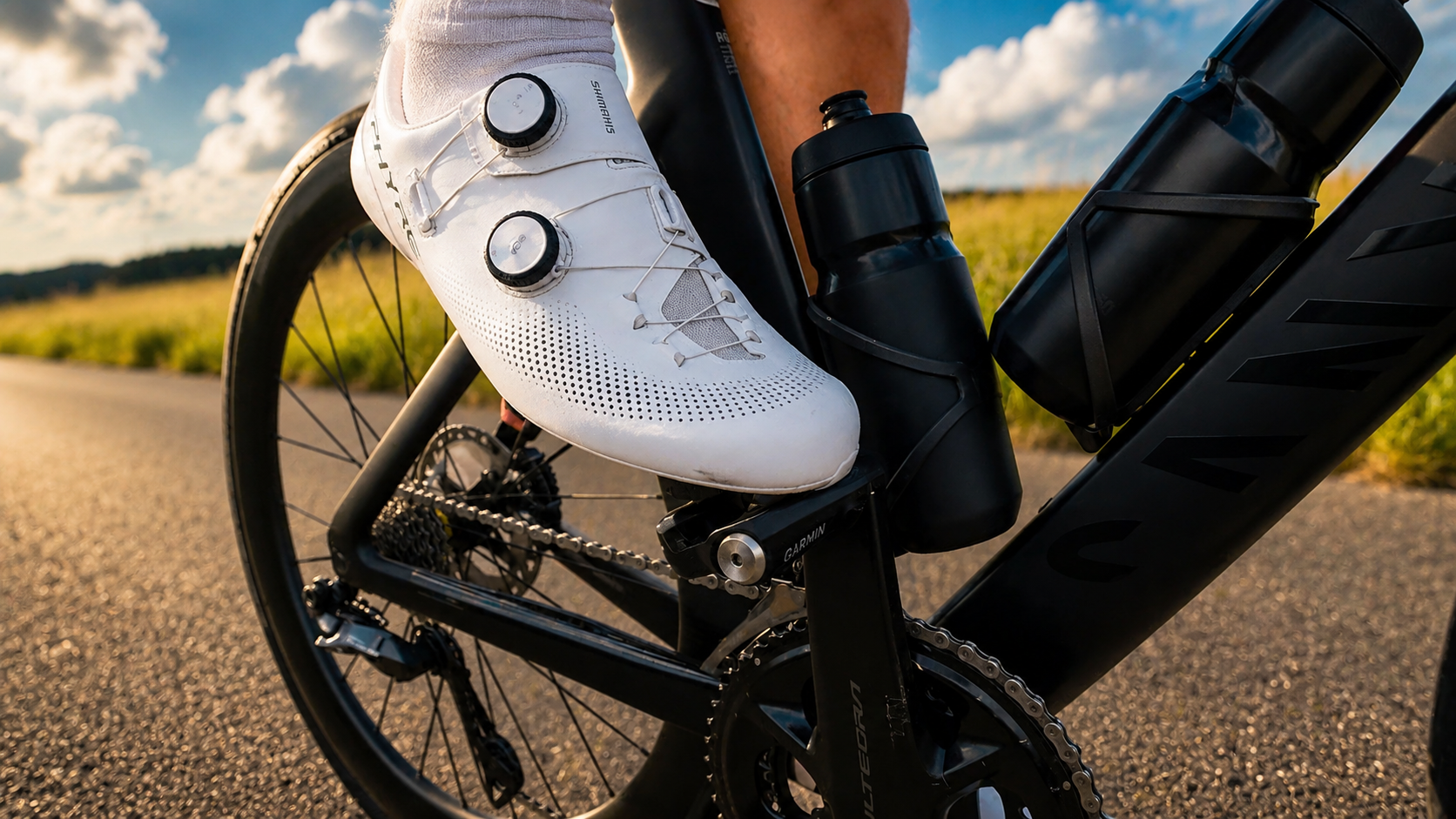
Practise Clipping In Calmly
First practise clipping in somewhere quiet or on an indoor trainer. You can learn how shoe, cleat and pedal work together without traffic pressure.
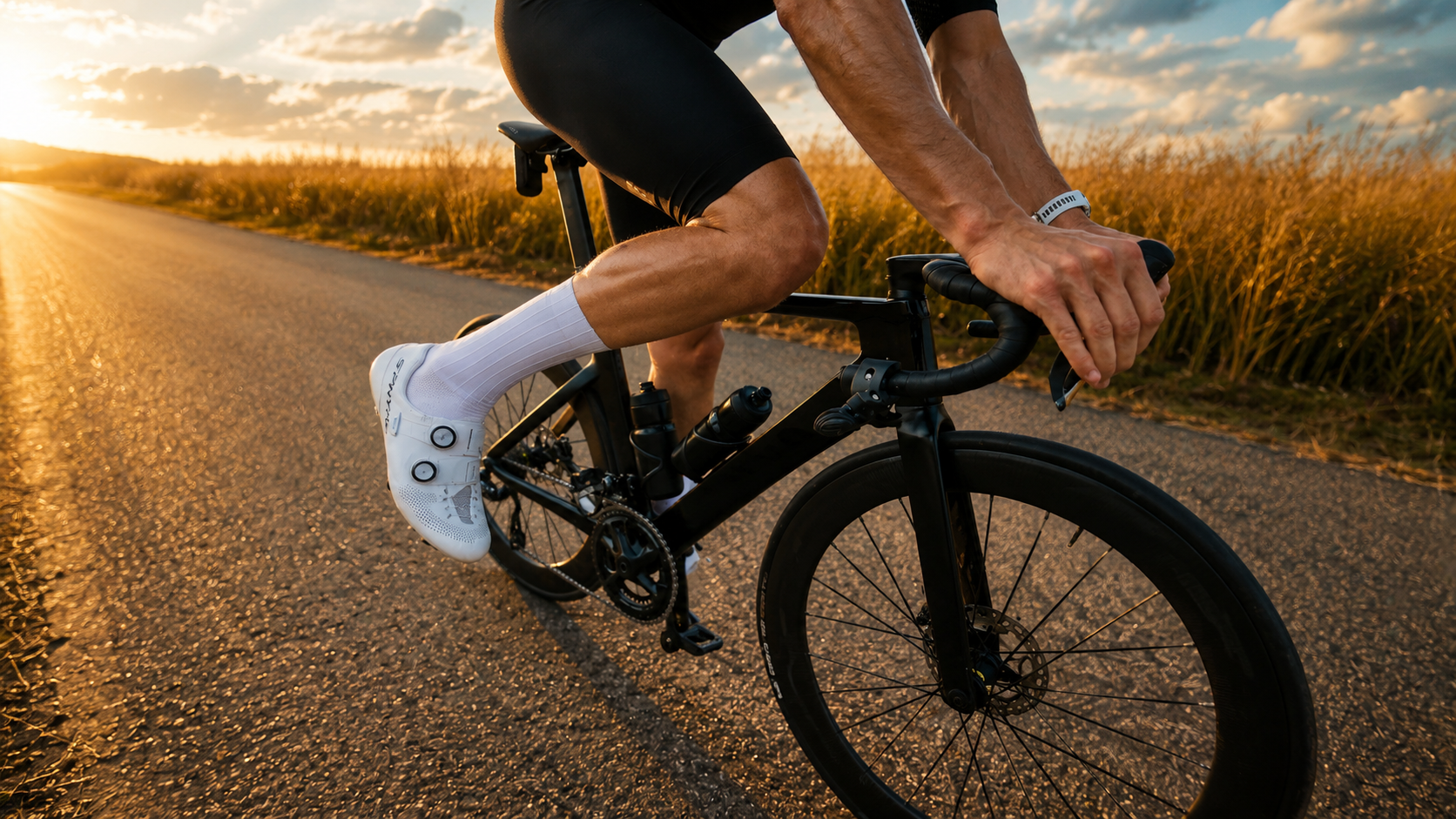
Make Unclipping Automatic Early On
Timely unclipping is even more important than clipping in. Repeat until the movement becomes automatic whenever you slow down or need to stop.
How to Learn to Clip In and Out Safely
- Start on One Side: initially clip in only one foot, leaving the other free for support.
- Practise by a Wall or on a Trainer: hold onto something or use an indoor trainer to learn the movement.
- Repeat the Release Movement: turn your heel slightly outwards and repeat many times on each side.
- Unclip Early: avoid leaving it until the last moment. Make a habit of unclipping before stopping.
- Practise Both Sides: deliberately train left and right so you can react confidently in any situation.
Find a quiet car park or traffic-free route. The aim is a smooth, calm sequence rather than speed. Repeat until unclipping feels natural.
The Most Common Beginner Mistake
Many beginners think about braking first and unclipping too late when stopping, causing typical stationary falls. Train yourself to unclip first, then stop.
The Right Basic Position: Stay Relaxed and Control Your Road Bike
After confident clipping in and out, a relaxed position is the next essential beginner handling skill. Tense shoulders, arms and hands make a road bike nervous. Beginners often grip too tightly and support too much weight on their hands, leading to overly abrupt reactions.
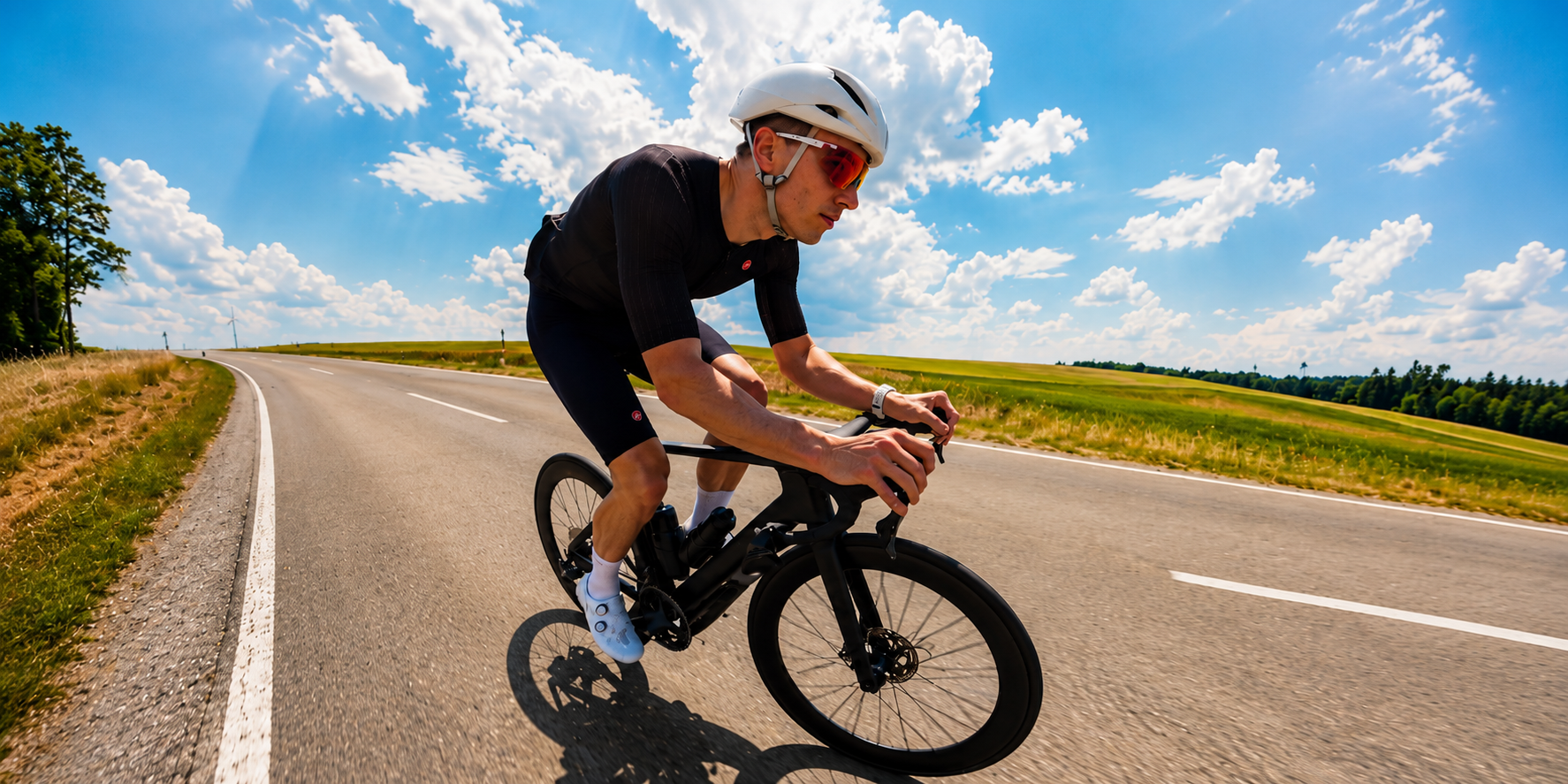
Relaxed Rather Than Rigid
Hold the bar securely without gripping tightly. Slightly bent arms act like small shock absorbers, helping you absorb bumps in a controlled way.
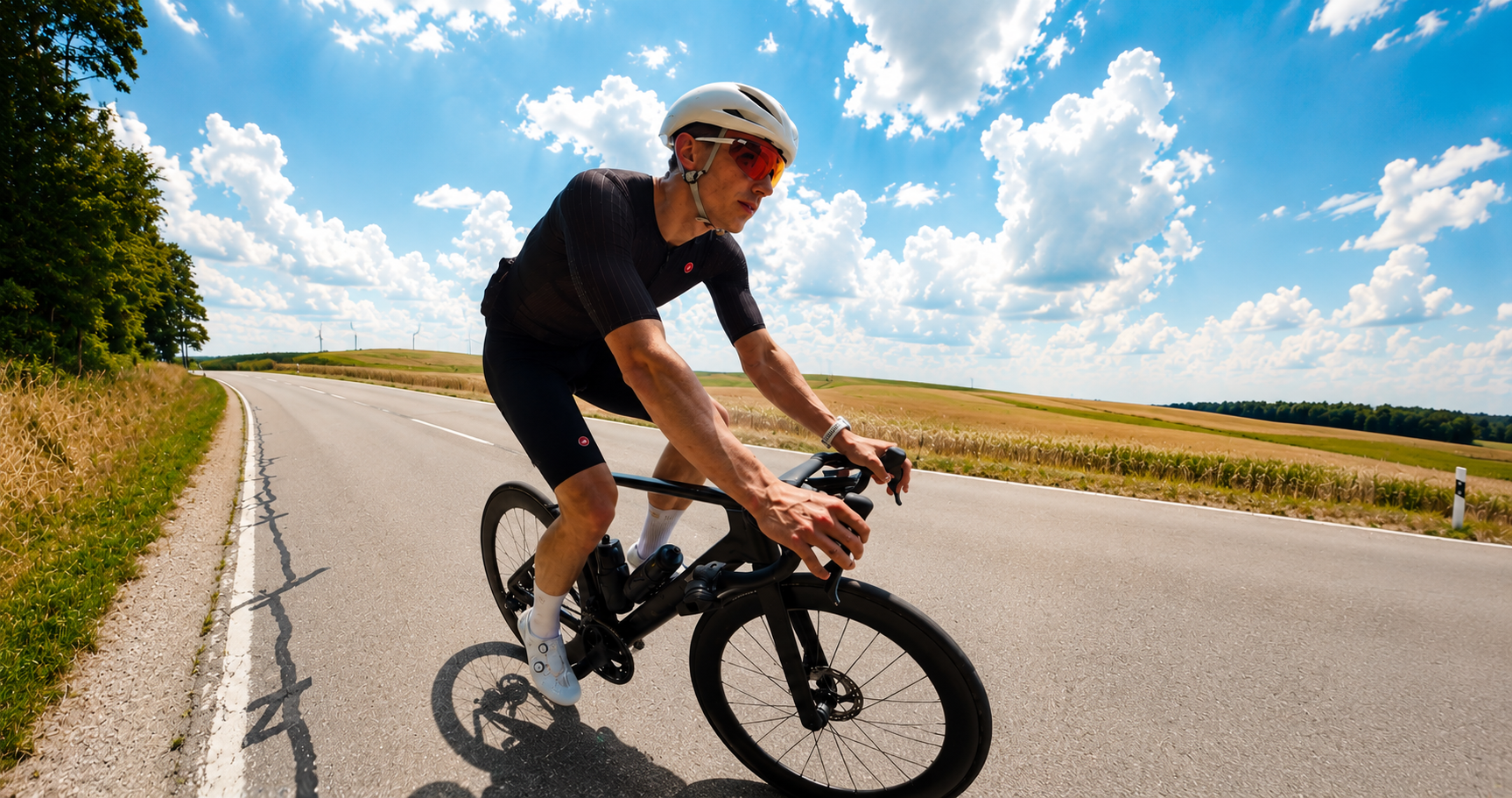
A Stable Riding Position
A suitable position makes handling exercises easier. Being too stretched out or too low makes braking, cornering and one-handed riding considerably harder.
Things to consider
- Look Ahead: look where you want to go, rather than directly in front of your wheel.
- Slightly Bent Arms: avoid fully locking your elbows.
- Relaxed Shoulders: do not raise them towards your ears.
- Calm Hands: hold the bar securely without a tight clamping grip.
- Centred Weight: avoid putting all your weight on your hands; distribute it securely between saddle, pedals and handlebar.
A Simple Self-Check
Ride along a quiet, straight route and deliberately relax your fingers, shoulders and jaw. If the bike immediately becomes unsettled, you are probably gripping too tightly or sitting without enough stability.
Practising Road Bike Braking: Controlled Slowing Instead of Panic
Safe braking is one of the most important beginner road bike skills. Learn how strongly your bike slows, how front and rear brakes feel, and how to control braking at speed, in the wet or downhill.
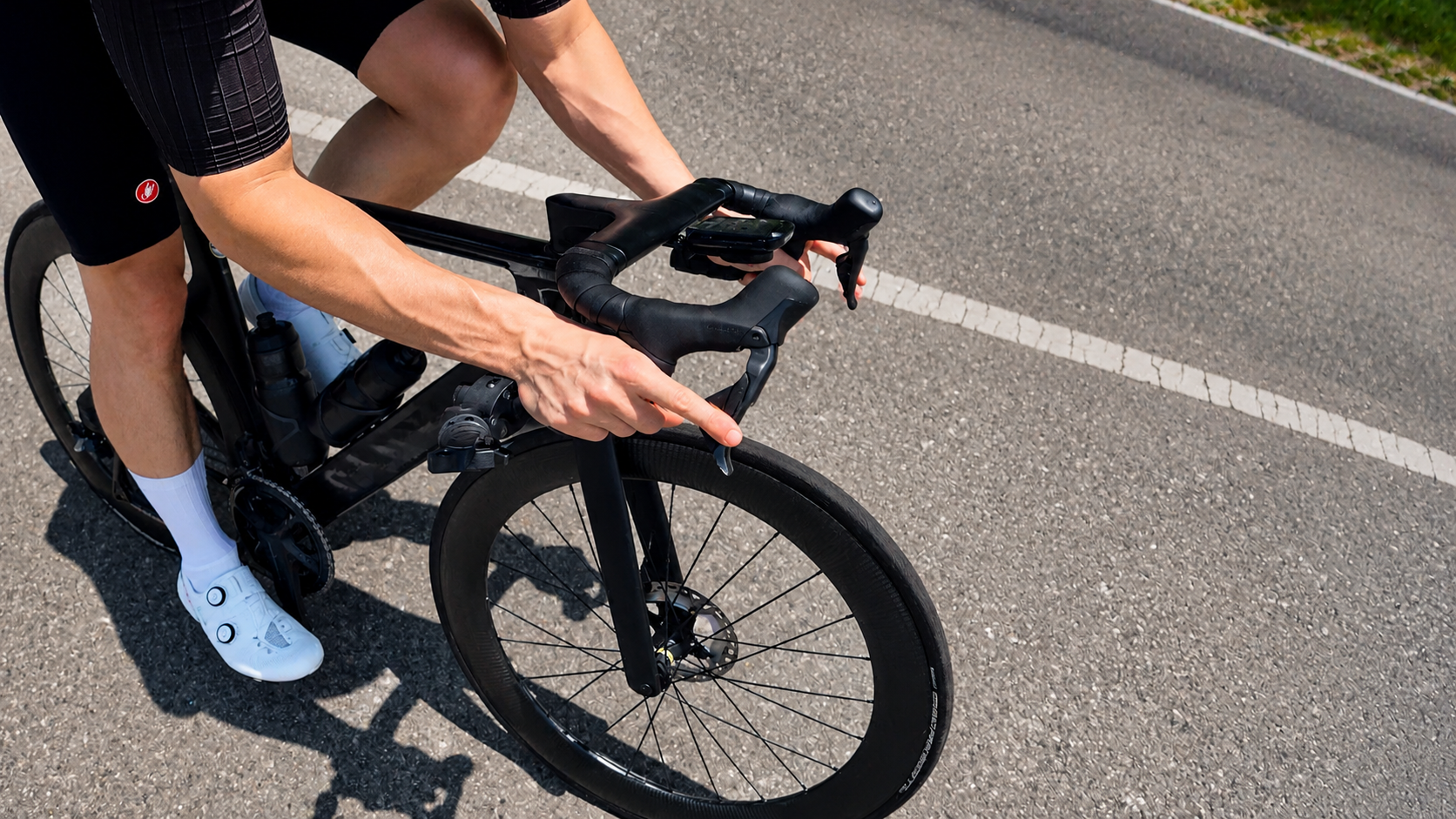
Modulate Braking Deliberately
Avoid grabbing the levers abruptly. Build braking pressure smoothly and release it cleanly to keep the bike settled.
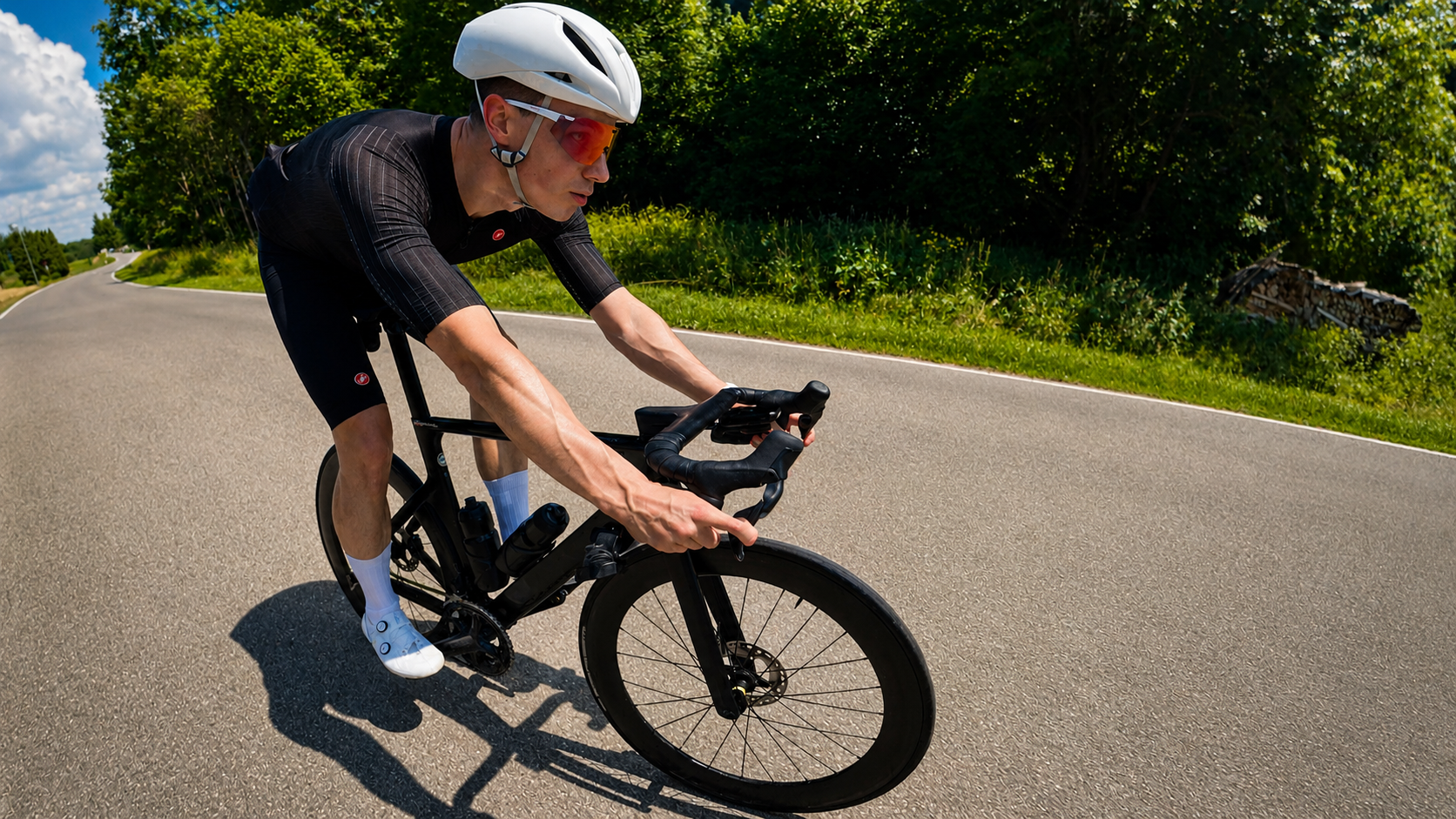
Move Weight Slightly Back
Harder braking transfers weight forwards. Stay low and stable, move your hips slightly back and keep your arms relaxed.
Beginner Braking Exercise: Build Road Bike Confidence
- Find an open, straight route without traffic.
- Start slowly and apply both brakes lightly.
- Repeat and gradually increase braking pressure.
- Notice when the rear wheel feels light or unsettled.
- Then practise from slightly higher speeds, always remaining controlled.
Place two markers on the ground, such as bottles, chalk marks or small cones. The aim is repeatable control rather than an emergency stop, bringing the bike to rest more calmly and precisely each time.
| Situation | What to Watch For | Typical Beginner Mistake |
|---|---|---|
| Normal Braking | Use both brakes with controlled pressure | Using only the rear brake and not slowing sufficiently |
| Harder Braking | Stabilise your weight and keep your arms relaxed | Panicking at the front brake and gripping the bar tightly |
| Braking in Corners | Reduce speed before the corner | Braking too late and correcting abruptly while leaned over |
| Wet Roads | Brake earlier and leave more space | Expecting the same stopping distance as on dry roads |
Important for Disc and Rim Brakes
Modern road bike brakes can be very powerful, so practise slowly first. Rim brakes can have delayed wet-weather braking, while disc brakes often respond more directly. Get to know either system deliberately.
Practising Road Bike Cornering: Vision, Line and Speed
Safe cornering depends on preparation rather than bravery. Reduce speed beforehand, look through the corner and keep the bike settled. Better vision helps the bike follow your intended line more smoothly.
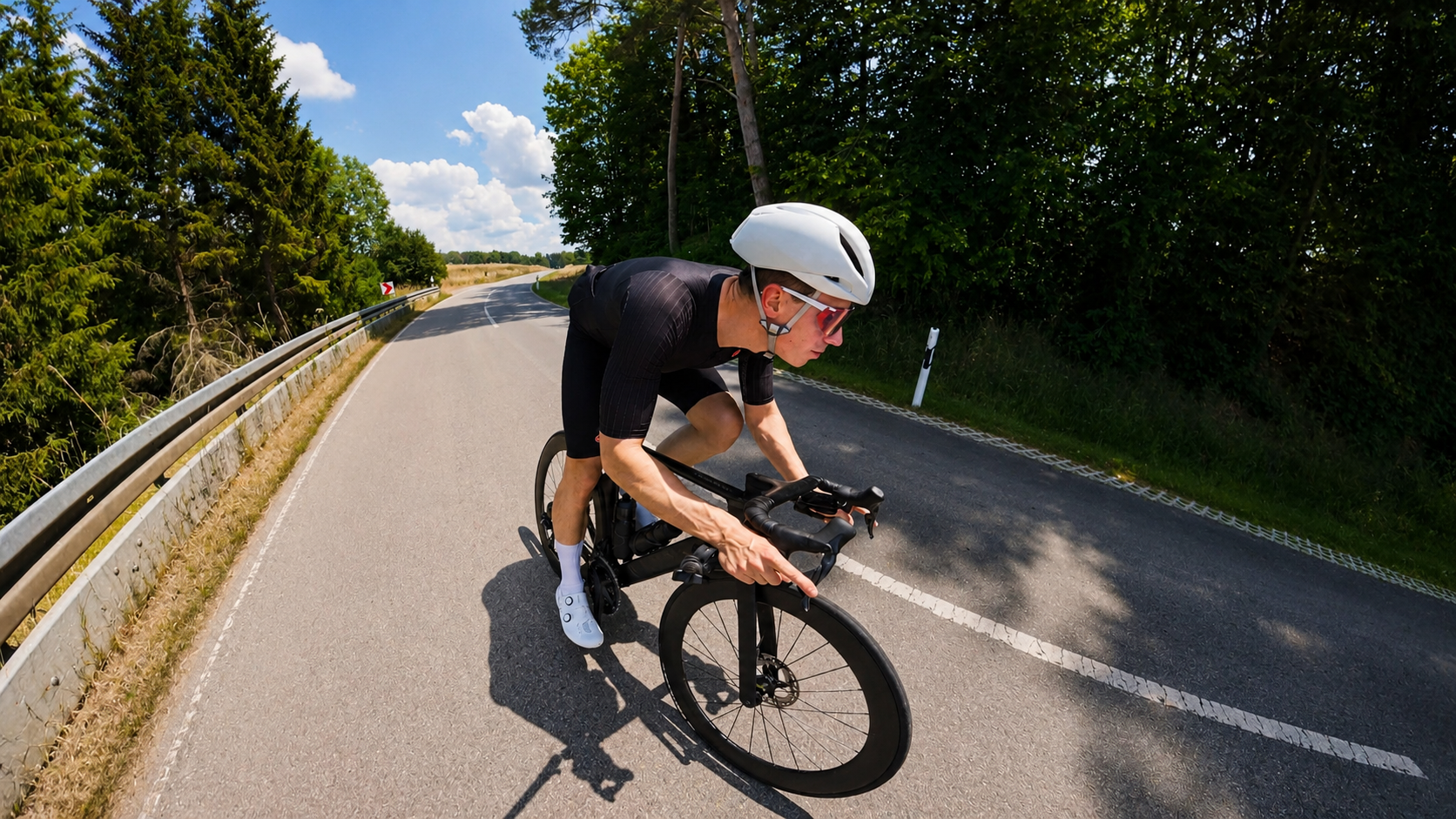
Look Through the Corner
Do not stare at the kerb, pothole or ground just ahead of your wheel. Your gaze guides your line.
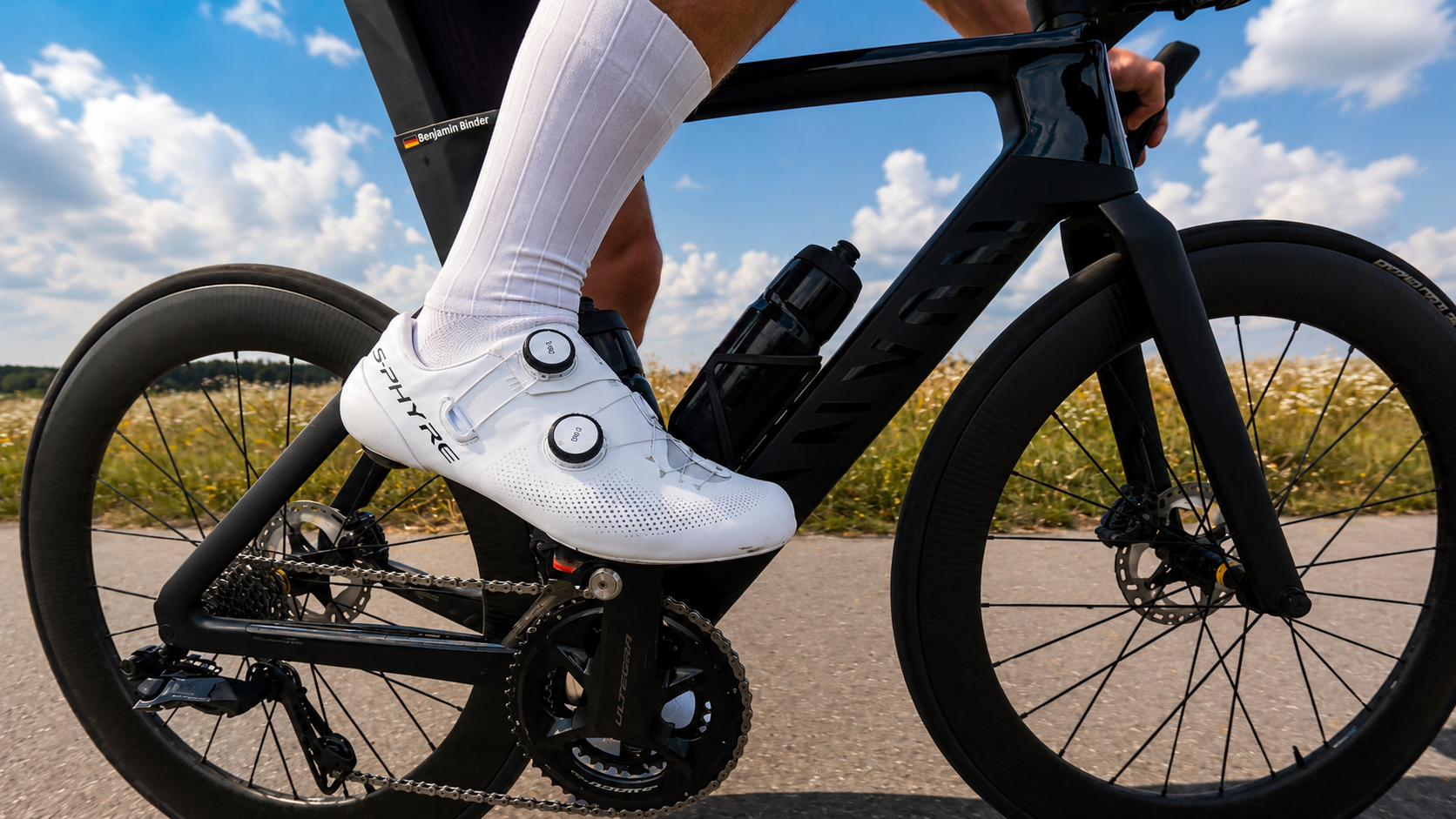
Inside Pedal Up
Keep the inside pedal up through tighter corners. This provides more ground clearance and prevents a pedal strike causing a fall.
Cornering Technique Step by Step
- Brake Before the Corner: reduce speed while the bike is still upright.
- Look Towards the Exit: look where you want to go.
- Outside Pedal Down: particularly important in tighter corners.
- Relax the Inside Knee: stay loose and let the bike flow calmly through the corner.
- Accelerate After the Corner: apply power only once the bike is stable again.
This exercise trains balance, vision and calm steering. Start with broad turns, moving the markers gradually closer as confidence grows.
Abrupt Steering Does Not Make Corners Safer
Road bikes respond very directly. The more abruptly you steer, the less settled your line becomes. A calm upper body, clear vision and appropriate speed matter more than large steering movements.
Practising Evasive Manoeuvres: Avoid Obstacles Safely
Potholes, branches, stones, drain covers and suddenly opened car doors can catch you out. Without avoidance practice, riders often respond with panic braking or excessive steering. A short, controlled change of line with steady forward vision is better.
How to Avoid Obstacles Cleanly
- Look First: quickly check where you can move.
- Avoid Staring at the Obstacle: look past it rather than directly at it.
- A Brief Input: move the bike with a small steering movement rather than yanking it around.
- Keep Your Body Calm: maintain a stable upper body while your arms guide the bike.
- Then Stabilise Your Line: avoid immediately jerking back again.
Place an empty bottle or soft cone in an open area. Approach slowly and deliberately ride around it. Important: first learn the clean movement without combining braking and avoidance practice.
| Obstacle | Best Response | Avoid |
|---|---|---|
| Small Branch | Spot it early and calmly ride around it | Staring directly at it |
| Pothole | Shift your line slightly and stay relaxed | Abruptly yanking the front wheel aside |
| Wet Drain Cover | Cross as straight and upright as possible, or ride around it | Braking or steering sharply on it |
| Loose Gravel | Reduce speed and use a wider cornering radius | Braking hard while leaned over |
Do Not Experiment in Traffic
Avoidance exercises belong in a quiet area. In road traffic, check over your shoulder and consider space and traffic first. Safety always comes before skills practice.
Riding One-Handed: Signal and Stay Stable on a Road Bike
One-handed riding is an important beginner road skill rather than a trick. You need it for signalling, shoulder checks, drinking, eating and adjusting glasses or clothing. The aim is to keep the bike moving straight while briefly taking one hand off the bar.
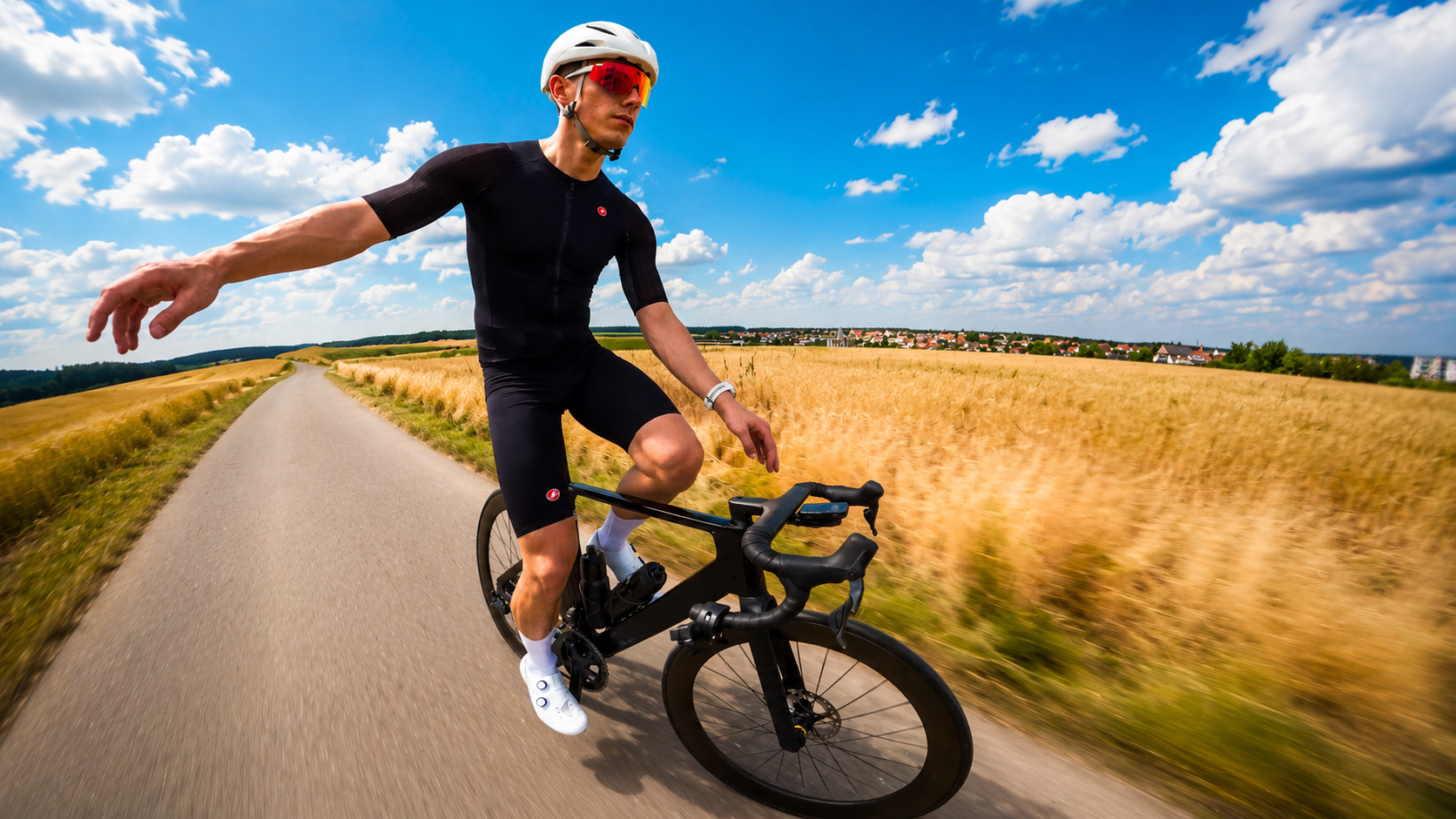
Stay Stable as One Hand Leaves the Bar
First practise on a quiet, straight route. Relax your upper body, keep the supporting hand steady and continue looking ahead.
How to Learn One-Handed Riding
- Start slowly on a wide, clear route.
- Rest both hands lightly on the hoods.
- First release pressure from one hand without removing it completely.
- Lift the hand a few centimetres, then replace it.
- Build gradually: briefly move the hand beside the bar, then to your hip, then outwards as a signal.
Release Pressure
One hand stays on the bar while the other becomes light. The bike should continue straight.
Lift Your Hand
Lift it only briefly. Keep your upper body steady and continue looking ahead.
Hand signal
Extend your arm briefly and in a controlled way, then return both hands securely to the bar.
The Most Common Mistake
Many beginners unconsciously pull on the bar with the remaining hand and drift sideways. Focus on keeping the supporting hand relaxed and centred.
Reaching for a Bottle: Drink Without Losing Control on a Road Bike
Reaching for a bottle should become automatic on a road bike. Looking down for too long can cause weaving or missed obstacles. Deliberately practise reaching, drinking and replacing the bottle.
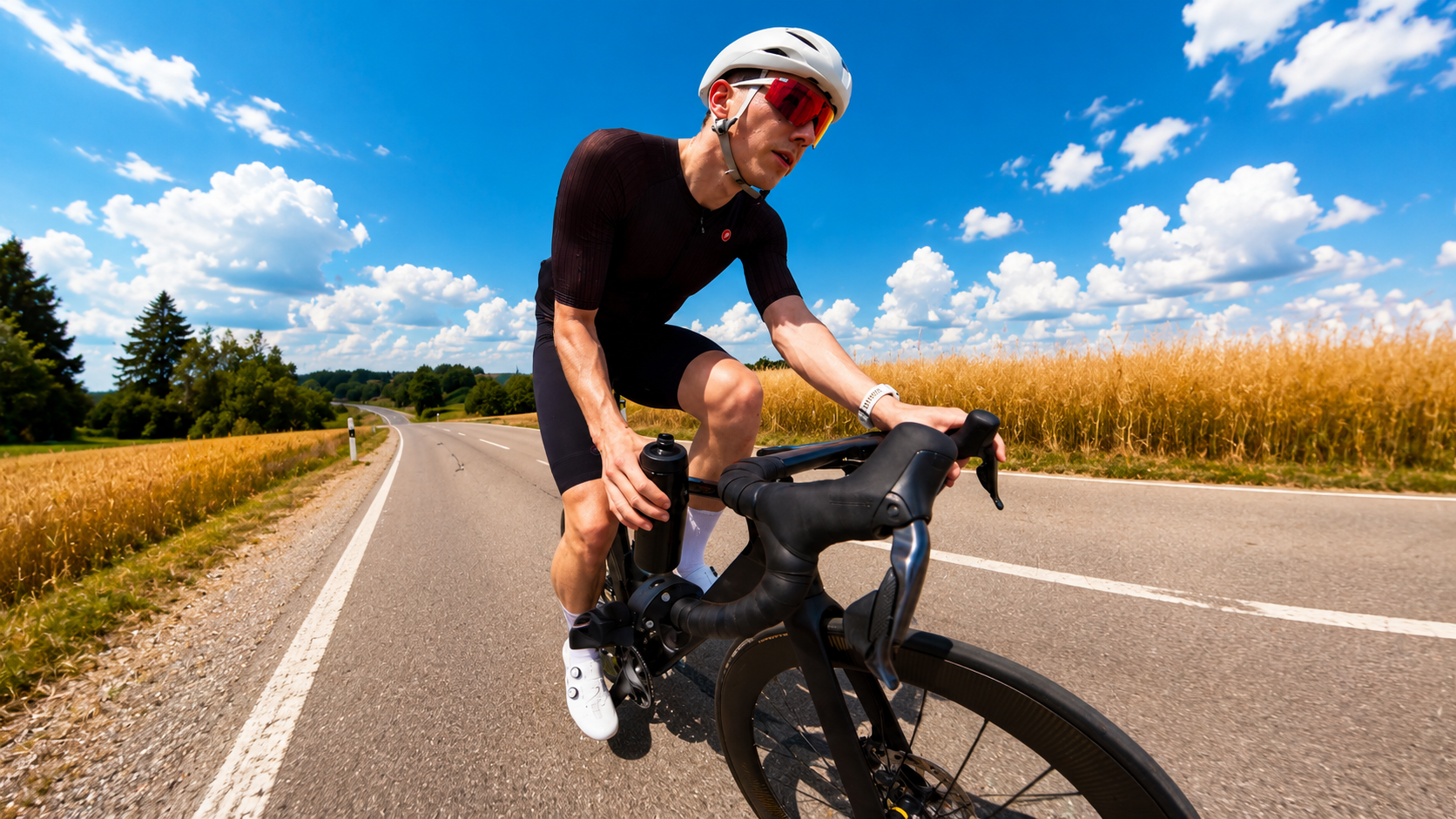
Feel First, Then Grip
Move your hand calmly towards the bottle cage. You should find the bottle without looking away from the road for long.
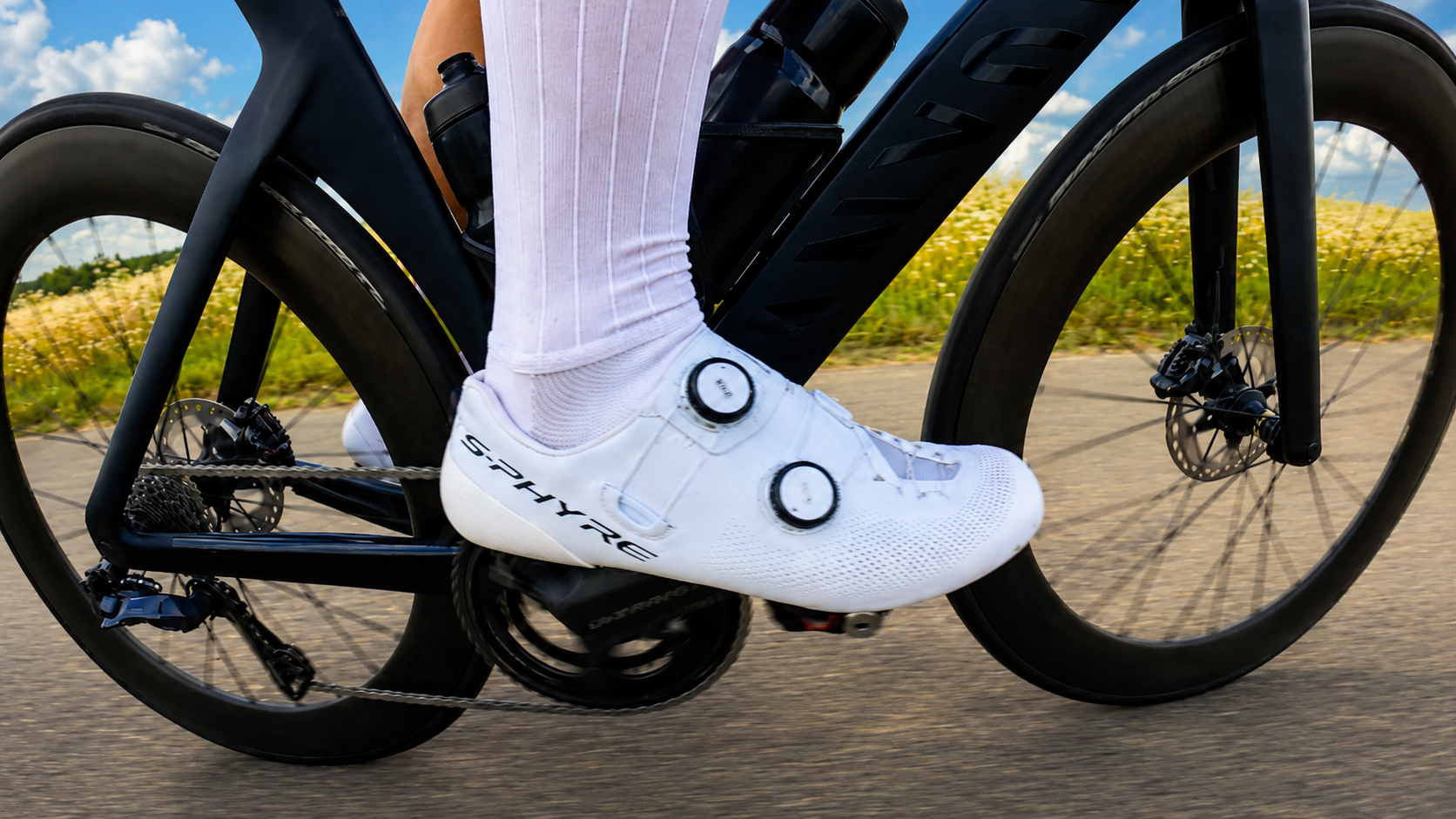
Keep Pedalling Smoothly
Avoid suddenly stopping pedalling or pulling on the bar when drinking. A smoother pedal stroke keeps the bike more stable.
Bottle-Reach Exercise
- Ride straight along a quiet route.
- Rest one hand lightly against the cage without removing the bottle.
- Grip the bottle, pull it up slightly and immediately replace it.
- Only remove it fully once that feels secure.
- Then drink, return your gaze forwards and calmly replace the bottle.
Avoid Staring Down
A brief checking glance is fine, but your eyes belong on the road. Practise until you can find bottle and cage almost without looking.
Practice Plan: Beginner Road Bike Handling Exercises
You do not need hours of skills training. Just 10–15 minutes before or after an easy ride can noticeably improve control. Practise regularly and build the exercises gradually.
| Exercise | Duration | Aim |
|---|---|---|
| Clipping In and Out | 10 Repetitions per Side | Use clipless pedals confidently and unclip early |
| Relaxed Straight-Line Riding | 2 Minutes | Relax shoulders, arms and hands |
| Braking Zone | 5 Repetitions | Build braking pressure in a controlled way |
| Figure Eights | 5 Minutes | Improve vision and cornering feel |
| Avoiding an Obstacle | 10 Repetitions | Learn a calm avoidance movement |
| One-Handed Riding | 1 Minute per Side | Practise signalling and stability |
| Reaching for a Bottle | 10 Repetitions | Grip and replace the bottle securely |
How to Progress Sensibly
First slowly, then a little faster. First alone, then in a light wind or over small bumps. First in an open area, then on quiet roads. Do not skip a stage just because it worked once.
Common Road Bike Handling and Control Mistakes
If your road bike feels nervous, equipment is rarely the only reason. Uncertainty and wobbling often come from poor vision, tense hands or late reactions. Calm basics help improve control.
| Mistake | Why Is It a Problem? | A Better Approach |
|---|---|---|
| Looking Directly Ahead of the Front Wheel | You react too late and ride less steadily | Look further ahead |
| Gripping the Bar Too Tightly | The bike becomes nervous and every movement transfers through it | Relax your hands and bend your arms slightly |
| Unclipping Too Late | You become flustered when stopping and risk a stationary fall | Unclip early, before coming to a complete stop |
| Braking Too Late in Corners | You have to correct while leaned over | Adjust speed before the corner |
| Staring Down While Drinking | You lose your line and awareness | Find the bottle by feel and look forwards again quickly |
| First Practising One-Handed Riding in Traffic | Too little room for mistakes | Practise on a quiet route first |
The key point in one sentence
Confident bike control comes from a relaxed position, clear vision and repeated low-speed practice.
Conclusion: Road Bike Handling Skills Make You Safer, More Relaxed and Faster
Basic bike control is central to safe road cycling rather than a minor consideration. When clipping in and out, braking, cornering, avoiding obstacles, one-handed riding and bottle handling become reliable, you feel considerably safer in traffic, on descents and on longer rides.
Practise these basics regularly as part of your cycling routine, rather than a one-off exercise. You will build confidence in the bike, improve skills step by step and later focus more easily on speed, endurance and enjoyment.
FAQ: Road Bike Handling for Beginners
Which Road Bike Skills Should Beginners Master?
You should confidently clip in and out, brake, corner with control, avoid obstacles, briefly ride one-handed, signal and reach for your bottle while riding.
What Is the Best Way to Practise Clipping In and Out?
Start somewhere quiet, by a wall or on an indoor trainer. Focus particularly on early unclipping so the movement becomes automatic when stopping.
How Should I Practise Road Bike Braking?
Find a quiet, straight route and practise using markers. Start slowly, brake with control using both brakes and increase pressure only gradually.
Why Is Vision So Important in Corners?
Your road bike follows your gaze. Looking towards the exit usually produces a calmer, smoother line. Staring at obstacles or the roadside unconsciously draws you towards them.
How Do I Learn to Ride One-Handed?
Start on a clear route. First reduce pressure from one hand, then lift it briefly and gradually build towards signalling. The bike should continue straight.
How Do I Reach for My Bottle Safely?
First practise without drinking: move your hand to the cage, briefly grip the bottle and replace it. Return your gaze forwards as quickly as possible.
How Often Should I Practise Road Bike Handling?
Even 10–15 minutes weekly helps. Regularly practise clipping in and out, braking, cornering, avoidance and bottle handling on quiet routes or open areas.